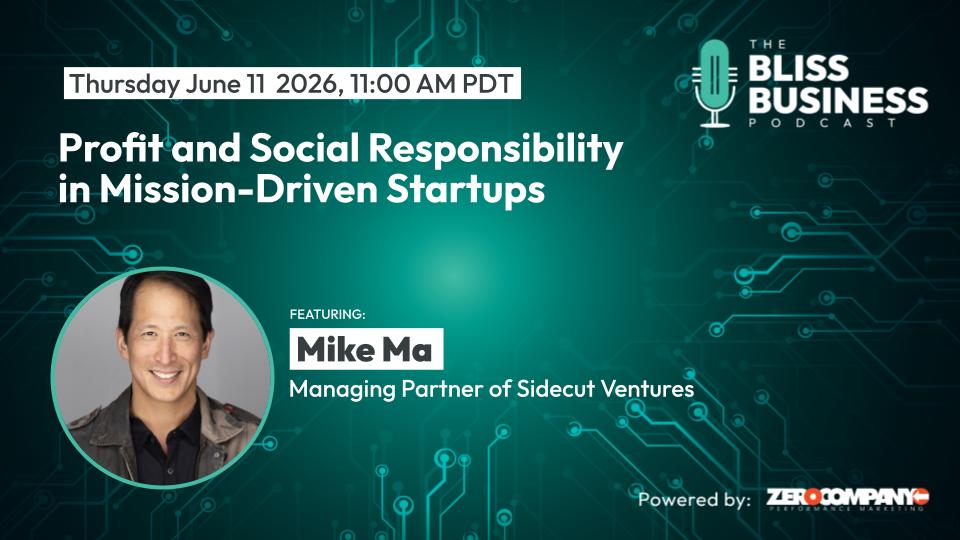
Love Is a Growth Strategy for Mission-Driven Startups

Mission-driven founders carry two pressures at once. They have to build companies that can survive commercially, and they have to stay close to the human problem that called them into the work in the first place.
That balance is hard. Growth asks for speed. Capital asks for proof. Markets ask for traction. But mission asks for something deeper: integrity.
On The Bliss Business Podcast, we sat down with Mike Ma, Managing Partner and Head Coach at Sidecut Ventures, to talk about why he treats love as a growth strategy for mission-driven founders, and what it really takes to build companies that are both commercially strong and socially meaningful. Mike invests in and coaches early-stage mission-driven founders working across economic mobility, healthcare, climate, and education. His model is built around a simple but uncommon idea: coach first, capital second.
The Best Founders Are Coachable Superheroes
Mike describes the founders he backs as “coachable superheroes.” That phrase matters because it holds two ideas together.
The superhero part is the calling. These are founders who are trying to solve problems that matter. They are not simply chasing a market opportunity. They are fighting something they believe should not exist.
The coachable part is action-oriented self-awareness. Mike is not looking for founders who perform humility in a pitch meeting. He is looking for founders who understand where they are, see the gap between the mission and the reality, and then do something with that information.
That is a different standard than charisma. It is not about having all the answers. It is about being willing to learn fast, act honestly, and adjust when reality gives you feedback.
Mission Is Proved Under Pressure
Every founder can say they are changing the world. Silicon Valley has turned that phrase into a cliché. Mike’s process is designed to see what is real underneath the language.
Sidecut does not write fast checks. Before investing, Mike and his team spend time working with founders, pushing them on go-to-market, sales, customer learning, and business reality. The point is not to create artificial stress. The point is to watch how founders behave when things get difficult.
That is when the distinction appears.
Missionaries stay close to the problem.
Mercenaries stay close to the optics.
Mission-driven founders do not just talk about the people they serve. They spend time in the field. They listen. They adjust. They answer the call with their feet, not just their mouths.
Vulnerability Builds Better Investor Relationships
One of the strongest moments in the conversation came when Mike described a founder who admitted his sales pipeline was weaker than originally believed. Instead of punishing that honesty, Mike saw it as a reason to invest.
Why? Because now the real risk was visible.
That is a better foundation for partnership than pretending everything is perfect. Early-stage companies are supposed to have risk. If the risk has not been found, the diligence is incomplete.
This is where venture capital often gets the human side wrong. Founders feel pressure to show up with everything buttoned up. Investors say they want coachable founders, but often penalize vulnerability. That creates a performance loop where everyone pretends to know more than they do.
Mike’s model breaks that loop by making the relationship more honest from the beginning.
Go First: A Different Kind of Capital
Tullio asked how Sidecut’s model compares to the traditional idea of “smart money” or “strategic money.” Mike’s answer was simple: go first.
Sidecut gives value before asking founders to take capital. They coach, work, push, and help founders see what it would be like to have them on the cap table. If the founder does not like the way they work, they should not take the money.
That flips the power dynamic in a healthy way. It turns investing into a real relationship instead of a transactional pitch process.
Mike compared early-stage investing to a long-term relationship. Investors may be on a company’s cap table for eight to ten years. If that is the case, a month of real working time before commitment is not excessive. It is responsible.
Revenue Is Not Always Traction
Mike shared a point every early-stage founder should sit with: revenue is not always traction.
Sometimes founders chase revenue that looks good externally but distracts from the deeper learning needed to build the right company. A well-known logo can make the pitch deck look better, but if it pulls the company away from the customer segment it was designed to serve, it can slow the mission down.
This is especially dangerous for mission-driven startups. Once capital enters the picture, founders can feel pressure to feed the venture machine: ARR, MRR, logo acquisition, the next raise, the next proof point.
The better question is not only “Did revenue go up?”
The better question is “Did we move closer to the problem we exist to solve?”
Impact Has to Be Built Into the Business Model
Mission-driven startups do not need to choose between impact and growth if the business model is designed correctly.
Mike looks for founders where revenue and impact are connected. The more revenue they generate, the more impact they create. That could mean more jobs created, more emissions reduced, better access to care, stronger educational outcomes, or greater economic mobility.
This is the ideal structure: impact is not a side project. It is not something added later when the company has enough money. It is built into the operating logic from day one.
The wrong answer is, “We will make money first and build the mission systems later.” By then, the culture is already formed, the incentives are already set, and the company’s real priorities are already visible.
Coaching Meets Founders Where They Are
Mike’s background as an adaptive snow sports instructor is not a side note. It shaped his philosophy of coaching.
Adaptive instruction means teaching people of all abilities how to ski and snowboard. The lesson is clear: there is no single right way to move down the mountain. You meet the person where they are, understand their constraints, and help them find a path forward.
That same principle applies to founders. The job is not to force everyone into the same playbook. The job is to understand the founder’s abilities, challenges, blind spots, and context, then help them move.
The founder brings the will.
The coach brings the knowledge.
Together, they figure it out.
Hiring for Mission Requires Seeing People in Action
An audience member asked how to make sure new hires care about the mission, not just the startup hype.
Mike’s answer was practical: do not only listen to what people say. Watch what they do.
He compared it to a chef hiring for a serious kitchen. You do not learn everything from the interview. You give someone the work and see how they approach it. Can they do the unglamorous part with care? Can they show up with energy, discipline, and purpose when the work is not exciting?
That is the test. Mission is revealed in behavior.
Love Should Be the Primary Filter
When asked what role love should play in business, Mike did not hesitate. Love should be at the center.
He was clear that this does not mean ignoring profit. It means changing the order of the questions. Most businesses treat love, impact, or mission as secondary screens after the financial logic is satisfied. Mike suggested the opposite: what if love were the primary filter, and the financials followed within that constraint?
That is not naïve. It is disciplined. It forces leaders to ask harder questions:
What is the right thing to do?
Who are we serving?
What are we unwilling to compromise?
How do we build a company that can grow without losing its reason for existing?
Love is not a substitute for strategy. It is the foundation that determines whether the strategy is worth scaling.
Key Takeaways
-
Mission-driven founders need both commercial strength and moral clarity.
-
Coachability is action-oriented self-awareness, not passive agreement.
-
Authentic mission is revealed under pressure, not in pitch language.
-
Vulnerability helps investors and founders identify real risk earlier.
-
“Go first” capital creates trust by delivering value before asking for commitment.
-
Revenue is not always traction if it pulls the company away from the problem it exists to solve.
-
Impact should be built into the business model from day one, not added later.
-
Love can be a growth strategy when it becomes the primary filter for decision-making.
Final Thoughts
Mission-driven startups are not weaker because they care. They can be stronger because they care, if that care is built into the company’s operating model from the beginning.
Mike Ma’s perspective challenges the venture world to rethink what value-add really means. Founders do not need investors who simply judge from a distance. They need partners willing to go first, tell the truth, coach with empathy, and help them build companies where profit and purpose reinforce each other.
Love is not the opposite of growth. Done right, love is the growth strategy.
Where to Go Next
Hear the full conversation with Mike Ma, including his “go first” model and the story behind Sidecut’s coach-first approach, on Profit and Social Responsibility in Mission-Driven Startups on The Bliss Business Podcast, or watch the episode. Learn more about Mike and his work with mission-driven founders on his guest profile, or visit Sidecut Ventures at sidecut.vc.
If love as a growth strategy is a lens worth building into your own company, this conversation is a practical place to start, not as a slogan, but as the operating filter behind every decision Sidecut makes with the founders it backs.
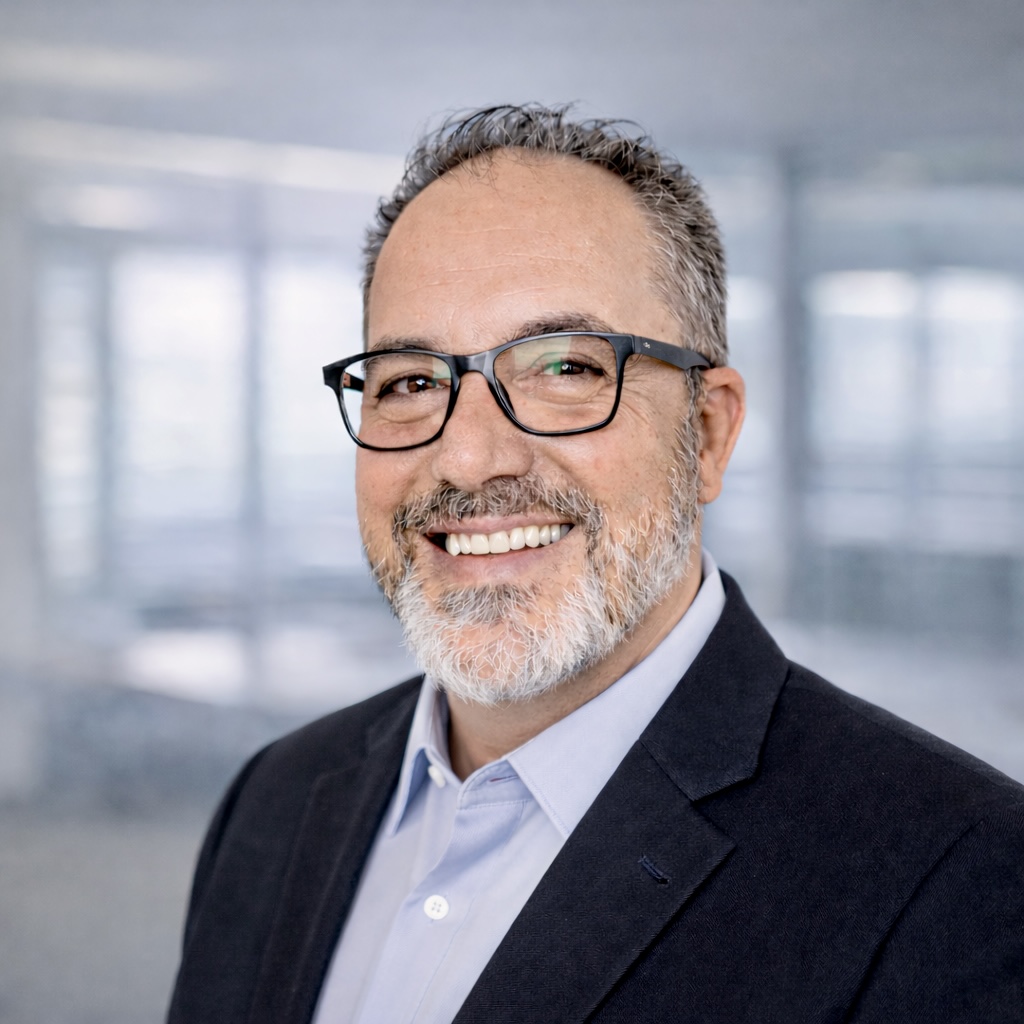
Executive Producer | Host | Blog Contributor
Tullio Siragusa is a strategic advisor, dynamic speaker, author, and EQ coach with 36 years of experience as a technology disruptor rooted in Design Thinking. Since 2018, he has been creating, producing and hosting live podcasts, interviewing over 1,000 C-suite executives across a wide range of industries. His work behind the mic reflects his larger mission: using conversation as a catalyst for human-centric innovation.
Tullio’s commitment to purpose-driven leadership and ethical transformation is reflected in his advisory roles at the University of California, Riverside’s Design Thinking Executive Program, and the University of San Francisco School of Management’s Digital Marketing Program. As a Board Advisor at AI2030.org, he helps guide the responsible advancement of AI toward ethical and sustainable outcomes. A founding member of RadicalPurpose.org, Tullio believes empathy isn’t just a trait, it’s a non-negotiable foundation for leadership.

Growth Is a Responsibility, Not a Race