In a Frictionless Retail World, Relationship Becomes the Differentiator
Retail has spent the last decade chasing convenience.
Faster checkout.
Smarter recommendations.
Cleaner automation.
More accurate pricing.
Less human friction.
On paper, that all makes sense. Consumers want speed. Businesses want efficiency. Technology keeps promising a smoother, more scalable experience. But something gets lost when every retail problem is solved only through optimization. The more frictionless the experience becomes, the more interchangeable it can start to feel.
That is why human connection matters so much right now.
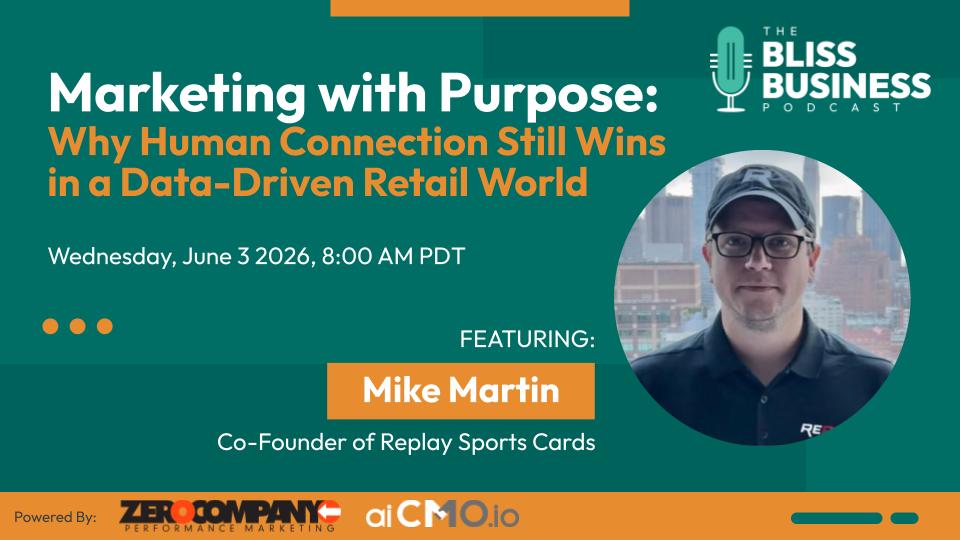
In a recent conversation with Mike Martin, Co-Founder of Replay Sports Cards, on the Marketing with Purpose series of The Bliss Business Podcast, that reality became a case study in relationship as a differentiator. Mike's business sits inside a category that could easily have gone all-in on automation, pricing tools, and purely transactional selling. Instead, Replay Sports Cards has built its growth around something more durable: community, in-person experience, and the idea that people often come back not just for the product, but for how the place makes them feel.
That insight reaches far beyond sports cards.
Because in a world where retail keeps getting more efficient, brands that still know how to create belonging may end up with the strongest advantage of all.
Efficiency Solves Transactions. Connection Builds Loyalty.
One of the biggest strategic misunderstandings in retail is assuming that convenience and loyalty are the same thing.
They are not.
Convenience can absolutely win a transaction. It can help someone complete a purchase quickly, compare prices more easily, or move through a decision with less effort. But loyalty usually asks for something more. It is built when people trust the experience, enjoy the environment, and feel a sense of emotional investment that goes beyond the item being bought.
That distinction matters because many retailers have become very good at reducing steps and very weak at increasing meaning.
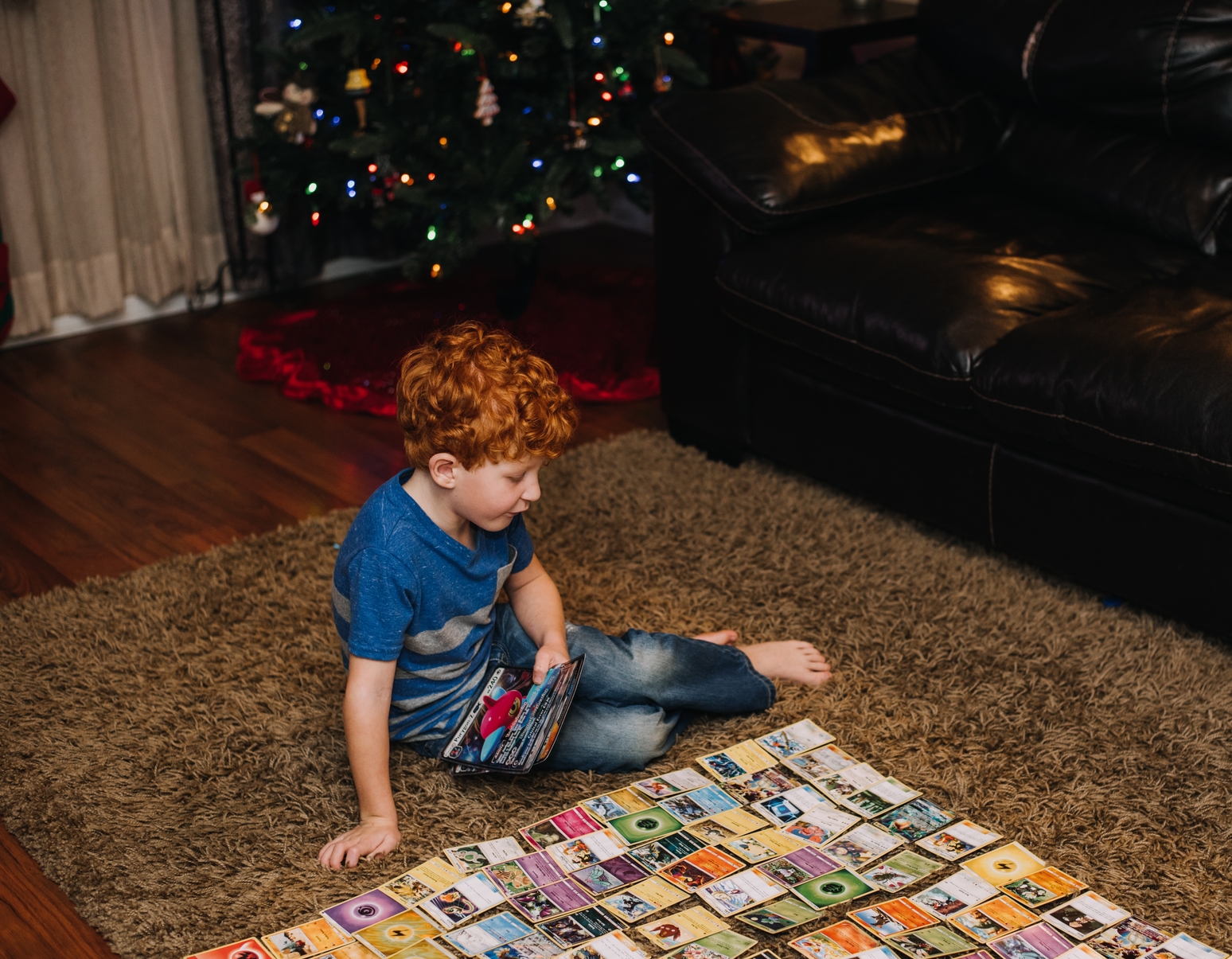
Replay Sports Cards offers a strong example of the opposite approach. Mike's perspective is rooted in the understanding that the category is not only about inventory. It is about collecting, trading, storytelling, nostalgia, identity, and community. If the business only leaned into pricing algorithms and self-service transactions, it might still sell cards. But it would lose the part of the experience that makes customers want to stay, hang out, talk, trade, and return.
This is a useful lesson for retail leaders in any category. Once a brand can be bought anywhere, the experience around the purchase starts to matter much more.
The Best Retail Brands Understand What Their Customers Are Really Buying
A sports card store may appear to be selling boxes, packs, singles, and memorabilia.
But that is not the whole purchase.
Customers are also buying anticipation.
They are buying ritual.
They are buying identity.
They are buying the social energy of the hobby.
They are buying a sense of being part of something.
This is where many retail brands undersell themselves without realizing it. They define the business too narrowly around product movement and miss the emotional ecosystem around the purchase. Once that happens, their strategy gets thinner. They optimize stock, margin, and speed, but fail to build the reasons customers feel attached.
Mike's model suggests something much stronger: if you want lasting growth, build around the human meaning of the category, not just the mechanics of the sale.
That is what turns a shop into a destination.
It is what makes people come in even when they are not sure exactly what they want to buy.
And it is what gives the business resilience when pricing pressure, market swings, or digital competition intensify.
Long-Term Retail Thinking Usually Looks Less Aggressive in the Short Term
One of the strongest takeaways from this conversation is Mike's commitment to long-term thinking.
That may sound simple, but it is surprisingly rare in retail categories that are cyclical, trend-driven, or highly influenced by hype. In those environments, the temptation is always there to maximize the moment. Raise margins while demand is hot. Push the hottest products hard. Lean into urgency. Extract as much value as possible while the market is tilted in your favor.
That can work for a while.
It can also quietly weaken the brand.
The problem is not making money in a strong market. The problem is building a business model that only works when the market is inflated. Once customers start to feel squeezed or manipulated, trust gets thinner. And when the cycle turns, those same customers remember exactly how they were treated.
Replay's approach is a different one. Rather than treating every strong product moment like a cash-out opportunity, the company is focused on preserving long-term relationships with collectors. That means protecting the experience, keeping the environment welcoming, and making choices that reinforce trust over time.
In retail, that kind of restraint is often strategic maturity.
It sacrifices some short-term extraction in favor of much stronger lifetime value.
Community Is Not a Side Effect of Retail. It Can Be the Business Model.
Too many retailers think of community as a nice extra.
A fun event here.
A loyalty perk there.
A social post with some customers.
An occasional in-store moment.
But in the strongest retail brands, community is not a layer placed on top of the business. It is part of what the customer is actually paying for.
That is clearly visible in Mike's description of trade nights, live streams, in-store interaction, and collector culture at Replay. These are not decorative activities. They are the connective tissue that turns the store into something more than a place to transact. They create rhythm. They create memory. They create reasons to stay attached even when a customer is not actively in buying mode.
This is increasingly important because products are becoming easier to source across multiple channels. If price and access are no longer enough to hold attention, then relationship becomes one of the few things left that competitors cannot easily duplicate.
Community deepens that relationship.
And deep community often becomes one of the most defensible assets a retailer can build.
When Markets Get Uncertain, the Brands Built on Habit and Belonging Hold Up Better
Mike made a particularly sharp point about downturns and market corrections.
The retailers most exposed in those moments are often the ones built around opportunistic buying and inflated momentum. If the business model depends too heavily on hot trends, speculative demand, or short-term churn, then a downturn can hit hard and fast. Inventory becomes riskier. cash flow tightens, and the customer base becomes less stable because it was never deeply rooted in the first place.
By contrast, brands that are built around recurring collectors, real community, and habitual engagement have more protection.
Not immunity, but protection.
The collector who genuinely loves the hobby behaves differently than the person who only showed up to catch a short-term wave. That collector still wants the store, still wants the experience, still wants the community around the product even if market conditions shift. That means the business has something to stand on beyond trend cycles.
This is one of the strongest arguments for human connection in retail. It is not just emotionally appealing. It makes the business less fragile.
Listening to Customers Is More Valuable Than Assuming You Know the Category
Another smart piece of Mike's approach is how seriously the business takes customer requests at the local level.
This matters because categories often look unified from a distance while behaving very differently market by market. One location may need more Pokémon. Another may need more football. Another may have a stronger appetite for a certain collectible segment that would move slowly elsewhere. A standardized inventory model might create operational ease, but if it ignores the real preferences of the local customer base, it can quietly reduce relevance.
Replay's model is stronger because it listens actively.
Customer requests are not treated like noise.
They are treated like signals.
The company responds quickly, tests demand, and then checks the data to see whether the instinct was right. That balance matters. If you only follow the request without measuring what happens, you can overreact. If you only follow the data without listening to people in real time, you can miss the moment entirely.
Retail brands that do both tend to make better merchandising decisions because they are not forced to choose between intuition and analytics. They let each one sharpen the other.
Loyalty Programs Work Best When They Feel Like an Extension of the Brand, Not an Add-On
One of the most useful details in the conversation was Mike's description of shifting from a basic rewards structure into something more creatively aligned with collectors.
That is an important distinction.
A lot of loyalty programs are technically functional and emotionally forgettable. They offer points, credits, and generic incentives, but they do not really deepen the relationship. They behave like accounting systems with a promotional wrapper.
The better question is not just whether a loyalty program rewards spending.
It is whether it rewards belonging in a way that fits the identity of the customer.
Replay's move toward collector-focused rewards is smart because it reflects the actual psychology of the audience. Collectors do not simply want abstract value. They want experiences, access, exclusivity, and interactions that feel tied to the hobby itself. That makes the loyalty system feel less like a coupon and more like part of the world the customer wants to stay in.
That difference matters.
Because when loyalty feels native to the brand, participation becomes emotional, not just economic.
Great Retail Brands Design for the Entire Customer Journey, Not Just the Purchase Moment
Another strong point in Mike's thinking is that the Replay experience does not end when a customer leaves the store.
That is an increasingly important way to think about modern retail.
The physical visit is only one part of the relationship. After the customer goes home, there is still content, live streaming, social interaction, rewards, event participation, and the ongoing sense that the brand is still present in their world. That means the business does not have to rely only on store traffic to stay relevant. It builds multiple touchpoints that reinforce one another.
This is what makes customer journey design so valuable in retail.
The strongest brands understand that a customer does not only decide whether to return based on the product they bought. They decide based on the total feeling of the relationship. Was the experience enjoyable? Did the brand stay interesting after the sale? Did it continue to offer value, entertainment, access, or connection when the customer was not actively transacting?
Retailers that think this way build much stronger repeat behavior than those that still see each purchase as an isolated event.
Culture Behind the Counter Always Becomes Part of the Brand
One of the most overlooked truths in retail is that employees do not just execute the brand. They are the brand in the customer's eyes.
That means internal culture matters far more than many operators acknowledge.
If staff feel unsupported, disengaged, or overly pressured, customers will feel it in the tone, the energy, the patience, and the quality of the interaction. If staff feel invested, heard, and proud to be part of the business, that comes through too. In retail, where the customer experience is so personal and immediate, there is very little distance between internal culture and external perception.
Mike's emphasis on listening, promoting from within, and creating a fun, values-based environment is not just a team management choice. It is a customer experience strategy. It helps ensure that the same energy the brand wants to project into the market is actually present in the people delivering it every day.
That is one reason human connection has to start internally.
A brand cannot consistently offer warmth and belonging outside if it has not built some version of that inside.
Purpose Makes the Brand More Memorable Than Product Alone Ever Could
The strongest emotional thread in this conversation is Replay Gives Back.
That initiative is not just a philanthropic side project. It reveals something deeper about how the brand sees itself. Replay is not only in the business of selling cards. It is in the business of creating access, joy, and belonging around the hobby. Once that becomes part of the company's identity, the brand becomes more meaningful to customers and more motivating for employees.
Purpose works best when it is not detached from the core business.
It works best when it grows naturally out of what the brand already stands for.
That is clearly what is happening here. The same values that make the in-store experience feel community-centered also make the giving initiative feel authentic rather than performative. Customers participate because they recognize the mission. Employees care because they can see the impact. The brand becomes more than a retailer. It becomes a steward of the culture around the product.
That kind of purpose creates memory.
And memory creates attachment in ways that discounts and promotion cycles never can.
Key Takeaways
Retail differentiation is moving away from convenience alone. As more businesses optimize for frictionless transactions, relationship and belonging become more valuable.
Customers are often buying more than the product. In hobby-driven categories especially, identity, community, ritual, and emotional attachment are part of the purchase.
Long-term trust can outperform short-term extraction. Brands that resist the urge to maximize every market spike tend to build stronger loyalty over time.
Community can function as a true growth engine. Events, interaction, and belonging create repeat behavior that competitors cannot easily replicate.
Local listening improves inventory strategy. Customer requests paired with fast testing and measurement lead to better market relevance.
Loyalty systems should fit customer psychology. The best programs feel native to the brand, not bolted on as generic incentives.
Internal culture is part of the customer experience. How employees feel behind the counter always shapes how the brand feels in front of it.
Final Thoughts
What this conversation with Mike Martin, Co-Founder of Replay Sports Cards, makes clear is that human connection still wins in a data-driven retail world not because data is unimportant, but because data by itself is not enough.
Retailers still need strong systems.
They still need better inventory intelligence.
They still need analytics, loyalty data, and customer insights.
But none of those things replace the emotional power of a place people want to return to.
In the end, the brands that last will not be the ones that only removed friction.
They will be the ones that gave customers something worth coming back for.
Where to Go Next
Listen to the full conversation: Marketing With Purpose Kit: Why Human Connection Still Wins in a Data-Driven Retail World.
Watch the video: Community Over Convenience in Retail.
Meet Mike on his guest profile.

Guest Development | Producer | Blog Contributor
Martha is a connector who brings over two decades of experience in engineering, sustainability, education, and public relations. She is part of the integrated go-to-market team at Zero Company and serves as Guest Development Lead for The Bliss Business Podcast, where she connects with purpose-driven leaders to shape meaningful conversations. Martha also produces the Marketing With Purpose Kit segments with CMO guests.
Her career includes founding nonprofits, and speaking at global forums in Malaysia, Dubai, and Paris. A passionate community builder, Martha also mentors women entrepreneurs and supports environmental initiatives across Mexico and the U.S. Her work reflects a deep commitment to impact, inclusion, and authentic leadership.

Starting Over Deserves Community