Thought Leadership That Moves Markets with Bill Sherman
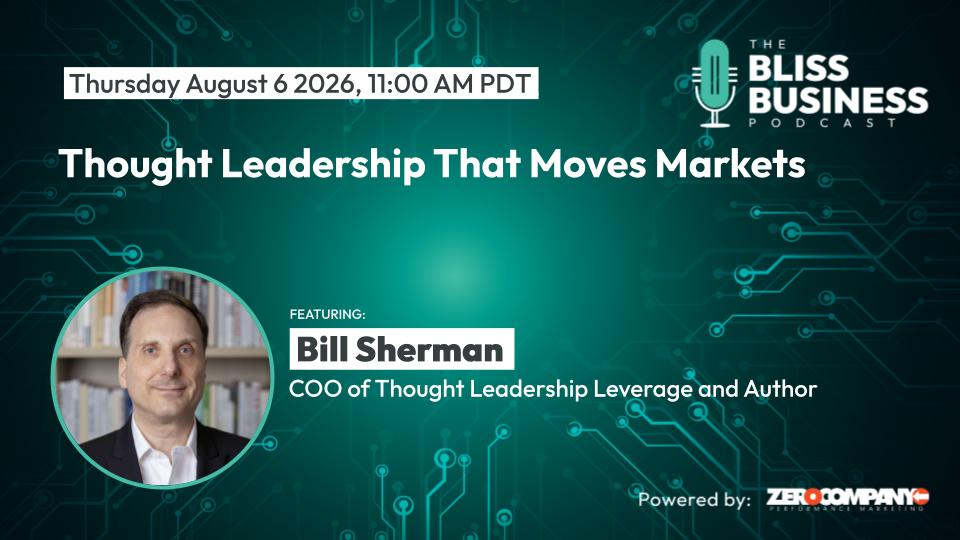
Bill Sherman, COO of Thought Leadership Leverage and lead author of The Thought Leadership Handbook, joins The Bliss Business Podcast to explain why give your ideas away: generosity earns the trust that opens doors sales cannot, and holding your best thinking close is the bigger risk.
Why give your ideas away? Because holding them close is the bigger risk, Bill Sherman argues, not the safer one. In this episode of The Bliss Business Podcast, Stephen Sakach and Mike Liwski welcome Bill Sherman, COO of Thought Leadership Leverage, co-host of the Leveraging Thought Leadership podcast, and lead author of The Thought Leadership Handbook, to make the case for giving your best ideas away first.
In this episode we explore:
• Why giving away your best ideas can grow your business
• How thought leadership opens doors traditional marketing cannot
• Why great ideas need systems to travel beyond one person
• How leaders can elevate ideas without burning themselves out
• Why AI makes authentic expertise more important, not less
• How thought leadership can create trust, revenue, and meaningful impact
Bill opens with the story of Kara Golden, founder of Hint Water, who was so committed to her fruit-infused, preservative-free idea that she was nearly willing to hand it to a Coca-Cola executive who told her it couldn't be done. "If you keep your ideas close, they don't travel," Bill says, and Kara's story did travel, told back to her by strangers who'd never met her. He distinguishes thought leadership from content marketing just as sharply: content marketing serves the funnel, while thought leadership is "taking an idea to scale to create impact for a target audience," the kind that gets growth-minded CEOs into rooms "their sales teams wouldn't have access to."
Not every idea earns that reach. Bill's framework calls for four things: provocative enough to stop a scroll, generous enough to offer real hope instead of just naming a problem, distinctive enough that it "doesn't sound like AI," and short enough to repeat, 20 words or less. From there, ideas need velocity, and Bill is candid that some of it is luck: a client's TED Talk, given only because his mentor Carol Dweck had a scheduling conflict, went viral by algorithm alone. But most velocity, he argues, comes from patience, relationships, and a track record of helping others first.
On AI, Bill draws a clear line: useful for pressure-testing a message, dangerous for originating one. "It will tell you whatever you've come up with is brilliant, necessary, and new," he warns, when the real work is holding that positioning up against what's actually been said before. He's just as direct about who gets to do this work, pushing back on the idea that thought leadership favors extroverts. Introverts, he says, often have the advantage: the ones who spent years quietly obsessing over a hard question are the ones with something worth saying once they find their lane.
It's the same instinct Zero Company brings to a brand's own story: an audience trusts an idea, or a company, for the same reason a colleague trusts a referral, because someone shared something useful before they ever asked for anything back.
Key Takeaways
• (3:25) Bill Sherman on Kara Golden of Hint Water, who nearly gave her idea to a Coca-Cola executive: “If you keep your ideas close, they don’t travel, don’t equip others to tell that story, they won’t.”
• (7:22) Bill Sherman's four elements of a core idea: provocative, generous, distinctive, and “the final characteristic, a core idea has to be 20 words or less.”
• (11:10) Bill Sherman distinguishing the two: “Thought leadership is what thought leaders do... one of the patterns that we’ve seen, many growth minded CEOs use thought leadership to open doors their sales team can’t get into.”
• (16:00) Bill Sherman on velocity: “velocity comes from two sources, you and not you... I want this idea to travel. The book is one way to get it to travel.”
• (19:28) Bill Sherman on a client's TED Talk that went viral after a scheduling conflict handed him the stage: “Is there a bit of serendipity? Yes. However, can you create opportunity for those conversations? Absolutely.”
• (21:45) Bill Sherman on how to know an idea is traveling: “are people willing to put their name, time, energy, reputation or resources supporting your idea?”
• (24:29) Bill Sherman's advice for leaders with no platform: “Be deeply relevant to the people who need you... Narrow your target audience as much as you can.”
• (26:46) Bill Sherman on AI's limits: “unless you tell it to go research... it will tell you whatever you’ve come up with is brilliant, necessary, and new.”
• (32:02) Bill Sherman naming content insecurity: “Are my ideas good enough? Are they worth someone’s time? Have they already been said?”
• (34:23) Bill Sherman on writing the book he wished existed when he stumbled into the field in the early 2000s: “The book that I wrote is the book that I wished I could have bought either second hand or first hand new back in 2005.”
• (38:22) Bill Sherman on love in business, citing Tim Sanders' Love Is the Killer App: “share your knowledge, share your network, show compassion, and that’s how you do business.”
FAQ
What is thought leadership, according to Bill Sherman?
Bill Sherman, COO of Thought Leadership Leverage, defines it as taking an idea to scale to create impact for a specific audience, distinct from content marketing because it starts from generosity rather than a funnel or lead-gen goal.
Why give your ideas away for free?
Bill Sherman argues that guarding your expertise keeps it from traveling, while sharing it generously builds the trust that opens doors traditional sales outreach cannot, citing Hint Water founder Kara Golden's story as an example of an idea that grew a business precisely because it was shared.
Can AI help build a thought leadership strategy?
Bill Sherman says AI is useful for pressure-testing language and positioning against a target audience, but shouldn't be handed the job of generating the core idea itself, since it defaults to flattering whatever you already wrote rather than sharpening it.
Learn more about Bill Sherman and Thought Leadership Leverage at ahamoments.com. Guest profile: Bill Sherman. More from the Featured Guest Series. Read the companion post, Thought Leadership That Moves Markets.
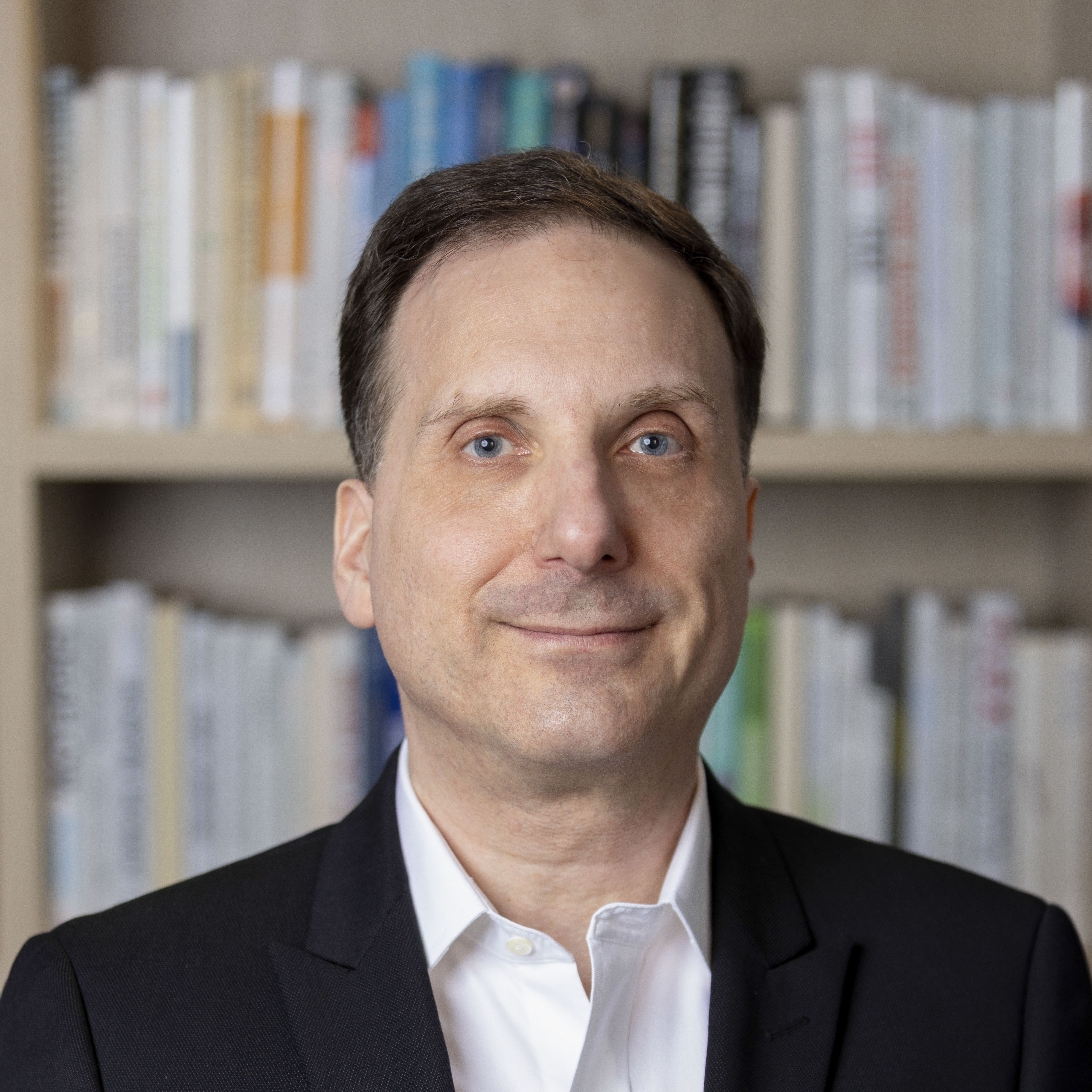
COO of Thought Leadership Leverage and Lead Author of The Thought Leadership Handbook
Bill Sherman is the COO of Thought Leadership Leverage and lead author of The Thought Leadership Handbook.
Bill's work has been based on several core ideas:
· Ideas can't speak for themselves. You can.
· Your field expertise ≠ skill in thought leadership. However, you can learn both.
· You have a duty to speak; yet, you have no right to an audience — earn it.
Bill has spent over twenty years — since 2003 — helping thought leaders codify, productize, and scale their ideas. When Keith Ferrazzi first published Never Eat Alone in 2005, he brought in Bill and his team to codify the frameworks behind the book and turn them into enterprise workshops and training programs for FerrazziGreenlight.
Bill's signature frameworks — including the Four Elements of Thought Leadership, the Impact Equation, and the Five Avatars — are developed in full at aha-moments.com/frameworks.
Since then, Bill Sherman has worked with hundreds of thought leaders: people preparing their first article or book, Thinkers50 recipients, Fortune 500 CEOs, and New York Times bestselling authors.
Today, Bill Sherman co-hosts the Leveraging Thought Leadership podcast with Peter Winick. Over 700 episodes in, the conversation keeps circling one question: what did it actually take to move an idea into the world?
Bill Sherman lives in Las Vegas, Nevada.