How Financial Clarity Helps Businesses Serve What Matters

Many small business owners think of bookkeeping as something they have to do after the real work of business is done.
They focus on customers, operations, sales, employees, vendors, growth, delivery, and the daily pressures of running the company. Then the books become something to clean up later, often after months of avoidance, stress, confusion, or shame.
But numbers are not just records of what happened. They reveal priorities. They reveal pressure points. They reveal risks, habits, opportunities, and whether the business is truly supporting the purpose it was created to serve.
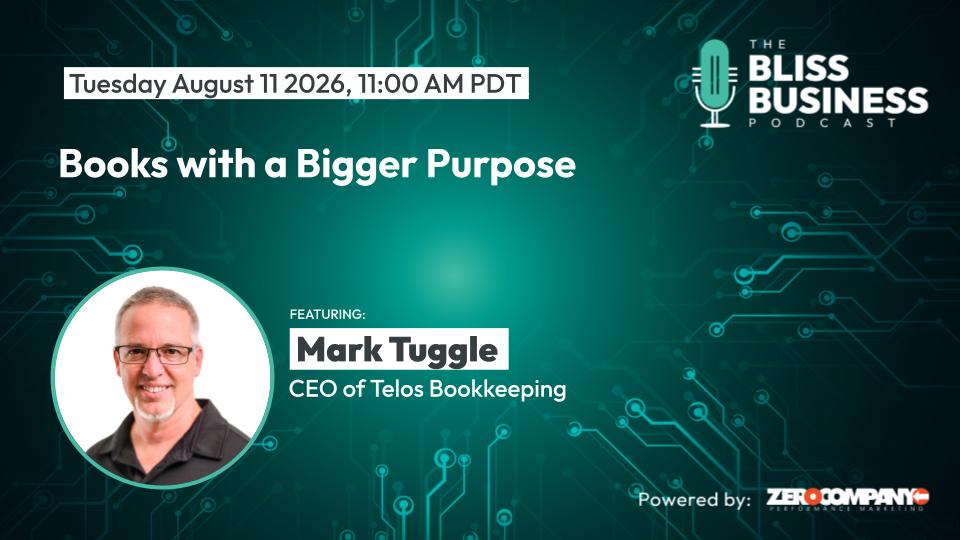
On The Bliss Business Podcast, we sat down with Dr. Mark Tuggle, CEO of Telos Bookkeeping, to explore purpose-driven bookkeeping and how business financial clarity can become a system for stewardship, better decision-making, and more intentional leadership. Telos is a purpose-driven bookkeeping firm that helps growing businesses with financial record keeping, reconciliation, payroll support, reporting, and tax preparation support. Its approach is grounded in the belief that bookkeeping should do more than document transactions. It should help business owners understand their numbers and stay aligned with their long-term purpose.
Mark’s message was clear: know your numbers, know your business. If you do not know your numbers, you do not fully know your business.
Bookkeeping Should Serve the Purpose of the Business
Most entrepreneurs do not start businesses because they love bookkeeping.
They start because they want to solve a problem, serve people, create freedom, build something meaningful, support their families, help a community, bring a product to market, or live a life with more purpose and autonomy.
That is where Mark begins.
Telos comes from the Greek word meaning ultimate purpose. For Mark, purpose-driven bookkeeping means aligning the bookkeeping system with the ultimate purpose of the business and the life of the business owner. The numbers are not the purpose. They are a means of supporting the purpose.
That shift matters.
When bookkeeping is treated only as compliance, it becomes a burden. When it is treated as stewardship, it becomes a leadership tool.
Financial Shame Is More Common Than Owners Think
Many business owners carry stress, shame, or embarrassment around their books.
They may be behind. They may not know whether the books are accurate. They may not understand what the reports mean. They may not know whether they are profitable. They may have avoided the issue for so long that opening the books feels emotionally overwhelming.
Mark’s first step is often reassurance.
He helps owners understand that this feeling is not uncommon and that the situation is recoverable. Even if the books are messy, incomplete, or nonexistent, there is a path back to clarity.
That is important because shame keeps people stuck.
A business owner who feels judged may avoid asking for help. A business owner who feels supported can begin the process of getting current, accurate, and healthy.
Financial clarity often begins with emotional safety.
The Books Are Not Static
Once the immediate fire is addressed, Mark helps business owners see that financial reports are not fixed, lifeless documents.
There is not only one way to look at the numbers.
The right financial reporting depends on what the business owner is trying to do. A company that wants to grow needs different visibility than one trying to sustain. A business preparing to sell needs different reporting than one seeking a loan or investment. A lifestyle business needs different insights than a company trying to expand service lines or hire aggressively.
That is why purpose matters.
The better the bookkeeper understands the owner’s goals, the better the financial reports can be structured to support decisions, conversations, and strategy.
The books should not only tell the past. They should help shape the future.
Purpose Changes How Owners Read the Numbers
A profit and loss statement can be more than a report.
For example, many business owners think revenue is just one line. But revenue can be broken down into meaningful streams. Recurring revenue can be separated from one-time revenue. Product lines can be compared. Service lines can be evaluated. Different customer segments can be analyzed.
That level of clarity helps owners see what is actually driving the business.
A company may discover that one revenue stream creates volume but little margin. Another may discover that a smaller service line is more profitable, more aligned with its mission, or more energizing for the team. A lifestyle business may learn that certain revenue is not worth the complexity it creates.
Purpose-driven bookkeeping helps business owners ask better questions.
What are we earning?
Where is it coming from?
What does it cost to deliver?
What is worth growing?
What no longer fits?
What does the business need to become more aligned with its purpose?
Those are not only accounting questions. They are leadership questions.
Relief Comes First, Then Possibility
When a business owner begins to understand their numbers, the first emotional response is often relief.
Relief comes from finally knowing where the money is going. Relief comes from understanding whether the business is profitable. Relief comes from seeing that the chaos can be organized and the uncertainty can be reduced.
But after relief comes something even more powerful: possibility.
Mark connected this to the idea of self-efficacy, the belief that you can actually do something. When owners begin to believe they can understand and manage their financials, their relationship with the business changes.
The books stop haunting them from the corner.
They become a source of clarity.
That mindset shift is significant. Financial confidence gives owners more than information. It gives them agency.
Your Spending Reveals Your Values
There is an old saying: if you want to know what someone values, look at their checkbook.
The same is true for a business.
Purpose-driven bookkeeping helps owners see whether their spending reflects what they say matters. If a business owner says people come first, do the numbers show that? If the company says it values community impact, is money actually being directed there? If the business claims to prioritize innovation, training, sustainability, employee well-being, or customer care, do the expenses support that claim?
Mark gave a personal example. He wants to take care of his team and pay them well. That means he has to look at personnel expenses in relationship to other spending categories, such as advertising, software, or overhead. He also admitted that he loves technology and has to watch the tendency to overspend on the latest software.
That is what values-based financial management looks like.
The numbers become a mirror.
Systems Help Money Flow Toward What Matters
A business owner may care deeply about a cause, a team, a community, or a mission. But without a system, good intentions often remain unfunded.
Mark described how bookkeeping can help business owners create systems that move money intentionally. Some companies use multiple accounts or frameworks like Profit First, where revenue is allocated into different buckets for taxes, profit, operating expenses, owner pay, or specific causes.
The same principle applies to purpose.
If a business says it gives a percentage to a local charity, supports a community initiative, invests in employee development, or reserves funds for mission-aligned work, the bookkeeping system can help make that visible and repeatable.
That is how purpose becomes operational.
It is not enough to care. The business needs a mechanism that ensures care is funded.
Expense Discipline Can Create Freedom
Many business owners assume the only way to create more room for purpose-driven work is to grow revenue.
Growth matters, but Mark emphasized that expense discipline can often free up dollars more quickly than owners expect. A small reduction in expenses can have a powerful impact on the bottom line because cost savings often flow directly into available dollars.
That does not mean cutting recklessly. It means examining what is out of proportion.
Where is the business leaking money?
Which subscriptions are unused?
Which tools no longer serve the business?
Which costs have grown without intentional review?
Which expenses do not reflect the current purpose or strategy?
When owners understand expenses clearly, they can redirect resources toward what matters most.
Bookkeeping becomes a way to create capacity.
Freeing the Owner To Do What Only They Can Do
Many small business owners wear too many hats.
They handle operations, sales, customer service, hiring, delivery, administration, billing, taxes, payroll, and everything else that needs attention. Over time, the work that drains them begins to steal energy from the work only they can do.
Mark sees part of his role as helping owners get life-draining financial tasks off their plate.
He shared the example of a client who hated filing a zero-dollar quarterly sales tax return. The task was simple, but emotionally draining. Mark offered to take it over, and the client felt immediate relief.
That may sound small, but small burdens add up.
When the right partner handles the right work, the owner can return to the purpose of the business. For doctors, dentists, veterinarians, surgeons, and other professionals, that often means practicing their craft rather than being consumed by administrative friction.
The Right Tech Stack Matters
Bookkeeping is not only about categorizing transactions. It often touches the systems that make the business easier or harder to run.
Mark’s background and interest in technology allow him to help clients think through tools such as payroll systems, point-of-sale platforms, reporting tools, and other operational software. Sometimes the difference between a draining process and a smooth one is the system itself.
If payroll takes 45 minutes in one platform and 10 minutes in another, that matters.
If reporting can be automated, that matters.
If financial workflows can reduce repetitive tasks, that matters.
The goal is not technology for technology’s sake. The goal is to give the business owner more clarity, more time, and more energy for the work that matters.
Conscious Business Needs Conscious Bookkeeping
Conscious capitalism asks leaders to build businesses that serve more than profit alone.
But to do that, the owner needs clarity.
When the books are behind, cash flow is chaotic, taxes are unpaid, or financial reports cannot be trusted, the owner’s mind is consumed by survival. They may care deeply about purpose, community, employees, family, and impact, but they do not have the emotional bandwidth to act on those commitments.
Accurate books create mental space.
When owners know the business is profitable, margins are healthy, expenses are controlled, and financial decisions are grounded in reality, they have more freedom to ask bigger questions.
How can we serve our community?
How can we take better care of our people?
How can we support our family legacy?
How can we sponsor something meaningful?
How can we give time, talent, and treasure in a more intentional way?
That is the connection between financial clarity and conscious leadership.
AI Can Help, But Human Judgment Still Matters
AI is already changing bookkeeping, and Mark uses it in his own firm for internal operations, workflow, communication, and administrative support.
But he is cautious about the idea of fully AI-driven bookkeeping with no human review.
Bookkeeping contains repetitive, rule-based tasks that AI may support. Data entry, categorization, and workflow assistance may continue to improve. But financial accuracy is too important to leave entirely to automation without oversight.
AI can make things up. It can misclassify. It can miss context. And when the books are wrong, the consequences can be serious.
For Mark, experienced human review still matters because clients need to know their information is accurate, current, and trustworthy.
Technology should support confidence, not undermine it.
Profit Is Not Selfish When It Serves a Purpose
One of the most important parts of the conversation was the discussion about profit.
Some conscious business owners struggle with the idea of profitability because they do not want to appear selfish or overly focused on money. But profit is not inherently selfish. The question is what the profit is for.
Mark believes business owners should pursue profit with the mindset of using those dollars for good. That may include taking care of employees, serving customers well, supporting family, leaving a legacy, giving to the community, or contributing to causes that matter.
Profit creates possibility.
It gives the business strength. It gives the owner options. It creates the ability to serve beyond survival.
When profit is aligned with purpose, it becomes a tool for stewardship.
Love in Business Means Service
When asked what role love should play in business, Mark connected love to leadership, learning, and service.
He did not start Telos because he loves bookkeeping more than anything else. He started it because he loves serving small businesses, and small businesses need help in the accounting arena. He loves building a team, creating a healthy workplace, supporting flexibility, and giving people opportunities to spend time with their families.
That is love expressed through business design.
Love is not only how a company treats customers. It is also how it structures work, supports employees, serves clients, builds culture, and creates space for people to live healthier lives.
For Mark, the business is a context where he gets to do what he loves: lead, serve, and learn.
Trust Opens the Door to Deeper Conversations
Financial relationships require trust.
A business owner who gives someone access to the company’s financial life is taking a meaningful risk. The right partner can help and heal. The wrong partner can create serious harm.
Over time, when trust is built, the relationship can go beyond bookkeeping.
Mark shared that some long-term clients become friends. In those relationships, he may have permission to speak more directly about what the business owner says they value, what they are working toward, and whether their decisions are aligned with that deeper purpose.
That is where bookkeeping can become advisory work.
The numbers become the starting point, but the conversation becomes about life, purpose, stewardship, faith, legacy, family, and what the business is really for.
Key Takeaways
-
Bookkeeping should support the purpose of the business, not only record past transactions.
-
Many business owners feel stress or shame around their books, but messy financials are recoverable.
-
Financial reports can be customized to reflect the owner’s goals, whether growth, sustainability, expansion, investment, or sale.
-
Understanding the numbers creates relief first, then possibility.
-
Spending patterns reveal whether a business is truly aligned with its stated values.
-
Purpose requires systems, including financial systems that direct money toward what matters.
-
Expense discipline can create capacity for purpose-driven action.
-
Delegating bookkeeping can free business owners to do the work only they can do.
-
AI can support bookkeeping workflows, but human judgment and review remain essential.
-
Profit is not selfish when it is stewarded toward people, purpose, family, community, and legacy.
Final Thoughts
Mark Tuggle’s perspective is a reminder that bookkeeping is not merely an administrative task.
It is a system of stewardship.
The numbers tell a story about what the business values, where it is strong, where it is leaking energy, where it is misaligned, and what becomes possible next. When business owners avoid the books, they avoid one of the clearest mirrors available to them. But when they engage the numbers with purpose, they gain more than financial clarity.
They gain confidence.
They gain capacity.
They gain direction.
They gain freedom to lead with intention.
Conscious businesses need conscious bookkeeping.
Because if purpose matters, the numbers should help support it.
Where to Go Next
Watch the full conversation on video, or meet Mark Tuggle on his guest profile. When the books reflect a business's real purpose, financial clarity becomes a tool for the life the owner is actually trying to build.
Check out our full conversation with Mark Tuggle of Telos Bookkeeping on The Bliss Business Podcast.

Executive Producer | Host | Blog Contributor
Tullio Siragusa is a strategic advisor, dynamic speaker, author, and EQ coach with 36 years of experience as a technology disruptor rooted in Design Thinking. Since 2018, he has been creating, producing and hosting live podcasts, interviewing over 1,000 C-suite executives across a wide range of industries. His work behind the mic reflects his larger mission: using conversation as a catalyst for human-centric innovation.
Tullio’s commitment to purpose-driven leadership and ethical transformation is reflected in his advisory roles at the University of California, Riverside’s Design Thinking Executive Program, and the University of San Francisco School of Management’s Digital Marketing Program. As a Board Advisor at AI2030.org, he helps guide the responsible advancement of AI toward ethical and sustainable outcomes. A founding member of RadicalPurpose.org, Tullio believes empathy isn’t just a trait, it’s a non-negotiable foundation for leadership.

Starting Over Deserves Community