Gratitude Is a System, Not a Sentiment

Home is one of the most personal spaces in our lives.
It is where families build routines, where people recover from difficult days, and where they feel safe enough to be themselves. Inviting a service professional into that space requires trust, especially when the work involves private rooms, personal belongings, and the everyday details of family life.
That makes home cleaning much more than a transaction. Gratitude is a system, not a sentiment, and it changes how the work feels for the people receiving it and the people doing it.
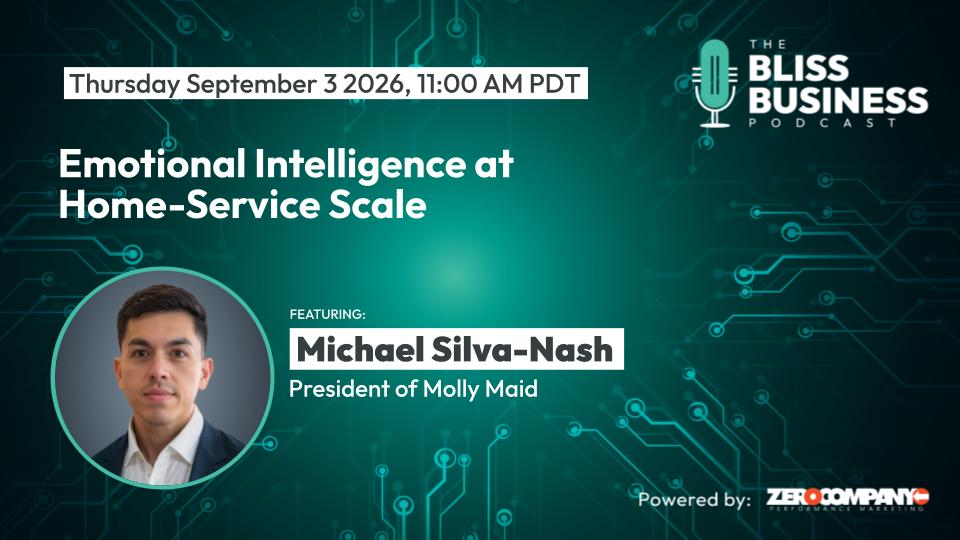
On The Bliss Business Podcast, we sat down with Michael Silva-Nash, President of Molly Maid, to explore emotional intelligence, gratitude, and the systems that help a home-service brand scale without losing its humanity. Michael brings more than two decades of experience within the Molly Maid network, including 12 years as a multi-location franchise owner before moving into corporate leadership. His journey also began as a child in the business, giving him a deeply personal understanding of the people and families behind the work.
His perspective is a reminder that gratitude is not simply a feeling leaders hope employees will have. It can be intentionally cultivated through values, rituals, recognition, community service, and the way people are supported every day.
The Work Is More Meaningful When People Understand Why
Michael often reminds teams that entering someone’s home is a privilege.
A home is a sanctuary, and the people who hire a cleaning service may be doing so for reasons that are not immediately visible. Some are busy professionals. Some are raising families. Others may be dealing with illness, physical limitations, or circumstances that make it difficult to maintain their homes without help.
That context changes the meaning of the work.
Cleaning a bottom shelf may sound like an ordinary task, but if the customer is undergoing medical treatment and cannot do it themselves, the task becomes an act of care. The service professional is not simply completing a checklist. They are helping someone maintain comfort, dignity, and a healthier living environment.
When employees understand the why behind the work, they can bring a different level of intention to it. The job becomes less about finishing a transaction and more about understanding the difference their work makes in another person’s life.
Lived Experience Creates a Different Kind of Leadership
Michael’s connection to Molly Maid began long before he became its president.
His family immigrated from Yucatán, Mexico, to rural Arkansas when he was eight years old. His mother began working as a house cleaner, later became an office manager, and eventually had the opportunity to purchase the franchise business. Michael grew up helping with the work, including cleaning homes when the team was short-staffed, answering phones, handling supplies, and eventually taking on ownership and strategic responsibilities.
He remembers difficult winter days when the team still made the effort to reach a customer undergoing cancer treatment because that cleaning mattered to her. In those moments, the work was not primarily about revenue. It was about fulfilling a need for someone who was counting on them.
That experience shaped the way Michael now leads franchisees.
When headquarters asks an owner to take on another initiative, he understands that the owner may be dealing with a ringing phone, a customer concern, a staffing shortage, a broken vehicle, and laundry that needs to be switched between loads. Those realities matter when deciding how to introduce change or coach someone through a challenge.
Empathy becomes more effective when leaders understand the actual conditions in which people work.
Trust Begins Before the Cleaning Starts
Customers need more than confidence that a home will be cleaned properly. They need to trust the people entering their private space.
That trust begins with the first interaction. It is shaped by how the phone is answered, whether questions are heard, how expectations are explained, and whether the customer feels respected rather than judged.
Michael discussed how some customers experience embarrassment or shame about the condition of their homes. They may even clean before the cleaning team arrives because they do not want to be perceived negatively.
For service professionals, this creates an important opportunity to practice empathy.
The customer with the most difficult home may be the person who needs the service most. Instead of seeing the situation as an inconvenience, Michael encourages teams to recognize the trust being placed in them and the meaningful role they are being allowed to play.
A grateful mindset changes the question from “Why is this house so difficult?” to “How can we make this person’s life better?”
Gratitude Changes the Way Employees See Customers
It is easy to appreciate a customer whose home is already tidy and whose service is simple to complete.
The deeper test of gratitude comes when the work is demanding.
Michael teaches teams to recognize that customers with greater needs are often the ones who rely most heavily on the service. They are creating employment, supporting the business, and allowing the team to make a meaningful difference in their lives.
That perspective does not eliminate the physical demands of cleaning. It changes the emotional relationship employees have with the work.
When service professionals understand that their effort supports a customer’s quality of life while also providing stability for their own families, the relationship becomes reciprocal. The customer is receiving care, and the employee is receiving an opportunity to contribute, earn a living, and feel proud of their work.
Gratitude creates a bridge between those two experiences.
Community Service Makes Values Tangible
One of the ways Molly Maid builds gratitude into its culture is through the Ms. Molly Foundation, the brand’s charitable arm focused on supporting people affected by domestic violence.
Michael described how franchisees are encouraged to participate in fundraising and donation drives that benefit local shelters. During Domestic Violence Awareness Month, his own teams would collect contributions from customers and make it a shared goal to fill a conference table with donated items.
The effort was not only about collecting supplies. Employees participated in the process, helped bring donations to the shelter, and had opportunities to see how their work could support people facing difficult circumstances.
That kind of experience makes service tangible.
Employees are not simply told that the company cares about the community. They are invited to participate in that care. Customers are also given an opportunity to contribute, creating a stronger connection between the business and the community it serves.
Michael’s advice extends beyond companies with established foundations. Find a cause that matters to the team, involve employees and customers, and create meaningful ways to participate.
Purpose becomes more powerful when people can act on it together.
Gratitude Can Become a Daily Ritual
Michael shared a simple practice his team used to make gratitude part of the workday.
Employees would write down something they were grateful for and place it in a box. The team would draw an entry, read it anonymously, and award a small prize. The activity made participation fun, but over time, the team realized that hearing only one person’s gratitude was limiting.
So they opened the exercise to the group.
People began sharing what they were grateful for in their personal lives. A child’s achievement, a family milestone, a moment of support, or something that had gone well during a difficult week could become part of the conversation.
The result was more than a morale activity.
Employees began seeing one another as whole people instead of simply coworkers performing tasks. They learned about the challenges and joys in each other’s lives. That understanding created stronger connection and a shared sense of responsibility for one another.
Culture is built through repeated experiences like these. A value becomes real when people are given regular opportunities to practice it.
Recognition Should Be Meaningful to the Person Receiving It
Michael also emphasized that recognition is most effective when leaders understand what motivates the individual.
Some employees appreciate public recognition. Others may value a small reward, a practical benefit, or a personal acknowledgment. The important thing is to avoid assuming that every person experiences appreciation in the same way.
He shared the example of training certificates that were meaningful to employees who had never received formal educational recognition. One employee told him that the certificate was the only diploma they had ever displayed on their wall.
The team also took group photographs and gave copies to employees. For some, those photographs became part of their family photo collection at home.
These gestures were not expensive, but they carried emotional weight.
They communicated that the employees’ work mattered, that their achievements were worth celebrating, and that they belonged to something meaningful.
Recognition is not measured only by its monetary value. It is measured by whether the person receiving it feels genuinely seen.
High Tech Should Create More High Touch
Michael is enthusiastic about the potential of AI and operational technology, but he also offered an important caution: not everything that can be automated should be automated.
The purpose of technology should not be to remove the human relationship from the business.
Molly Maid has worked with tools for lead management, communication, operational support, and franchise business coaching. These systems can reduce repetitive work and make processes more efficient. But Michael believes the time saved should be reinvested into the activities that require human attention.
A franchisee may now have more time to call a customer, support an employee, or build relationships in the community. A business coach may have more time to understand an owner’s challenges, ask better questions, and provide more meaningful support.
The goal is not simply to become more efficient.
The goal is to use efficiency to become more human.
Sometimes People Need Someone To Go Fishing With Them
Michael used a memorable analogy to describe effective coaching.
Leaders often say they should teach someone how to fish. That is important because people need skills, knowledge, and independence. But sometimes a franchisee does not need another explanation of how to fish. They need someone to go fishing with them.
They need a coach who will sit beside them, work through the problem, demonstrate the process, or help them navigate a difficult situation.
That is the difference between merely providing information and providing support.
A franchise business coach can have all the right dashboards, systems, and training materials, but the relationship still matters. Owners need to know that the person supporting them understands their situation and is willing to help them move forward.
Technology can make that support more scalable, but it cannot replace the value of someone genuinely being there.
Scale Should Strengthen the Local Business
Being part of Neighborly gives Molly Maid access to resources that would be difficult for many individual brands to develop on their own.
Michael described the benefits of shared technology, consumer insights, vendor relationships, operational capabilities, and leadership support. These resources can help the brand move faster and provide franchisees with stronger tools.
But the value of the platform is ultimately measured by what happens locally.
A franchise owner needs support that helps their business succeed. Employees need an environment where they feel valued. Customers need an experience that feels personal and trustworthy. The national brand provides the infrastructure, but the local team creates the relationship.
Scale works best when it gives local businesses more capacity to care.
Listening Is the Foundation of Trust
When asked what other industries could learn from home services, Michael returned to listening.
In a home-service business, customers often share more than the immediate service request. They may reveal details about their family, schedule, health, frustrations, or what is happening in their lives. Those details can help the team understand what the customer truly needs.
But listening requires patience.
Michael challenged the tendency to listen only long enough to formulate a response. He encouraged leaders to slow down, hear the person fully, and make sure they understand the information being shared before deciding what to say or do next.
That applies to customers, employees, franchisees, and leadership teams.
Trust grows when people feel that their perspective has been received rather than simply answered.
Small Details Create Lasting Emotional Memories
One of Michael’s most memorable customer stories involved a voicemail from a woman who was walking through her home after a cleaning.
She was nearly in tears because she was so happy with the service. In the background, her child noticed that the team had thoughtfully arranged the child’s stuffed animals.
That small detail mattered.
The team could have cleaned the room and placed the toys aside. Instead, someone took the time to leave the space in a way that felt welcoming to the child.
The customer remembered it. The child noticed it. And Michael still remembered the voicemail years later.
That is the power of emotional intelligence in service.
The technical task creates the foundation, but thoughtful details create the memory.
Love Is Expressed Through Everyday Choices
When asked what role love should play in business, Michael said it should be at the forefront.
For him, love is closely connected to gratitude, compassion, and the small choices people make throughout the day. He shared a habit of replacing “I know” with “You’re right” when someone tells him something he already understands.
The difference is subtle but meaningful.
“I know” can close a conversation. “You’re right” acknowledges the other person and gives them room to continue sharing. It communicates respect rather than impatience.
That is an example of love as a behavior.
It is not about being sentimental or avoiding difficult conversations. It is about choosing language and actions that preserve dignity, create connection, and help people feel valued.
Values Must Be Recognized in Action
For leaders who want to build more emotional intelligence into their organizations, Michael offered a practical starting point: define the values you want people to live by.
The list does not have to be long. It may contain one value or several. What matters is that the values are clear, understood, and connected to everyday behavior.
But writing them down is only the beginning.
Leaders have to recognize people when they see those values in action. If gratitude matters, celebrate an employee who demonstrates gratitude. If compassion matters, acknowledge someone who goes out of their way to support a customer or teammate. If service matters, tell the story of someone who made a difference.
Over time, people begin to understand what the organization truly values because they see those behaviors being noticed and reinforced.
That is how values move from a poster to a culture.
Key Takeaways
-
Home-service businesses operate in deeply personal spaces, making trust and emotional intelligence essential to the customer experience.
-
Explaining the why behind the work helps employees understand the meaningful impact they have on customers’ lives.
-
Lived operational experience helps franchise leaders support owners with greater empathy and credibility.
-
Gratitude changes how teams respond to difficult work and customers with greater needs.
-
Community service, daily rituals, and recognition can turn gratitude into a repeatable cultural practice.
-
Recognition is most powerful when it reflects what matters to the individual receiving it.
-
AI and automation should reduce repetitive work so people have more time for relationships, coaching, and customer care.
-
Effective coaching sometimes requires working alongside someone, not simply telling them what to do.
-
Listening with the intent to understand is a foundation of trust across customers, employees, and franchisees.
-
Values become scalable when leaders consistently recognize and reinforce them through everyday behavior.
Final Thoughts
Michael Silva-Nash’s story is a reminder that gratitude can be designed into the way a business operates.
It can shape how employees understand their work, how leaders recognize people, how teams support their communities, and how franchise systems use technology to create more time for human connection.
The result is not simply a more pleasant workplace.
It is a business where people understand why their work matters, where customers feel respected in their most personal spaces, and where employees can see the value they create for others and for their own families.
The strongest systems do not remove humanity from work. They make care, gratitude, and trust more consistent.
And sometimes the most meaningful expression of a brand is not a campaign, a slogan, or a grand gesture.
It is a child noticing that someone cared enough to arrange their teddy bears.
Where to Go Next
Hear the full conversation on the episode page, watch it on the video page, or visit Michael Silva-Nash’s guest profile. Gratitude is a system, not a sentiment, and systems only work when someone builds them on purpose. Explore more Featured Guest Series conversations.

Executive Producer | Host | Blog Contributor
Tullio Siragusa is a strategic advisor, dynamic speaker, author, and EQ coach with 36 years of experience as a technology disruptor rooted in Design Thinking. Since 2018, he has been creating, producing and hosting live podcasts, interviewing over 1,000 C-suite executives across a wide range of industries. His work behind the mic reflects his larger mission: using conversation as a catalyst for human-centric innovation.
Tullio’s commitment to purpose-driven leadership and ethical transformation is reflected in his advisory roles at the University of California, Riverside’s Design Thinking Executive Program, and the University of San Francisco School of Management’s Digital Marketing Program. As a Board Advisor at AI2030.org, he helps guide the responsible advancement of AI toward ethical and sustainable outcomes. A founding member of RadicalPurpose.org, Tullio believes empathy isn’t just a trait, it’s a non-negotiable foundation for leadership.

Systems Should Fit People, Not the Other Way Around