Empathy Is an Operating System

Beauty and wellness businesses are built on trust. A guest may walk into a salon expecting a manicure, pedicure, haircut, facial, or another service, but what they are really entering is a relationship. They want to feel comfortable in the space, confident in the products being used, safe with the person providing the service, and cared for throughout the experience.
That makes empathy much more than a desirable personality trait in this industry. It becomes part of how the business operates.
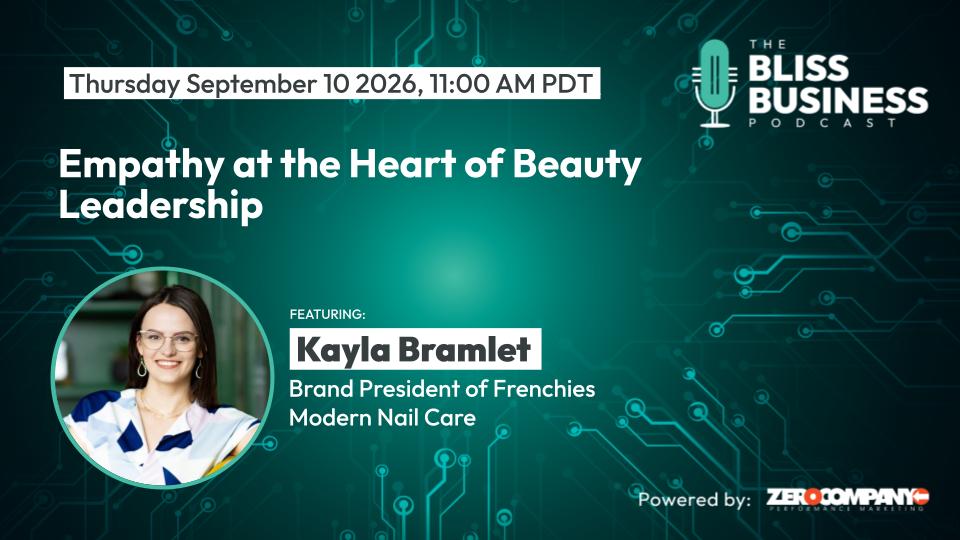
On The Bliss Business Podcast, we sat down with Kayla Bramlet, Brand President of Frenchies Modern Nail Care, to explore the role empathy and mindfulness play in leadership, guest experience, team culture, franchise operations, and clean beauty. Kayla brings an unusually broad perspective to the conversation because she has experienced the business from almost every seat. She began working in salons as a teenager, earned her nail technician license while still in high school, became a studio manager, invested in the brand as a multi-unit franchisee, served as Director of Training and Operations, and now leads the brand while continuing to own two Frenchies locations in Minnesota.
Her journey demonstrates something that is easy to forget as businesses grow: empathy becomes more powerful when leaders stay connected to the reality of the work.
Leadership Changes When You Have Sat in the Other Person’s Chair
Kayla describes beauty and wellness as a people business, but the idea extends far beyond salons. Every business eventually depends on people serving, supporting, designing for, selling to, or interacting with other people. What makes beauty especially personal is that those interactions happen in very intimate settings.
A nail technician may spend hours each day in physically demanding positions while also maintaining conversations, reading social cues, responding to customer needs, and delivering precise technical work. A studio manager is balancing schedules, team dynamics, customer issues, performance goals, and operations. A franchise owner has financial risk, staffing responsibilities, and community expectations. Each person is experiencing the business differently.
Because Kayla has occupied so many of those roles herself, she can view leadership decisions through more than one lens. During our conversation, she shared a simple example. She had been dealing with significant neck pain and immediately thought about what it would feel like to perform pedicures all day with that kind of discomfort. Suddenly, a technician calling in because of neck pain looks very different when you have physically experienced something similar.
That is empathy at work. It does not mean lowering expectations or eliminating accountability. It means understanding the human reality behind the situation before deciding how to respond.
Leaders lose that perspective when they become too removed from the people doing the work. They begin to see labor percentages instead of bodies getting tired, scheduling problems instead of human circumstances, and performance gaps instead of situations that may need context. Staying connected to the frontline helps prevent leadership from becoming abstract.
Caring for Employees Shapes How They Care for Customers
Frenchies places significant emphasis on creating a cleaner, safer approach to nail care. That includes rigorous sanitation standards, ventilation, sterilization protocols, and a commitment to using products that reduce exposure to harsh chemicals.
At first glance, that might sound primarily like a customer experience strategy. Kayla sees it differently. The team member delivering the service may be exposed to those products every working day, sometimes for years. A guest may spend an hour in the environment. The technician may spend an entire career there.
That distinction matters.
Kayla shared the story of a technician who had worked in the nail industry for many years and developed asthma severe enough that she used a filtration mask while working. The cleaner environment and product choices at Frenchies made it possible for her to continue doing work she loved. Kayla also described experiences earlier in her own career where harsh products caused skin and facial irritation, things people sometimes joked about as if they were simply part of working in the industry.
They do not have to be.
A company that says it cares about people has to examine the conditions under which those people work. That means asking whether the cheapest product is actually the best choice, whether employees are being unnecessarily exposed to risk, and whether operating practices support long-term well-being.
This is where empathy becomes operational. The company does not merely tell employees that they matter. It makes decisions that demonstrate it.
When employees experience that kind of care, they are better positioned to extend it to guests. The customer experience is often downstream from the employee experience. If leadership builds an environment where people feel protected, valued, and trusted, that feeling has a chance to travel through the organization.
Great Customer Experiences Cannot Depend on Personality Alone
One of the challenges in any service business is that exceptional customer care often begins with naturally caring people. A talented employee remembers names, notices preferences, reads emotions, and instinctively creates connection.
But personality does not scale.
If a brand wants guests to experience consistent care across locations, it has to define what good care looks like and build systems that help people deliver it.
Frenchies does this through what Kayla describes as the guest experience journey. Rather than simply telling employees to provide great service, the company breaks down the experience from before the guest enters the salon through what happens after the appointment ends. Team members learn what a standard experience looks like and what an exceptional experience can look like.
That distinction is important because leaders frequently assume people know what “excellent service” means.
They may not.
A technician entering the beauty industry may never have stayed at a luxury hotel, eaten in a high-end restaurant, or experienced the type of hospitality leaders have in mind when they talk about elevated service. Telling that person to “create a Ritz-Carlton experience” is meaningless if they have never experienced one.
The responsibility of the organization is to translate an aspiration into behaviors people can understand and repeat.
How should someone be welcomed? How should concerns be handled? What should happen when a guest is unhappy? What happens before the service begins? What details communicate that someone is paying attention? What does care sound like?
Once those things are defined, they can be trained. Once they can be trained, they can become consistent. That is how empathy moves from an individual trait into an organizational capability.
Systems Should Make People Feel More Supported, Not More Controlled
Franchising offers an especially useful lens for understanding this because systems are fundamental to the model. Franchise owners are buying into an operating structure precisely because much of the trial and error has already been done.
But good systems should not make people feel trapped. They should make people feel supported.
Kayla explained that franchise owners come to the business with different professional backgrounds and levels of beauty industry experience. When a difficult situation occurs, an established system gives the owner somewhere to turn. Instead of feeling isolated and wondering how the brand would expect them to handle an issue, they can refer to the operating framework and find guidance.
That reduces uncertainty.
In many organizations, leaders think of systems primarily as tools for consistency and control. They are also tools for confidence. A well-designed system tells someone, “You are not alone. We have thought about this before. Here is a path forward.”
That has an emotional impact as well as an operational one.
Mindfulness Begins With Knowing How People Are Showing Up
One of Kayla’s simplest leadership practices may also be one of the most transferable.
Her teams use brief morning huddles, and part of that process includes asking everyone for two words that describe how they are showing up that day.
Someone might say they are excited and energized. Someone else might say tired and overwhelmed. Another person may be distracted, hopeful, anxious, or motivated.
The exercise takes very little time, but it gives the leader valuable information.
If someone is already emotionally drained, that may not be the day to repeatedly push them about a stretch sales goal. They still have responsibilities, but the leader can respond with more awareness. If someone else arrives highly motivated and energized, that may be the right moment to challenge them, recognize progress, and build on that momentum.
The standard does not disappear.
The leadership approach becomes more intelligent.
Mindfulness in the workplace is sometimes discussed as meditation, quiet rooms, or breathing exercises. Those practices can be useful, but mindful leadership begins much more simply. It means paying attention to the human beings around you.
Consistency Matters More Than Grand Gestures
Kayla is also a strong believer in regular check-ins with employees.
The value of those conversations comes from their consistency and sincerity. A leader should not schedule a check-in and repeatedly cancel it. They should not turn every conversation into a disguised performance review. They should arrive prepared to make the discussion about the person.
How are you doing? What are you experiencing? What can we do better? What do you want to learn? What could make your work experience better?
Those questions communicate that the relationship matters beyond the employee’s immediate output.
This is especially important in an industry that experiences significant turnover. Compensation will always matter, but people also make decisions about where to work based on whether they feel respected, whether they are growing, whether leadership follows through, and whether anyone seems genuinely interested in their experience.
Culture is rarely transformed by one elaborate employee event.
It is shaped by what happens repeatedly.
A five-minute huddle every morning can matter more than a once-a-year culture initiative if the huddle consistently communicates attention, clarity, and care.
Training Has to Include the Human Side of the Job
Beauty industry training understandably focuses heavily on technical skills. Professionals need to know how to perform services safely and effectively.
But technical ability is only one part of the customer experience.
A technician also needs to know how to speak with an unhappy guest, create comfort, listen without becoming defensive, handle awkward situations, recover from mistakes, and make people feel genuinely welcome.
Those skills are often called soft skills, but there is nothing soft about their impact on the business.
A technically perfect service delivered in a cold, dismissive, or chaotic environment can still create a poor experience. An employee who knows how to create trust and connection adds value that cannot be measured only by the technical outcome.
This is one reason Kayla rejects the idea that companies should hesitate to invest in employee training because those employees may eventually leave.
The better question is what happens if you do not develop people and they stay.
Development benefits the employee, the guest, and the organization. If someone eventually grows into a larger opportunity elsewhere, that does not erase the value created along the way. Sometimes helping someone become capable enough to graduate into their next chapter should be viewed as evidence of good leadership rather than failed retention.
Leadership Should Create More Leaders
Kayla’s own career is a powerful example.
She began in the industry as a teenager and has since moved through technical work, studio management, ownership, training, operations, and brand leadership.
That progression has shaped what she wants others in the beauty industry to understand about their careers.
Working as a nail technician does not have to be a final destination unless someone wants it to be. There may be paths into management, education, operations, entrepreneurship, franchise ownership, or corporate leadership.
People are more engaged when they can see possibility.
One of the responsibilities of leaders is helping people imagine versions of themselves they may not yet be able to see.
Operator-Led Leadership Keeps Strategy Grounded in Reality
Kayla still owns and operates locations while serving as brand president, and that creates a valuable filter for decisions.
Whenever a new initiative is considered, she can ask whether it will actually work inside the four walls of the salon.
That question sounds obvious, but organizations frequently implement ideas because they look compelling in presentations without fully understanding what they create for frontline employees.
Kayla referenced examples from other industries where technologies were deployed only to create frustration because the realities of the operation had not been fully considered.
Operator-led leadership helps close that gap.
It allows someone at the strategic level to ask not only whether an idea is innovative, but whether it is usable. Not only whether it improves a metric at headquarters, but whether it creates unnecessary complexity for the team delivering the service.
Empathy, in this case, becomes a design filter.
Love in Business Is a Form of Respect
When we asked Kayla what role love should play in business, her answer came back to helping people.
Love can show up in listening carefully to a franchisee even when you disagree. It can show up in choosing safer products for technicians. It can show up in building an environment where guests feel comfortable. It can show up in creating career opportunities and supporting someone’s next stage of growth.
She described it simply as loving helping others.
That is a useful way to think about leadership because it removes the sentimentality that sometimes makes people uncomfortable with the word love in business.
Love becomes behavior.
It becomes the willingness to care about what happens to another person because of the decisions you make.
Key Takeaways
-
Empathy becomes scalable when it is built into systems, training, safety standards, and daily leadership practices, not left to individual personality.
-
Leaders stay more grounded when they remain close enough to frontline work to understand what employees are actually experiencing.
-
Employee well-being directly influences customer experience, especially in service businesses where trust and care are central.
-
Safer products, cleaner environments, and thoughtful operational choices are practical expressions of respect for both employees and guests.
-
Clear guest experience systems help teams understand what excellent service looks like and make care more consistent across locations.
-
Simple practices like daily pulse checks and regular one-on-one check-ins help leaders respond more mindfully to what their teams need.
-
Training should go beyond technical skills and include communication, emotional intelligence, conflict recovery, and relationship-building.
-
Developing employees should be viewed as part of leadership, even if some eventually grow into opportunities beyond the organization.
-
Operator-led leadership helps ensure that strategies and new initiatives actually work in the real-world environment where employees and customers experience them.
-
Love in business can be expressed through listening, safety, respect, growth opportunities, and a genuine desire to help others succeed.
Final Thoughts
Kayla Bramlet’s story is a reminder that empathy becomes most powerful when it stops being something leaders merely believe in and starts becoming something the business knows how to do.
It is reflected in the products a company chooses, the safety standards it establishes, the way it trains employees, the questions leaders ask, and the systems people rely on when situations become difficult.
It is present when a leader notices that someone is struggling instead of assuming they are disengaged. It is present when a franchise owner has clear guidance rather than feeling alone. It is present when a guest enters an environment and senses that someone has thought carefully about their safety, comfort, and experience.
That is what it means to make empathy operational.
The goal is not simply to build a business filled with caring people.
The goal is to build a business where care has been designed into the way the organization works.
Check out our full conversation with Kayla Bramlet of Frenchies Modern Nail Care on The Bliss Business Podcast.

Executive Producer | Host | Blog Contributor
Tullio Siragusa is a strategic advisor, dynamic speaker, author, and EQ coach with 36 years of experience as a technology disruptor rooted in Design Thinking. Since 2018, he has been creating, producing and hosting live podcasts, interviewing over 1,000 C-suite executives across a wide range of industries. His work behind the mic reflects his larger mission: using conversation as a catalyst for human-centric innovation.
Tullio’s commitment to purpose-driven leadership and ethical transformation is reflected in his advisory roles at the University of California, Riverside’s Design Thinking Executive Program, and the University of San Francisco School of Management’s Digital Marketing Program. As a Board Advisor at AI2030.org, he helps guide the responsible advancement of AI toward ethical and sustainable outcomes. A founding member of RadicalPurpose.org, Tullio believes empathy isn’t just a trait, it’s a non-negotiable foundation for leadership.
Growth Is a Responsibility, Not a Race