Compassion Scales When Care Becomes a System
Some businesses begin with a market opportunity. Others begin with a moment that changes how someone sees the world.
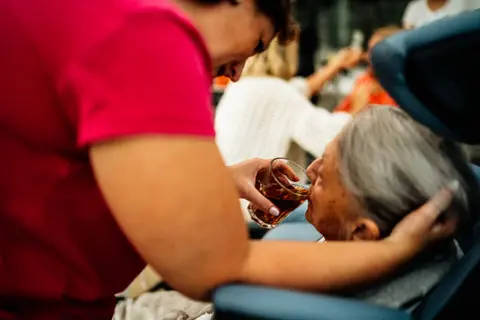
In home care, those moments are deeply personal. A family member experiences a stroke. A parent who once lived independently suddenly needs help getting dressed or preparing a meal. A caregiver becomes the calm presence in a household that feels overwhelmed. These experiences rarely appear on a financial statement, yet they are often the moments that define whether a care organization is truly delivering value.
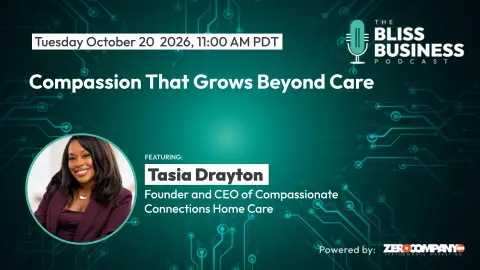
On The Bliss Business Podcast, we sat down with Tasia Drayton, Founder and CEO of Compassionate Connection Home Care, to explore what it means to build and scale a business around compassion. Tasia began her career as a certified nursing assistant after spending summers alongside her grandmother during rehabilitation following a series of strokes. At just 24 years old, with a newborn and $250, she started the company that would eventually grow into a larger home care organization and, more recently, a franchise platform.
Her journey reveals an important truth about purpose-driven growth: compassion does not have to disappear as a company gets bigger. But preserving it requires far more than good intentions. It requires systems, leadership, accountability, hiring discipline, communication, and a constant connection to the people the business exists to serve.
Care Begins With Seeing the Person Behind the Behavior
One of Tasia’s earliest lessons came from observing the contrast between two care environments.
When her grandmother was in rehabilitation, the team remembered Tasia and her family. They created an atmosphere where the family felt known, cared for, and supported. Later, as a CNA, Tasia experienced a very different culture where patients could quickly be labeled “difficult” when they called too often, needed more attention, or expressed frustration.
The difference shaped the way she thinks about care.
A patient who appears difficult may have been independent only weeks earlier. Now they need someone to help them bathe, get dressed, or move safely around their home. The behavior may not be about the caregiver at all. It may be grief, fear, frustration, embarrassment, or the shock of losing independence.
The same applies to family members.
A son or daughter who seems demanding may be balancing children, work, finances, and the sudden responsibility of caring for an aging parent. Their rigidity may be anxiety. Their impatience may be exhaustion.
Empathy changes the interpretation.
Instead of asking, “Why is this person so difficult?” a compassionate caregiver asks, “What might this person be experiencing that I cannot immediately see?”
That shift can transform the entire interaction.
Completing the Task Is Not the Same as Providing Care
Home care includes practical responsibilities. Someone needs help bathing. A meal needs to be prepared. Medication reminders need to happen. Transportation may be required.
But completing those tasks does not automatically create a good care experience.
The difference is often in how the task is performed.
Was the client treated with dignity? Did someone listen? Did the caregiver appear rushed? Did the family feel informed? Did the person receiving care feel as though they were a human being or simply the next appointment on a schedule?
This is especially important in home care because caregivers are entering someone’s most personal environment.
They are not serving a customer across a counter. They are walking into bedrooms, kitchens, family routines, and moments of vulnerability.
That creates an emotional responsibility beyond technical competence.
The goal is not simply to complete the work.
It is to protect dignity while doing it.
Growth Requires Compassion and Firmness
As Tasia moved from caregiver to employer, she discovered that compassionate leadership does not mean always being agreeable.
That can be a difficult transition for purpose-driven founders.
When the mission is centered on helping people, it is easy to believe that good leadership means being endlessly understanding. But leadership also requires setting expectations, having difficult conversations, protecting standards, and holding people accountable.
Tasia described it as being compassionate and firm.
Those qualities belong together.
If a caregiver repeatedly fails to show up on time, empathy for the employee does not erase the reality that a vulnerable client may be waiting to get out of bed. If a manager is not performing effectively, avoiding the conversation may eventually affect families, caregivers, and the rest of the team.
Kindness without accountability can become neglect in another form.
Strong compassionate leadership asks how to address the issue respectfully while still protecting the people who depend on the organization.
The Right Caregiver Match Is Part of the Service
One of the most human aspects of Compassionate Connection’s model is its emphasis on matching caregivers and clients based on more than availability.
Tasia wants to know who the client is.
What did they used to do? What music do they enjoy? Are they introverted or highly social? What kind of personality puts them at ease? What kind of routine feels natural to them?
Those details matter because inviting a caregiver into your home can feel uncomfortable, particularly for someone who has never needed help before.
Tasia shared the story of a new client who was anxious about having someone in her home. When Tasia introduced her to the caregiver selected for her, the woman’s expression changed. There was immediate relief and a sense that the match might work.
That moment captures why personalization matters.
Caregiving is relational.
A highly skilled caregiver who is completely incompatible with the client’s personality may create a worse experience than someone whose technical skills are strong but whose warmth and personality make the client feel comfortable and respected.
Matching becomes part of quality.
Hiring for Humanity Matters as Much as Hiring for Skill
Technical competence is obviously important in home care.
But Tasia emphasized two other qualities that are essential: reliability and being personable.
Reliability is non-negotiable because clients often structure their entire day around the caregiver’s arrival. Someone may literally be waiting for help getting out of bed.
Being personable matters because caregiving is fundamentally about human connection.
A person can know how to operate equipment, assist with activities of daily living, and perform every required task correctly while still creating an experience that feels cold.
That is why Tasia looks beyond the resume.
Does the person genuinely enjoy caregiving? Are they kind? Are they dependable? Do they want to be part of a care organization, or are they simply looking for the next short-term job?
Those questions become even more important as the company grows.
When leaders cannot personally monitor every interaction, the people they choose become the culture.
Communication Is Often the Difference Between Trust and Frustration
Tasia has seen that some of the most damaging customer complaints are not caused by catastrophic mistakes.
They come from communication breakdowns.
Nobody called.
The family did not know who was coming.
A schedule changed and no one explained it.
Someone expected an update and never received one.
These may seem like small failures compared with the complexity of healthcare, but to a family depending on someone to care for a loved one, communication creates security.
This is why Compassionate Connection uses internal and external surveys, team meetings, individual check-ins, and regular reporting to monitor the client and caregiver experience.
The goal is not perfection.
Mistakes will happen.
The important question is whether the organization notices, takes accountability, communicates honestly, and improves the process afterward.
Trust is often preserved not because nothing went wrong, but because the company responded responsibly when it did.
Compassion Has to Be Measured as the Company Grows
A founder can personally create a compassionate experience when the business is small.
Scaling that experience is much more difficult.
Tasia understands this because she has lived through the transition from being the first caregiver in the company to managing teams, departments, payroll, and now franchise growth.
The larger the organization becomes, the easier it is for the founder to become separated from the actual care experience.
That is why systems matter.
Surveys help identify what clients are experiencing. Internal feedback helps leadership understand what caregivers are experiencing. Weekly reports provide visibility into problems before they become crises. Meetings help departments avoid operating as isolated islands.
None of these systems replaces care.
They protect it.
Without them, compassion can remain dependent on individual personalities. With them, leadership has a better chance of recognizing when the experience is drifting away from the original mission.
Caregivers Need to Feel Cared For Too
A compassionate care model cannot focus only on clients.
Caregivers perform emotionally demanding work.
They spend their days supporting people who may be grieving independence, experiencing pain, dealing with cognitive changes, or navigating difficult family circumstances. They also often work independently in clients’ homes, which can make the job feel isolating.
Tasia believes recognition matters.
Compassionate Connection celebrates caregivers monthly, provides gifts and recognition, maintains an internal company community, and hosts larger events where team members are recognized for their contributions.
The intention is to remind caregivers that they belong to something larger than the individual shift they are working.
That matters because the way a company treats caregivers eventually influences how those caregivers show up for clients.
An organization cannot continuously drain the people providing care and expect them to remain emotionally available to everyone else.
Care has to flow in both directions.
Financial Discipline Protects the Mission
One of the most important lessons in Tasia’s journey came through financial difficulty.
Earlier in the company’s growth, the business relied heavily on Medicaid clients. Those relationships aligned with the mission, but the economics included very thin margins, and payment delays created serious cash-flow pressure.
Tasia learned that caring deeply about the mission does not remove the responsibility to understand the business model.
Payroll still has to be met.
Caregivers still need hours.
The company still needs enough cash to operate.
The lesson was not to care less.
It was to build a financially healthier organization capable of continuing to care.
That meant paying closer attention to payer mix, billing discipline, cash flow, and the balance between available caregivers and incoming clients.
Purpose-driven organizations sometimes treat financial discipline as though it conflicts with the mission.
In reality, financial health protects the mission.
A care organization that cannot remain solvent cannot help anyone.
Quality Has to Win Over Quantity
Growth creates another temptation: saying yes to business simply because revenue is available.
Tasia has learned to resist that.
If the organization does not have the right caregiver available for a case, taking the client anyway may create a short-term financial benefit but a long-term reputational problem.
That is why she emphasizes quality over quantity.
There are times when the right decision is to pause.
The company may need to strengthen technology, improve systems, support the existing team, or make sure current clients are receiving the experience they were promised before pursuing another wave of expansion.
This is particularly important in care businesses.
Growth that outpaces the organization’s ability to provide reliable care is not healthy growth.
It is simply more exposure to failure.
Franchising Can Scale Both Care and Opportunity
Tasia considered expanding the Compassionate Connection model long before she fully understood franchising.
Early in the company’s life, she encouraged her sister, who was also a CNA, to consider opening a similar operation in another market while Tasia helped with marketing and systems. Only later did she realize that the idea she had been describing was essentially franchising.
Today, that model gives her an opportunity to scale two things at once.
The first is access to compassionate home care.
The second is entrepreneurship.
Tasia remembers the nights she spent figuring everything out alone. She had no established playbook and often wished she had someone who could tell her what to expect.
Franchising allows her to give future owners some of the support she did not have.
That creates another form of compassion.
The company is not only serving seniors and families.
It can also create opportunities for entrepreneurs who want to serve their own communities without having to start entirely from scratch.
Franchise Growth Requires Cultural Selection
Not everyone who can afford to open a franchise should become a franchisee.
Tasia approaches franchise selection with the same seriousness she brings to caregiver hiring.
There may be qualified candidates who still are not aligned with the mission.
That matters because franchise owners will eventually hire caregivers, interact with families, manage crises, and make decisions that affect vulnerable people.
The financial opportunity cannot be the only motivation.
Future franchisees need to understand that the clients are not “cases,” the hours are not simply units of revenue, and the caregivers are not just labor.
These are people.
A family may be trusting the organization with the person they love most.
That requires responsibility.
Scaling compassion begins with choosing leaders who believe that too.
Delegation Requires Letting Other People Grow
One of the hardest transitions for many founders is learning to stop doing everything themselves.
Tasia experienced that too.
Delegation requires trusting others, giving them meaningful responsibility, and sometimes allowing them to make mistakes.
If leaders constantly rescue people before they struggle, those people never develop the judgment required to lead independently.
There has to be room to learn through experience.
That does not mean allowing errors that put clients at risk.
It means creating enough space for emerging leaders to solve problems, own decisions, receive feedback, and become stronger.
Empowerment is not simply assigning work.
It is allowing someone else to become capable of carrying the responsibility.
That is how a founder eventually creates an organization that can grow beyond them.
Purpose Gives Entrepreneurs a Reason to Keep Going
Building a company from $250 while raising a young child was not easy.
Neither was navigating cash-flow pressure, hiring challenges, operational complexity, or the transition into franchising.
Tasia believes having a mission gave her something to return to during those difficult periods.
Purpose does not remove hardship.
It creates context for it.
When business becomes difficult, a founder who is connected only to revenue may begin asking whether the struggle is worth it. A founder connected to a deeper mission can remember why the work mattered in the first place.
That is especially important in care businesses where the work can be emotionally and operationally demanding.
The mission becomes fuel.
Love Has to Survive the Layers of Growth
When we asked Tasia what role love should play in business, her answer came naturally from the work she has built.
Love should influence how people are treated, how conversations happen, and how decisions are made.
But she also identified one of the greatest risks of growth.
Founders can become removed from the people they originally served.
As companies add managers, departments, locations, and financial complexity, leadership can spend more time looking at reports than interacting with the people represented by those reports.
That is where organizations can become transactional.
The founder may still care deeply, but if the leadership team does not carry that care into daily decisions, the customer will never experience the founder’s intention.
This is why culture cannot exist only at the top.
It has to travel through every layer.
Love becomes scalable when leaders intentionally build it into hiring, training, communication, measurement, recognition, decision-making, and accountability.
Key Takeaways
-
Compassion begins by understanding what may be happening behind someone’s behavior rather than labeling them as difficult.
-
Completing caregiving tasks is not the same as providing a caring experience. Dignity, patience, and emotional connection matter.
-
Compassionate leadership still requires firmness, boundaries, expectations, and difficult conversations.
-
Caregiver-client matching should consider personality, lifestyle, preferences, and compatibility in addition to technical needs.
-
Reliability and human warmth can be just as important as technical skill when hiring caregivers.
-
Communication failures can damage trust even when the clinical or caregiving work itself is sound.
-
Culture must be monitored through feedback, surveys, reporting, and regular conversations as organizations become more complex.
-
Caregivers need recognition, connection, and support because emotionally demanding work requires care in both directions.
-
Financial discipline does not undermine the mission. It creates the stability required for the mission to continue.
-
Healthy growth sometimes requires saying no to business when the organization cannot provide the quality of care the client deserves.
-
Franchising can expand access to compassionate care while also creating supported entrepreneurship opportunities.
-
Franchisees should be selected for alignment with the mission, not simply their financial qualifications.
-
Delegation means allowing emerging leaders enough ownership to learn, solve problems, and become stronger.
-
Purpose gives entrepreneurs a reason to continue through the difficult periods that inevitably accompany growth.
-
Love remains scalable only when it is embedded into the systems and leadership layers of the organization.
Final Thoughts
Tasia Drayton’s journey illustrates what happens when compassion evolves from an individual instinct into an organizational responsibility.
She began by seeing what care could look like when her grandmother was treated by people who genuinely remembered and valued her family. She later saw what happened when care became transactional and patients were reduced to call lights, tasks, and labels.
Those experiences gave her a standard.
The challenge now is carrying that standard into a much larger organization.
That requires compassion, but it also requires operational discipline. It requires healthy finances, strong hiring, communication systems, recognition, leadership development, clear expectations, and the courage to slow down when growth begins to threaten quality.
The bigger a care company becomes, the easier it is to measure hours, revenue, staffing, utilization, and margins.
Those numbers matter.
But every number still represents a person.
A client waiting for someone to arrive.
A family hoping they can finally take a breath.
A caregiver carrying responsibility into someone else’s home.
A new franchise owner hoping to build something meaningful in their community.
The organizations that remember the human beings behind those numbers will ultimately build something more valuable than a successful care company.
They will build a system capable of carrying compassion further than one person ever could alone.
Check out our full conversation with Tasia Drayton of Compassionate Connection Home Care on The Bliss Business Podcast.

Executive Producer | Host | Blog Contributor
Tullio Siragusa is a strategic advisor, dynamic speaker, author, and EQ coach with 36 years of experience as a technology disruptor rooted in Design Thinking. Since 2018, he has been creating, producing and hosting live podcasts, interviewing over 1,000 C-suite executives across a wide range of industries. His work behind the mic reflects his larger mission: using conversation as a catalyst for human-centric innovation.
Tullio’s commitment to purpose-driven leadership and ethical transformation is reflected in his advisory roles at the University of California, Riverside’s Design Thinking Executive Program, and the University of San Francisco School of Management’s Digital Marketing Program. As a Board Advisor at AI2030.org, he helps guide the responsible advancement of AI toward ethical and sustainable outcomes. A founding member of RadicalPurpose.org, Tullio believes empathy isn’t just a trait, it’s a non-negotiable foundation for leadership.

Systems Should Fit People, Not the Other Way Around