Beauty in Scale: Empowering Franchise Leaders Through Care, Culture, and Mentorship

Behind every successful franchise system are people: franchise owners taking entrepreneurial risks, teams delivering the brand experience, mentors developing new leaders, and executives creating the conditions for everyone to thrive.
That human dimension becomes even more important in beauty and wellness. Customers return not only for a service, but for confidence, self-expression, care, and connection.
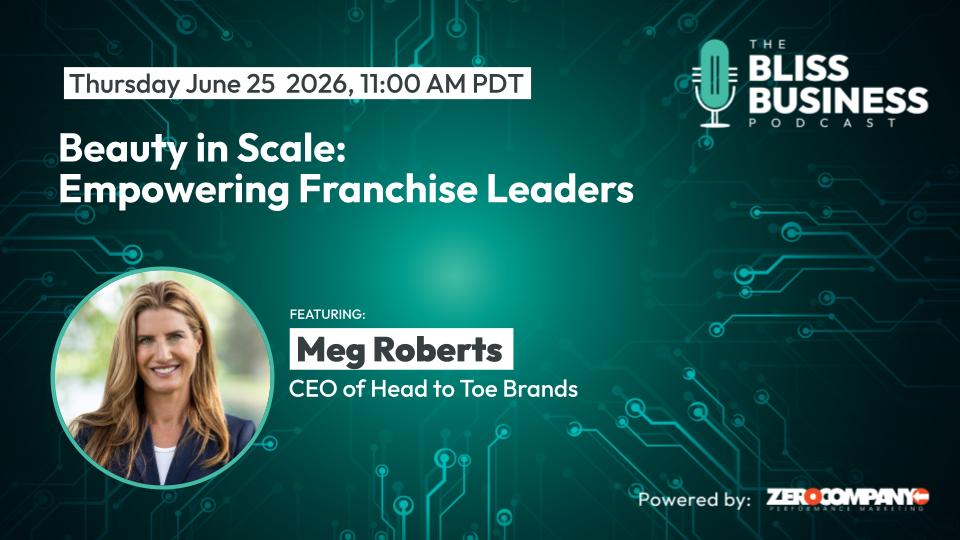
On The Bliss Business Podcast, we sat down with Meg Roberts, CEO of Head to Toe Brands, to talk about franchise relationships over fees and a beauty and wellness franchise platform that includes The Lash Lounge, Frenchies Modern Nail Care, Bishops Cuts/Color, and Delta Crown Extensions. Meg previously served as CEO and President of The Lash Lounge, helping grow the system from 14 to more than 140 open locations. Earlier in her career, she became the youngest president to lead Molly Maid, supporting more than 250 franchisees.
Her perspective is rooted in scale, but also in service, mentorship, and the responsibility leaders carry when people choose to follow them.
Scaling Requires a New Kind of Leadership
When a franchise brand moves from emerging to established, the challenge changes. At 14 locations, leaders may still be close enough to manage communication and support in a more personal way. At 50, 100, or 140 locations, the system must evolve.
Meg explained that the bigger the system gets, the more responsibility leaders have to understand the multiplier effect. Every franchise owner is different. Some learn best hands-on. Others prefer digital training. Some need more direct support. Others thrive with autonomy.
That means scaling is not simply about adding locations. It is about expanding the way the organization communicates, trains, listens, and supports a growing audience.
If the system grows but the leadership model does not, relationships begin to strain.
Beauty and Wellness Cannot Feel Impersonal
Beauty and wellness services are deeply personal. A customer may come in for lashes, nails, hair, extensions, or another service, but what they often seek is more than a transaction. They want confidence. They want trust. They want to feel seen.
Meg made an important distinction: different beauty customers want different experiences. Some customers want value and consistency. Others want a premium experience with a highly trained professional. Head to Toe Brands focuses on customers who value the experience, the excellence of the provider, and the care behind the service.
That is why standardization alone is not enough. A franchise system needs consistency, but the experience still has to feel human.
The goal is not to remove individuality. The goal is to create a system where excellence can be repeated without making the customer feel processed.
Not Every Great Business Should Be a Franchise
One of Meg’s strongest points was that not every successful business should become a franchise.
Before scaling, founders have to ask a serious question: why do we want to grow? Is the goal simply to hit a certain store count and exit? Or is the founder truly convinced that the service is needed, desired, and economically viable across many markets?
That distinction matters.
A concept may work beautifully in New York, Los Angeles, or Dallas, but that does not mean it will work in 500 locations across the country. Franchising requires a model that can support the franchise owner’s success in different markets, not just the founder’s success in one.
The responsibility of a franchisor is to understand the economics deeply enough to know whether the model can travel.
Founders and Franchise Executives Need Each Other
Meg also described the important partnership between founders and experienced franchise executives.
Founders often bring the vision, creativity, innovation, and original culture of the brand. Franchise executives bring systems, planning, operational discipline, and the ability to anticipate what the business will need several years ahead.
The best results happen when those strengths work together.
The founder protects the soul of the brand.
The franchise executive protects the scalability of the brand.
If growth moves too fast without discipline, the brand can become damaged. If structure becomes too rigid without founder energy, the brand can lose what made it special.
Culture Is the Distinguishing Factor
Meg was clear that culture matters in every business, but especially in beauty and wellness.
The professionals delivering these services are highly trained. Nail technicians, lash artists, stylists, estheticians, massage therapists, and beauty professionals bring craft, skill, and care to work that is often underappreciated.
Meg emphasized the importance of honoring that craft.
Head to Toe Brands recognizes top performers through awards such as nail technician, lash artist, and stylist of the year, including featuring them in a Hall of Fame online. That kind of recognition sends a message: we see your work, we respect your skill, and we know the brand experience depends on you.
Culture is not built only through values. It is built through what leaders recognize, celebrate, and protect.
Small Rituals Build Real Connection
One practical system Meg brought into her leadership came from the EOS model and the Level 10 meeting structure. Every meeting starts with good news.
That may sound simple, but it matters. Asking each person to share something positive from their life creates familiarity, connection, and a more human tone. In remote and distributed environments, those small moments become even more important.
It helps people remember that they are not only working with roles. They are working with human beings.
In a franchise system, where communication can easily become operational and transactional, small rituals like this can help protect the relationship layer that keeps people connected.
What Breaks First When a Franchise Grows Too Fast?
When asked what usually breaks first in a fast-growing franchise system, Meg’s answer was immediate: the relationship.
Training can break. Real estate and construction can break. Operations can break. But the first and most dangerous fracture is often the relationship between franchisor and franchisee.
In emerging systems, even a few disappointed franchisees can create significant strain. When trust breaks, listening stops. The franchisor begins playing defense. Franchisees stop feeling heard. The relationship becomes reactive instead of collaborative.
That is why emerging franchisors cannot live on franchise fees alone. They have to be prepared to support the people who invested in them.
Multi-Brand Platforms Need Shared Strength, Not Sameness
Head to Toe Brands includes several distinct beauty and wellness concepts. Meg explained that the goal of a platform is not to force every brand into the same box.
The opportunity is to identify shared strengths where scale helps, while protecting what makes each brand unique.
Marketing, operations, systems, leadership, and resources can often benefit from shared infrastructure. But brand leaders still need space to say, “This works for the platform, but our brand needs a slight adjustment.”
The CEO’s role is not to flatten the brands. It is to listen across them, identify common themes, and preserve meaningful differences.
Servant Leadership Is Essential in Franchising
Meg described franchise leadership as a privilege.
When someone writes a major check, invests family resources, and chooses to follow a brand, that commitment deserves deep respect. Franchisees are not just investors. They are people putting their identity, ambition, family time, and future into the business.
Meg’s view is direct: the franchisee is the customer.
That means responsiveness matters. Availability matters. Listening matters. If stores are open evenings and weekends, the franchisor’s mindset cannot be limited to a 9-to-5 posture.
Servant leadership is not a slogan in franchising. It is the operating posture required to honor the trust franchisees place in the system.
Mentorship Shapes Better Leaders
Meg credits much of her success to mentors who invested in her growth. She spoke specifically about learning patience, humility, and leadership presence from people who were willing to tell her the truth, even when it was hard to hear.
That is what great mentorship provides beyond formal education. It helps leaders soften hard edges without giving up strength. It helps them hear feedback, grow self-awareness, and understand the human consequences of leadership.
Meg also co-founded a Thirty Under Thirty mentor program for emerging franchise leaders. The intent was to help newer franchisors connect with experienced, reputable people in the industry, so they could choose better relationships, avoid costly mistakes, and develop with the right guidance.
In franchising, who you learn from matters.
Love Means Strength and Empathy
When asked what role love should play in business, Meg connected love to care, respect, authenticity, and honesty.
Love in leadership does not mean being soft or avoiding difficult decisions. It means treating people with sincerity and thoughtfulness, whether you are growing someone’s career, giving hard feedback, navigating change, or even separating from someone.
Meg described love as strength and empathy together.
That is a powerful leadership definition. Strength without empathy becomes cold. Empathy without strength can lack direction. Together, they create leadership people can trust.
Trust During Change Requires Communication
Meg has led through acquisitions, growth, and private equity environments. Her view is that trust during change depends on thoughtful communication.
Not everything can or should be shared at once, but leaders need to anticipate what people may be wondering. If the leader has been away for two weeks, people may start filling in the blanks. If change is happening and no one explains it, stories form.
The more leaders communicate what is true, the more people can focus on the work in front of them.
Uncertainty is natural. Silence makes it worse.
Key Takeaways
-
Scaling a franchise system requires expanding how leaders communicate, train, and support different types of franchisees.
-
Beauty and wellness brands need consistency without losing the personal care that customers value.
-
Not every great business should become a franchise. The model has to work economically across markets.
-
Founders and franchise executives are strongest when vision and operating discipline work together.
-
Culture is built by honoring the craft of the people delivering the service.
-
Small rituals, like starting meetings with good news, create connection across distributed teams.
-
The relationship between franchisor and franchisee is often the first thing to break during fast growth.
-
Multi-brand platforms should create shared strength without forcing sameness.
-
Mentorship helps leaders grow in ways formal education alone cannot.
-
Love in business is the combination of strength, empathy, honesty, and care.
Final Thoughts
Meg Roberts’ leadership perspective is a reminder that scaling beauty and wellness is not just about opening more locations. It is about protecting the relationship between brand, franchisee, employee, and guest.
Franchising works best when systems create consistency, leaders preserve humanity, and culture honors the people doing the work.
The brands that scale well do not choose between excellence and empathy. They build both into the operating system.
Where to Go Next
Listen to the full conversation: Beauty in Scale: Empowering Franchise Leaders with Meg Roberts.
Watch the video: Meg Roberts on multi-brand franchise culture.
Meet Meg on her guest profile.

Executive Producer | Host | Blog Contributor
Tullio Siragusa is a strategic advisor, dynamic speaker, author, and EQ coach with 36 years of experience as a technology disruptor rooted in Design Thinking. Since 2018, he has been creating, producing and hosting live podcasts, interviewing over 1,000 C-suite executives across a wide range of industries. His work behind the mic reflects his larger mission: using conversation as a catalyst for human-centric innovation.
Tullio’s commitment to purpose-driven leadership and ethical transformation is reflected in his advisory roles at the University of California, Riverside’s Design Thinking Executive Program, and the University of San Francisco School of Management’s Digital Marketing Program. As a Board Advisor at AI2030.org, he helps guide the responsible advancement of AI toward ethical and sustainable outcomes. A founding member of RadicalPurpose.org, Tullio believes empathy isn’t just a trait, it’s a non-negotiable foundation for leadership.
Growth Needs Both Discipline and Heart