The Human Experience Is the Brand

Beauty and wellness businesses are deeply personal.
People may come in for a service, but they often return because of how the experience makes them feel. They remember whether someone welcomed them, listened to them, understood what they wanted, and helped them leave feeling more confident than when they arrived.
That makes the human experience more than a customer service consideration. The human experience is the brand.
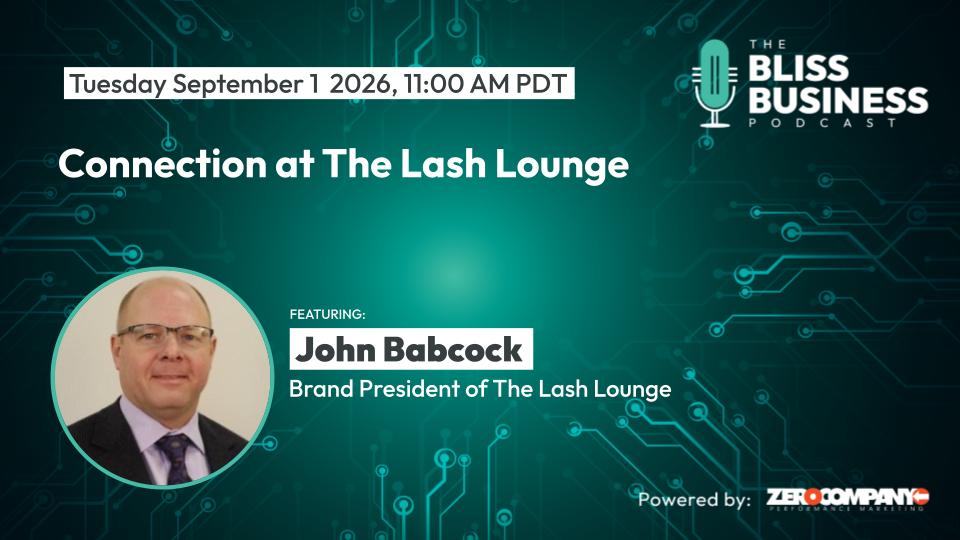
On The Bliss Business Podcast, we sat down with John Babcock, Brand President of The Lash Lounge, to explore how franchise systems can scale with consistency while preserving the personal connection that makes local businesses meaningful. John brings a unique perspective because he is also a franchisee. Since 2018, he has owned salons in the Detroit metro area, giving him firsthand experience with the opportunities and challenges faced by local owners. Before entering the beauty industry, he spent 25 years in technology services across engineering, sales, operations, business ownership, and executive leadership.
His perspective is a reminder that successful franchising is not simply about replicating a business model. It is about creating a reliable foundation that allows local owners, employees, and customers to thrive.
Leadership Credibility Begins With Lived Experience
John’s experience as both a franchisee and brand president gives him a perspective that is not always common in franchise leadership.
When an owner talks about losing a stylist, managing staffing challenges, retaining employees, or navigating a difficult operational situation, John can relate from personal experience. He has been through many of those same situations in his own salons. That gives him a practical understanding of how brand-level decisions affect the people responsible for delivering the experience every day.
This kind of lived experience creates credibility.
It is one thing to introduce a new initiative from headquarters. It is another to understand how that initiative will affect the owner, the general manager, the stylist, the customer, and the local business. John described the importance of thinking through those consequences before rolling out changes across the system.
Empathy in leadership becomes more effective when it is connected to operational reality. Leaders do not have to have experienced every challenge personally, but they do need to understand the conditions in which their people are working.
Consistency and Autonomy Must Work Together
Franchising depends on consistency.
A customer who visits a brand in one city should be able to recognize the experience when visiting another location. The standards, service quality, training, sanitation, and brand promise should not change dramatically based on geography.
John’s technology background reinforced this principle. In his previous career, he worked with distributed teams and offices across the country, where consistent systems were essential. The same principle applies in franchising, even though the work is different. A customer consultation in a salon is not so different from an engineer sitting down with a client to understand what they need before designing a solution.
But consistency does not mean every local business should be treated identically.
John emphasized that franchise owners have different backgrounds, goals, demographics, staffing models, and levels of experience. Some are active operators. Others have general managers. Some are building lifestyle businesses, while others are focused on larger investments.
The role of headquarters is to provide the foundation while helping each owner apply it effectively in their own market.
The Platform Must Reach the Front Line
The Lash Lounge is part of the Head to Toe Brands platform, which provides shared resources and capabilities across multiple beauty and wellness brands.
John described the importance of translating those platform resources all the way down to the salon level. A marketing initiative, technology platform, or operational program only creates value when it can be applied meaningfully by the people running the local business.
That requires more than broad-brush implementation.
A salon that has been open for 90 days does not have the same needs as one that has been operating for five years. A location with an owner on-site may need different support from one managed by a general manager. Local demographics, staffing, and customer patterns also vary.
The best franchise systems recognize those differences without abandoning the standards that hold the brand together.
Scale should create support, not distance.
The Mirror Effect Is the Result of Every Touchpoint
John described one of his favorite moments in the business as the mirror effect.
At the end of a service, the client is given a mirror. They look at the result, their face brightens, and they can see the difference in how they feel about themselves. The service has helped them leave with confidence.
But that moment does not happen in isolation.
It is the result of everything that came before it. The first inquiry. The way the phone was answered. The consultation. The welcome at the front desk. The cleanliness of the salon. The atmosphere. The stylist’s skill. The attention to detail. The feeling that the client was understood.
John said some of his favorite reviews are not only the ones praising a stylist’s technical work. They are the reviews that mention the friendly front desk, the pleasant smell of the salon, or how clean and welcoming the space felt.
Those details may seem small individually, but together they create the emotional experience.
The service has to be excellent. The entire journey has to support that excellence.
Every Customer Has a Different Why
A beauty service can meet very different needs depending on the person.
One client may be preparing for a special event. Another may want to feel more confident about her appearance. Someone else may be looking for a simpler morning routine because she is busy and does not want to spend time applying mascara. Another client may value the quiet hour as much as the lashes themselves.
John described the experience many clients call a lash nap, where the appointment becomes a chance to disconnect from the outside world, relax, and enjoy a little time for themselves.
That is an important reminder about customer experience.
The same service does not necessarily create the same value for every person. To one client, the value is convenience. To another, it is confidence. To another, it is self-expression, relaxation, or the feeling of being cared for.
The role of the stylist is not merely to deliver a technical result. It is to understand why the person came in and what outcome would make the experience meaningful to them.
Personalization Requires a System
Personalized service cannot depend entirely on memory.
John explained that The Lash Lounge uses service notes within its point-of-sale system to track details about each client’s preferences and previous appointments. These notes may include lash length, curl, other service specifications, and relevant details that help the stylist understand what the client expects.
That information becomes especially important when a client sees a different stylist because their usual provider is on vacation, unavailable, or no longer with the salon.
Without the notes, the client may have to repeat everything or risk receiving a different result. With them, the next stylist can continue the relationship with the right context.
John takes this process seriously enough that he receives a daily report identifying appointments where service notes were not updated.
That is a practical example of building care into a scalable system.
The system does not replace the relationship. It protects the continuity of the relationship.
Membership Creates a Foundation for Both Sides
John also discussed the importance of the membership program.
From the franchisee’s perspective, memberships create a recurring revenue foundation. An owner can begin each month with a clearer understanding of a portion of expected revenue, which supports planning and financial stability.
From the client’s perspective, the program provides benefits and makes it easier to maintain a consistent beauty routine.
That creates an opportunity for mutual value.
A membership should not simply be a mechanism for collecting recurring payments. It should support a relationship that the client continues to find worthwhile. When the service is consistent, the experience is personal, and the value remains clear, the membership can strengthen both customer retention and business sustainability.
Recurring revenue is strongest when it is supported by recurring trust.
Local Ownership Makes the Brand Feel Like Home
One of the challenges for any franchise is avoiding the feeling of being overly corporate.
John believes the strongest franchisees take the brand’s infrastructure and make it part of the fabric of their local community. They are active locally, build relationships, and create a salon that feels like a neighborhood business rather than a distant corporate operation.
Customers know the owner or manager. They recognize the staff. They feel comfortable returning. They see the business participating in the community around them.
That local connection is what gives the brand its personality.
Headquarters can provide standards, training, marketing, technology, and operational support. But the local owner has to bring those tools to life in the community.
The goal is not to make every salon feel identical.
The goal is to make every salon feel consistently trustworthy and distinctly local.
Culture Travels Through the Entire System
The customer experience is shaped by a chain of relationships.
Headquarters supports the brand. The brand supports the franchisee. The franchisee supports the manager and staff. The staff supports the customer.
If one part of that chain breaks down, the experience eventually suffers.
John emphasized that brand leadership must understand the needs of individual owners and provide support that fits their situation. Owners, in turn, need to understand their staff and create the conditions for them to perform well. Stylists need the training, tools, and confidence to deliver the experience customers expect.
This is how culture travels.
It cannot remain a statement at headquarters. It has to become meaningful at every level, all the way to the person answering the phone and the stylist preparing for an appointment.
A company cannot consistently deliver care to customers if care is absent from the system behind them.
Standards Are an Expression of Trust
Empathy and accountability are not opposites.
John was clear that franchisees need autonomy, but they also need to uphold brand standards. Those standards protect the customer experience and the trust that every owner shares in the brand.
If a franchisee begins offering services that do not belong to the brand or fails to follow important consultation or sanitation standards, it affects more than that one location. It can create confusion and damage the expectations customers have across the system.
That is why standards need to be communicated, supported, and enforced.
The goal is not control for its own sake. The goal is to protect the promise that customers and franchisees rely on.
Healthy franchising requires both freedom and responsibility.
Financial Partners Must Understand the People Behind the Numbers
John also brought extensive experience working with banks, private equity firms, and strategic partners.
His perspective on financial partnerships was shaped by the importance of alignment from the beginning. Before entering a relationship, both sides need to understand where the business stands, what it wants to accomplish, and whether their goals and time horizons are compatible.
A short-term financial strategy may not align with a business that is focused on long-term culture, customer relationships, and franchisee health.
John emphasized the importance of knowing the partner, understanding their track record, and speaking with people who have worked with them through a full investment cycle. A positive experience 90 days after a deal is not the same as understanding what the relationship looks like five years later.
That is a lesson in stewardship.
Financial engineering can make a deal look attractive on paper. But if the partner does not understand the people and culture that create the business’s value, the relationship may become damaging over time.
The Business Is the People
John made a powerful point about how he sees the business.
The Lash Lounge serves approximately 40,000 clients a month and has around 900 stylists. Those numbers are important, but they represent people. They represent relationships, livelihoods, customer experiences, and communities.
That is the business.
If a financial partner, franchisor, or leader sees only the numbers without understanding the people behind them, the long-term strategy becomes incomplete.
The same principle applies to defining success.
Success is not only location count or revenue. It is also whether stylists feel that this is a place where they can build careers, support their families, and succeed with their clients. It is whether customers feel that the salon is their place. It is whether franchisees are achieving the goals that led them to invest in the business.
When those forms of success align, financial success has a stronger foundation.
Love Begins With Listening
When asked what role love should play in business, John connected it to servant leadership.
For him, the starting point is setting himself aside and listening to the other person. Whether that person is an employee, a franchisee, a boss, or a customer, the goal is to understand their perspective before deciding how to respond.
That is a practical expression of love.
It does not require sentimental language or the absence of accountability. It requires genuine attention, respect, and a willingness to understand what another person is experiencing.
John also emphasized that people can sense whether a culture is genuine. They notice when employees are unhappy, when the experience feels forced, or when a company’s actions do not match its words.
Authenticity cannot be manufactured through marketing alone.
It has to be lived through the behavior of the business.
Build a Place People Want To Return To
One of the strongest indicators of a meaningful brand is when people refer to it as their place.
John recalled being surprised by how many customers were eager to return after the COVID shutdowns. They were not simply waiting for a service to become available again. They were waiting to return to a place that had become part of their lives.
That kind of loyalty is difficult to create through transactions alone.
It comes from relationships, consistency, familiarity, and the emotional experience built over time. It is the customer who knows the staff, trusts the service, enjoys the atmosphere, and feels comfortable returning.
The same should be true for employees.
A sustainable business creates places where people want to belong, whether they are customers, stylists, managers, or owners.
Key Takeaways
-
The human experience is the brand, especially in beauty and wellness businesses where trust and confidence are deeply personal.
-
Franchise leadership becomes more credible when leaders understand the operational realities faced by local owners.
-
Consistency and local autonomy must work together to create a reliable brand that still feels connected to the community.
-
Every customer touchpoint contributes to the emotional outcome of the service, not just the technical result.
-
Understanding each customer’s personal why helps transform a routine service into a meaningful experience.
-
Service notes, training, and shared systems protect personalization and continuity across locations and staff.
-
Membership programs can support both customer value and the financial stability of local franchisees.
-
Financial partners should be evaluated for cultural and strategic alignment, not only the attractiveness of the deal.
-
Long-term success depends on the health of customers, employees, and franchisees, not simply revenue or location count.
-
Love in business can be expressed through servant leadership, genuine listening, accountability, and consistent care.
Final Thoughts
John Babcock’s perspective is a reminder that a brand is not simply a logo, a service menu, or a collection of locations.
It is the experience people have with the business.
The strongest franchise systems create a foundation that allows that experience to be delivered consistently while giving local owners room to build meaningful relationships in their communities. They understand that training, technology, standards, and operational discipline are not separate from care. They are part of how care becomes repeatable.
And they recognize that the business is ultimately made up of people.
Customers who want to feel confident. Stylists who want to build meaningful careers. Franchisees who want to succeed on their own terms. Leaders who are responsible for protecting the trust that connects them all.
When those relationships are healthy, the brand becomes more than a place to purchase a service.
It becomes a place people want to return to.
Where to Go Next
Hear the full conversation on the episode page, watch it on the video page, or visit John Babcock’s guest profile. The human experience is the brand, one small detail at a time. Explore more Featured Guest Series conversations.

Executive Producer | Host | Blog Contributor
Tullio Siragusa is a strategic advisor, dynamic speaker, author, and EQ coach with 36 years of experience as a technology disruptor rooted in Design Thinking. Since 2018, he has been creating, producing and hosting live podcasts, interviewing over 1,000 C-suite executives across a wide range of industries. His work behind the mic reflects his larger mission: using conversation as a catalyst for human-centric innovation.
Tullio’s commitment to purpose-driven leadership and ethical transformation is reflected in his advisory roles at the University of California, Riverside’s Design Thinking Executive Program, and the University of San Francisco School of Management’s Digital Marketing Program. As a Board Advisor at AI2030.org, he helps guide the responsible advancement of AI toward ethical and sustainable outcomes. A founding member of RadicalPurpose.org, Tullio believes empathy isn’t just a trait, it’s a non-negotiable foundation for leadership.

Systems Should Fit People, Not the Other Way Around