Sustainable Innovation Wins When It Is Built on Purpose

Sustainability is often marketed as sacrifice: higher cost, slower execution, fewer options. That framing is outdated. The strongest sustainability stories are the ones where ethics, performance, and economics reinforce each other.
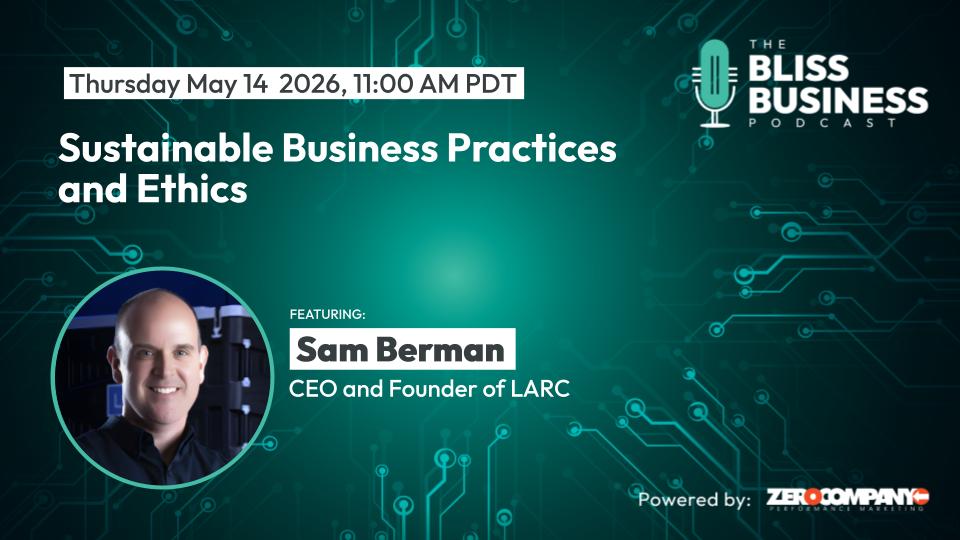
On The Bliss Business Podcast, we sat down with Sam Berman, Founder and CEO of LARC, the Logistics Advanced Research Center, to talk about innovation built on purpose. Sam is an entrepreneur and engineer focused on transforming how the world moves high-value technology infrastructure. LARC developed a reusable, high-performance crating platform designed to replace one-time wood packaging with solutions that are stronger, lighter, more secure, and materially more sustainable.
What made the conversation compelling is that Sam did not present sustainability as branding. He presented it as a practical disruption of a massive, entrenched system, paired with a moral commitment that extends far beyond packaging.
A Napkin Sketch Became a Category Shift
Sam told the origin story with detail. Years ago, he sat in a restaurant with the owner of a wood crating company and heard about weekly shipments of expensive server racks. The economics made no sense. He grabbed a napkin, sketched a modular reusable container concept, and started asking a question the industry had ignored for decades: why are we still shipping the world’s most advanced technology in one-time dead trees.
That question sounds simple. It is not. Wood crating is one of those hidden global industries that most people never think about, even though nearly everything we depend on rides inside it at some point. Sam’s napkin sketch became a door into a much bigger reality: billions of dollars in crates built globally, each requiring trees, fuel, chemical treatment, and then a one-way trip to waste.
Sustainability at Scale Is About Systems, Not Statements
Sam described the mismatch that defines modern logistics. Data centers and hyperscale infrastructure now cost billions to build. Yet the packaging used to ship the hardware often resembles something found in an Egyptian tomb. The only real difference is where it ends up after one use.
LARC’s model flips the system. Instead of one-time crates, they lease reusable crates through a “packaging as a service” model. Crates cycle through multiple uses, then get reformatted for the next customer or project. It is a shared-economy approach applied to logistics.
The impact is not incremental. Sam described crates that have run through a thousand cycles without a single repair. He also described the compounding effect at hyperscale: hundreds of thousands of rack systems shipped each year, each one historically requiring a wood crate. When you change the packaging model, you are not saving a little carbon or a few trees. You are changing the footprint in metric tons and millions.
The part leaders should notice is that sustainability is not being treated as a cost. LARC delivers better engineering and protection, zero damage incidents, and lower total cost, which is the trifecta most companies claim but few can prove.
Haven Connects Logistics to Human Dignity
The most unexpected part of the conversation was how Sam connected logistics to human trafficking.
He described an early investor who asked him a question no other investor had asked: what is on your heart. Sam answered honestly: human trafficking. That investor shared the same burden and funded the company, then Sam built Haven as an initiative tied to LARC’s success. LARC commits a portion of every sale to organizations rescuing and restoring survivors of trafficking and exploitation.
The leadership lesson is not that every company should adopt the same cause. The lesson is that responsibility is a leadership definition. Sam said it in plain language: with great power comes great responsibility. Companies are only people. Leaders exist inside communities, and they have moral obligation to do more than extract value.
Haven also connects to a deeper truth inside logistics. Human beings are moved as “cargo” in the darkest corners of the system. Sam’s framing was direct: cargo containers are for cargo, not people. If your industry has a relationship to a moral crisis, even indirectly, you do not get to pretend it is not your problem.
Consumers Will Force Ethics When Companies Will Not
A strong thread in the episode was accountability. Sam pointed to a pattern leaders should take seriously: consumers are becoming more conscious of supply chains, labor conditions, and greenwashing. When brands get exposed for unethical practices, the backlash is swift, and money moves.
His point was not performative outrage. It was leverage. When revenue dries up, ethics suddenly become urgent. Leaders do not have to like that. They do have to understand it. Consciousness is becoming an Achilles heel for companies that treat ethics as marketing language rather than operating truth.
People Want to Be Part of Something Bigger
Stephen asked a question that many leaders sense but do not know how to articulate: how do you intertwine innovation and doing what is good without making it feel like you have to choose one.
Sam’s answer was practical. When LARC markets the product, they get traction. When they share the story of why they exist, they get eight to ten times the traction. People are hungry for authenticity. They want to matter. They want to belong to a mission, not just buy from a company.
He also made a broader cultural point. Social media is increasingly antisocial. People are craving real human connection. Companies that embrace mission and humanity will be more magnetic to employees and customers because people do not want to be treated like numbers. They want to be part of a meaningful story.
This is where ethics becomes strategic. Not as manipulation, but as alignment. When a company’s actions match its story, people can feel it, and they want to join it.
The Militant Mindset Is Purpose Under Resistance
An audience question asked how to coach someone talented who lacks the “militant mindset” needed to innovate.
Sam’s answer revealed the deeper psychology of building new categories. A militant mindset is not aggression. It is focus. It is the ability to keep climbing the hill against entrenched systems, doubt, and resistance. You cannot really coach it as a personality. You create it through purpose and belief. If someone truly wants to do something, very little can stop them. If they do not, almost anything can stop them.
His practical approach is to give people purpose, then trust them to act. He also made a founder observation that will resonate with many leaders: most founders have a scar. Something broke early, and they overcame it. That scar becomes fuel. Purpose gives it direction.
Love as the Foundation of Responsible Leadership
When asked what role love should play in business, Sam said: all of it.
He described love as the reason people fight for what matters, love of what is behind them, love of family, love of the journey, love of creation. He framed creation itself as one of the greatest human gifts. If you do it with love, outcomes improve. If you do it without love, you miss the point.
He ended with a mindset shift that is worth repeating because it is rare in practice: everything is giving. Leaders eat last. Take care of your people at all costs.
Key Takeaways
- Sustainability scales through systems, not statements. Reusable models change impact in metric tons, not marketing lines.
-
Ethical innovation can outperform. Better protection, lower cost, and dramatically improved sustainability can coexist when the model is redesigned.
-
Purpose creates traction because people want authenticity and want to be part of something bigger than themselves.
-
Private sector leaders have a moral responsibility to contribute beyond profit, especially when their industry intersects with human harm.
-
Consumers can force ethical change by moving money. Consciousness is becoming a real operational risk for companies that greenwash.
-
The mindset required to build what does not exist is rooted in belief and purpose, not personality.
Final Thoughts
Sustainable business practices and ethics are not a separate track from performance. They are the foundation of performance that can endure. Sam Berman’s work with LARC shows what happens when a leader redesigns an entrenched system with engineering discipline and moral clarity, then uses the success of that redesign to fund tangible human impact.
Where to Go Next
Listen to the full conversation: Sustainable Business Practices and Ethics with Sam Berman.
Watch the video: Sam Berman on reusable crating innovation.
Meet Sam on his guest profile.
Executive Producer | Host | Blog Contributor
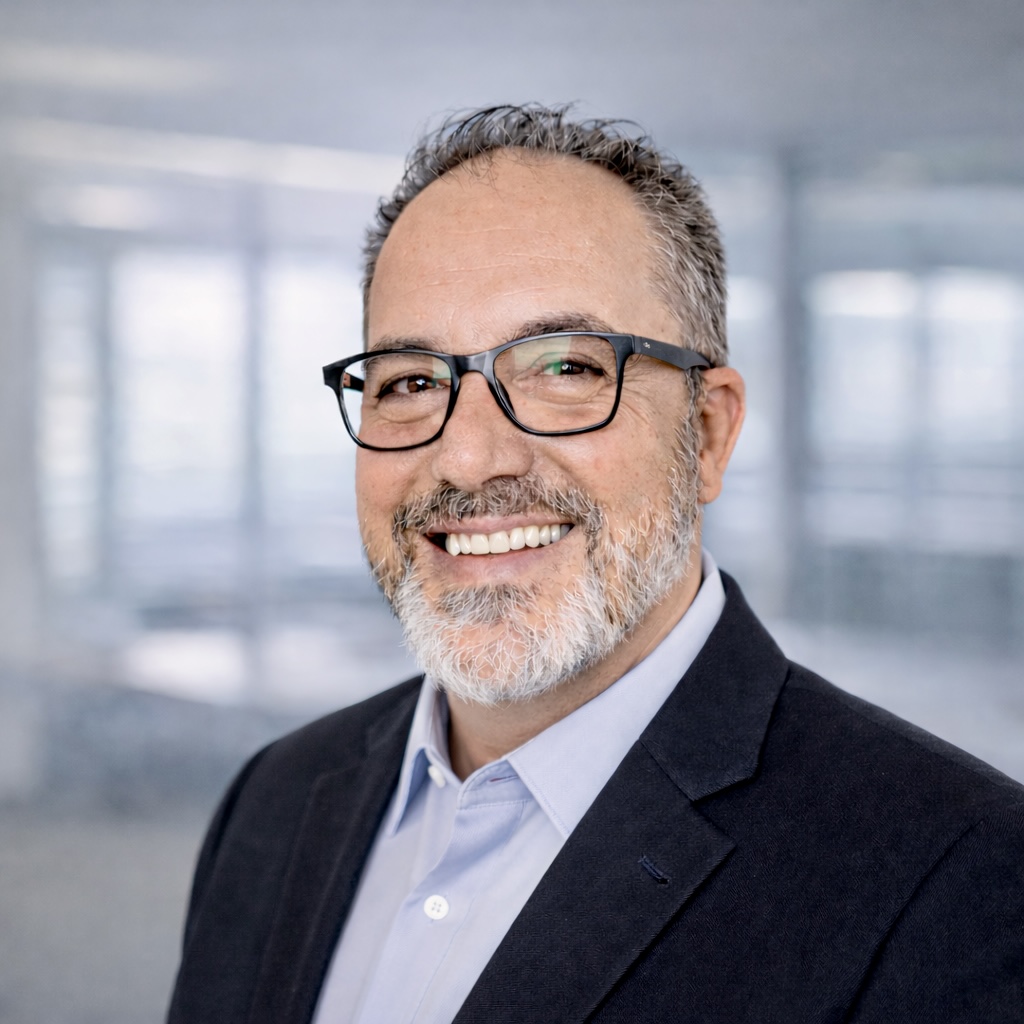
Tullio Siragusa is a strategic advisor, dynamic speaker, author, and EQ coach with 36 years of experience as a technology disruptor rooted in Design Thinking. Since 2018, he has been creating, producing and hosting live podcasts, interviewing over 1,000 C-suite executives across a wide range of industries. His work behind the mic reflects his larger mission: using conversation as a catalyst for human-centric innovation.
Tullio’s commitment to purpose-driven leadership and ethical transformation is reflected in his advisory roles at the University of California, Riverside’s Design Thinking Executive Program, and the University of San Francisco School of Management’s Digital Marketing Program. As a Board Advisor at AI2030.org, he helps guide the responsible advancement of AI toward ethical and sustainable outcomes. A founding member of RadicalPurpose.org, Tullio believes empathy isn’t just a trait, it’s a non-negotiable foundation for leadership.

Starting Over Deserves Community