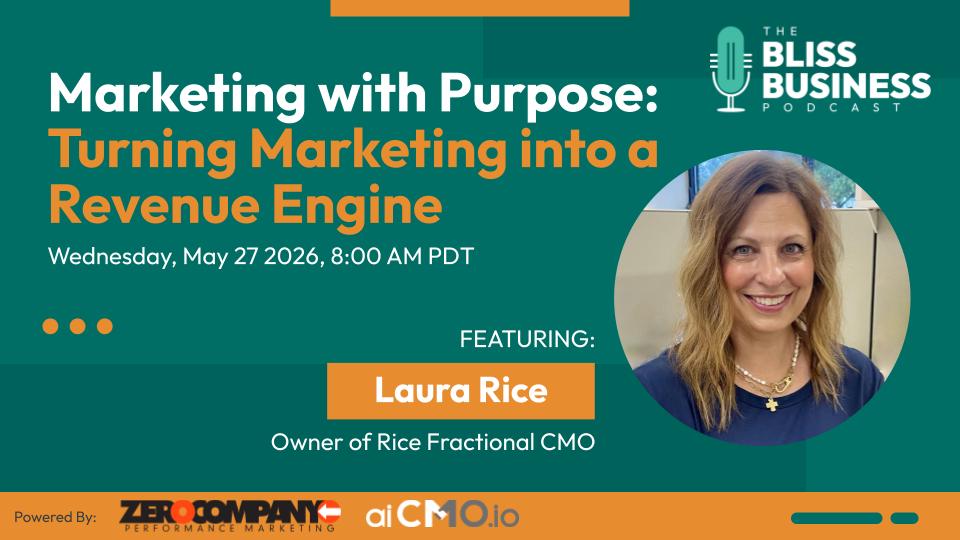
Marketing Becomes a Revenue Engine When It Starts Owning More Than Awareness

For a long time, many organizations treated marketing as a support function.
It built campaigns.
It refreshed messaging.
It launched promotions.
It made things look better, sound better, and reach more people.
But when pressure rose and growth slowed, marketing often found itself in a familiar position: being asked to justify its existence in business terms it had not been fully empowered to shape.
That model no longer works.
In a market where growth expectations are higher, budgets are scrutinized more closely, and every function is being asked to prove its value, marketing has to operate differently. It has to be tied to revenue, retention, and customer lifetime value. It has to understand how leads move through the funnel, where they get stuck, what turns them into customers, and what keeps them loyal once they arrive. Most of all, it has to stop behaving like a department adjacent to growth and start behaving like one of the systems that creates it.
That perspective came through clearly in a recent conversation with Laura Rice, Owner and CMO of Rice Fractional CMO, on the Marketing with Purpose series of The Bliss Business Podcast. Laura brought the kind of perspective that only comes from working across multiple industries, full-funnel strategies, and growth environments where marketing is expected to do more than generate attention. Her message was simple, but important: marketing is not a support act. It is one of the primary ways a business creates momentum, trust, retention, and revenue over time.
That shift in thinking changes everything.
The Funnel Does Not Work Without Fuel
One of the clearest ideas in this conversation is Laura’s description of marketing as the oil of the funnel.
That is a useful metaphor because it captures a truth many companies still miss. Marketing is not merely the thing that sits at the top of the funnel generating leads. It is the force that keeps the entire system moving. It creates awareness at the top, yes, but it also shapes consideration, nurtures trust, reinforces the customer experience, and supports loyalty and retention after the initial conversion.
This matters because too many organizations still think of marketing in isolated moments rather than connected business outcomes. They ask what campaign is live now, what lead count is up this month, or what creative is running in the current quarter. Those things matter, but they are not the whole story. If marketing is truly functioning like a revenue engine, it is not just producing activity. It is increasing the quality of what enters the funnel, improving how customers move through it, and strengthening the value of what happens after the sale.
That is a much bigger role than many companies still assign to it.
But it is also a much more accurate one.
Revenue-Driving Marketing Requires Cross-Functional Thinking
One of the most important themes in Laura’s perspective is that marketing cannot be separated from the rest of the customer journey.
It is easy to talk about campaigns in isolation. It is much harder, and much more useful, to ask what happens after marketing does its part. What happens when the lead gets handed off to sales? What happens when the customer enters the operational experience? What happens when expectations set by the brand are not matched by what the business actually delivers?
This is where marketing becomes either a true revenue function or a disappointed one.
If marketing is bringing in strong leads but sales is mishandling them, the business has a conversion problem masquerading as a lead problem. If marketing is attracting the right customers but operations is failing to deliver on the promise, the business has an experience problem that will eventually show up as a growth problem. If retention is weak, then acquisition alone will never fully solve the business challenge, no matter how hard the marketing team works.
That is why Laura is right to emphasize shared KPIs and alignment across verticals. Growth is not created by one department doing its job in a silo. It happens when the handoffs between departments are clear enough, strong enough, and consistent enough that the customer experiences one coherent journey instead of a series of disconnected internal functions.
The Best Marketing Strategies Begin With the Business Goal, Not the Channel Plan
A lot of marketing still starts in the wrong place.
It starts with a tactic.
A channel.
A campaign format.
A new idea.
A budget request.
A launch timeline.
Laura’s framing is a much healthier corrective. Before you build a marketing strategy, you have to understand the company growth goals and the broader operational environment around them. That sounds obvious, but many teams skip it. They rush to plan activity without understanding the role that activity is actually supposed to play in the business.
That is how misalignment begins.
A company may need new leads, but perhaps the real issue is poor follow-through.
A company may think it needs awareness, but perhaps the real problem is retention.
A company may want more top-of-funnel traffic, but perhaps the real need is stronger trust signals deeper in the journey.
Marketing becomes much more effective when it is built from the business objective backward rather than from the campaign outward. That way, the work is not merely creative or responsive. It is diagnostic and intentional.
The Strongest Brands Do Not Chase Every Lead. They Build Trust That Lasts
Another valuable point in Laura’s conversation is her emphasis on loyalty and long-term value, especially in relationship-driven industries.
This matters because many businesses still over-focus on acquisition while underestimating the revenue power of retention. They celebrate new customers, new units, new enrollments, new deals. But if those people do not stay, do not trust the experience, and do not return, the business ends up on a treadmill of constant reacquisition. That is expensive, exhausting, and strategically fragile.
What changes that dynamic is trust.
Trust built through consistent messaging.
Trust built through a good first experience.
Trust built through a customer journey that feels intentional rather than transactional.
Trust built through a brand that does not disappear after the initial sale.
That is why marketing cannot stop at lead generation. If it is really tied to revenue, it has to care deeply about what happens once the customer enters the system. Revenue is not just a first transaction. It is the cumulative value of a relationship that continues.
In Hard Moments, the Best Leaders Bring Clarity Before They Bring Activity
When the conversation shifted toward crisis moments and downturns, Laura made an especially important point: you cannot simply shut things off and hope the business will recover later.
That instinct is understandable. When pressure rises, many organizations react by cutting spend, narrowing focus, and trying to preserve as much cash as possible. Sometimes that discipline is necessary. But if it is done carelessly, especially in marketing, it can create a lagging problem that only shows up months later when the funnel has been weakened and the pipeline starts to dry up.
That is why maintaining a baseline matters so much.
What stood out in Laura’s answer was not just her emphasis on staying active, but on being strategic and communicative when hard decisions need to be made. Teams need clarity. They need to understand what is being prioritized and why. They need to know what moves to the back burner and what remains mission-critical. If leadership fails to create that clarity, panic can spread and activity can become more chaotic rather than more effective.
Good leadership in those moments is not about pretending everything is fine. It is about giving people enough perspective and direction that they can still make useful decisions under pressure.
The Customer Journey Breaks Wherever Expectations Are Not Shared
One of the strongest practical insights in Laura’s conversation is how often campaigns and launches fail because departments are not aligned around the same expectations.
That is a deceptively simple problem, and a very expensive one.
Marketing may believe a campaign is clear.
Sales may believe the messaging is creating the wrong kind of lead.
Operations may believe the customer is arriving with expectations the service cannot yet meet.
Leadership may believe the whole thing should be moving faster than it realistically can.
None of those perspectives are inherently unreasonable.
But if they are not reconciled early, the launch becomes less about coordination and more about recovery.
This is why Laura stresses shared ownership, planning, and regular communication. These are not managerial niceties. They are growth requirements. The more complex the business becomes, the more important it is that every team understands what success looks like, what each handoff requires, and where gaps in the journey still exist.
When those conversations do not happen, marketing gets blamed for downstream problems it never fully controlled.
When they do happen, the brand becomes much more coherent at scale.
Listening Is Often More Valuable Than Guessing Right
Laura also highlights something that high-performing marketing leaders tend to understand very well: customer insight is not a side input. It is one of the most strategic assets in the business.
That is especially true when it comes from real points of friction in the customer journey. Listening to sales calls, reading objections, hearing where people drop off, and understanding why someone hesitated or left can often reveal more than a polished dashboard ever could. It tells you where the brand promise feels off, where the process feels too heavy, or where the emotional value of the product is not being communicated strongly enough.
This is where intuition and analytics work best together.
The analytics show what happened.
The customer feedback helps explain why.
And the marketer’s job is to connect those things into a smarter next move.
That may mean changing the messaging.
It may mean producing new testimonial stories.
It may mean fixing a sales process.
It may mean adjusting the sequence of communication.
But without that listening loop, teams often keep producing activity around assumptions that are no longer true.
CRM Is Only as Valuable as the Discipline Behind It
When Laura talks about turning marketing into a revenue engine, one of the most grounded points she makes is about the role of CRM, lead tracking, and funnel visibility.
Those systems are essential, but only if the people using them understand why they matter and maintain them consistently.
This is one of the reasons so many organizations struggle to truly connect marketing to revenue. The tools are there, but the discipline is uneven. Marketing wants clean data because it helps optimize the funnel. Sales may see the CRM more as an administrative burden than a strategic asset. Operations may not be feeding back what customer behavior reveals after the sale. The result is fragmented visibility.
And fragmented visibility makes it difficult to know where the real problem lives.
Strong revenue-driving marketing depends on shared accountability around the data. Not because the CRM itself is magic, but because without a clear view of the funnel, the business is forced to make too many decisions from partial information and internal opinion.
Great Marketing Leaders Develop People, Not Just Programs
Another important part of Laura’s perspective is how she approaches building teams.
What stands out is not only her emphasis on challenge and support, but her realism about what people in marketing actually need. They need clarity. They need context. They need room to grow. And they need to feel that their work is understood and valued by the people around them.
This matters because marketing can be a high-pressure discipline with constant shifting priorities and often unrealistic expectations from other parts of the business. Without strong leadership, talented marketers can become burned out, fragmented, or disengaged. With strong leadership, they become sharper, more resilient, and more collaborative.
Laura’s approach—regular communication, open feedback, development opportunities, and bringing people into more strategic conversations—does something important. It helps people see that they are not just producing assets or managing campaigns. They are helping shape outcomes that matter to the business and to the customer.
That sense of contribution is what keeps strong people engaged over time.
The Best Marketing Feels Like Relationship-Building, Not Promotion
At the deepest level, what Laura is arguing for is a version of marketing that is more relational than performative.
That means building campaigns that are rooted in trust.
Creating systems that support customers after conversion.
Helping internal teams understand the human reality behind each metric.
And refusing to reduce growth to a shallow conversation about volume.
This aligns naturally with the B.L.I.S.S. philosophy—Building Love Into Scalable Systems.
Because love in business is not about sentiment.
It is about care translated into process.
It is about trust translated into retention.
It is about empathy translated into a customer experience that feels coherent and respectful.
And it is about building organizations strong enough to support both performance and people at the same time.
That is what makes marketing sustainable.
Not just that it drives revenue once, but that it creates the conditions for revenue to keep growing in a way the customer actually wants to stay inside.
Key Takeaways
Marketing becomes a revenue engine when it owns more than awareness. It has to be tied to conversion, experience, retention, and long-term customer value.
Growth strategies should start with company goals, not campaign ideas. Marketing works best when it is built backward from the business objective.
Shared KPIs create better alignment. Sales, marketing, and operations need common definitions of success if the customer journey is going to feel coherent.
Retaining customers is just as important as acquiring them. Sustainable revenue depends on trust, loyalty, and repeat engagement, not just lead volume.
Hard moments require strategic clarity. Cutting blindly or pausing all activity often creates a lagging problem that shows up later in the funnel.
Customer feedback is one of the strongest strategic inputs. Real objections, drop-off points, and customer emotions help explain what the data alone cannot.
CRM discipline matters. Revenue-driving marketing requires clean visibility into how leads move, convert, and stay.
Final Thoughts
What this conversation with Laura Rice, Owner and CMO of Rice Fractional CMO, makes clear is that turning marketing into a revenue engine is not about proving marketing’s worth through prettier dashboards or louder campaigns.
It is about making marketing inseparable from how the business grows.
That means understanding the economics.
Understanding the customer journey.
Understanding the handoffs.
Understanding the data.
And understanding that revenue is not just a number at the end of the funnel, but the result of many aligned decisions made all the way through it.
That is where modern marketing gets stronger.
And that is where it becomes impossible to treat as a support function again.

Guest Development | Producer | Blog Contributor
Martha is a connector who brings over two decades of experience in engineering, sustainability, education, and public relations. She is part of the integrated go-to-market team at Zero Company and serves as Guest Development Lead for The Bliss Business Podcast, where she connects with purpose-driven leaders to shape meaningful conversations. Martha also produces the Marketing With Purpose Kit segments with CMO guests.
Her career includes founding nonprofits, and speaking at global forums in Malaysia, Dubai, and Paris. A passionate community builder, Martha also mentors women entrepreneurs and supports environmental initiatives across Mexico and the U.S. Her work reflects a deep commitment to impact, inclusion, and authentic leadership.

Starting Over Deserves Community