Growth Needs Both Discipline and Heart

Growth is one of the most energizing forces in business because it creates momentum, opportunity, and possibility. It gives founders confidence that the vision is working and gives teams something tangible to rally around. But growth also exposes whatever is underneath the surface. It reveals whether systems are ready, whether the team is aligned, whether the customer experience can hold up under pressure, and whether the culture is strong enough to carry more weight.
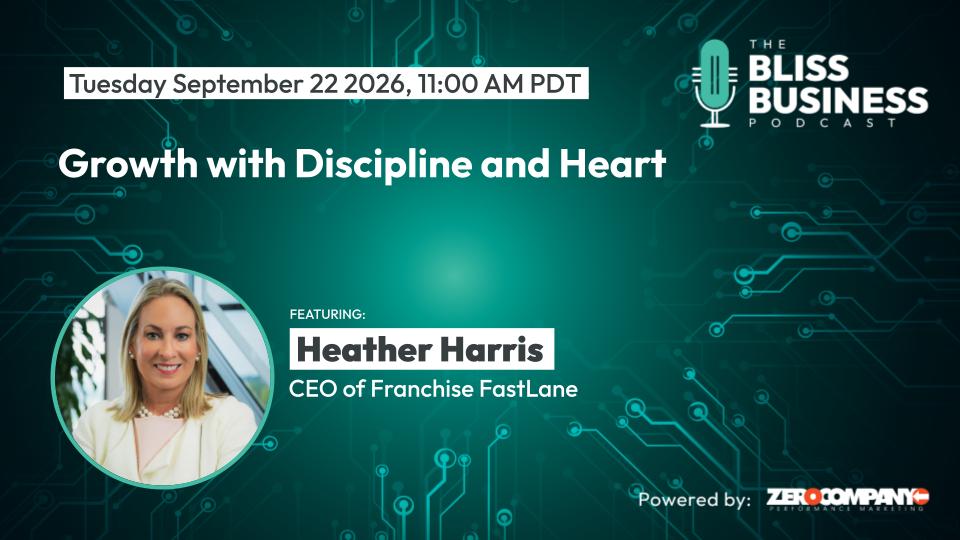
That is especially true in franchising, where every new location adds another owner, another team, another market, and another set of customer relationships. On The Bliss Business Podcast, we sat down with Heather Harris, CEO of Franchise Fastlane, to explore what it means to scale with ambition without losing discipline, culture, or the human side of the business. Heather brings nearly three decades of leadership experience across franchising, retail, and consumer businesses, including roles with brands such as Calvin Klein Jeans, Donna Karan Intimates, CycleBar, Intelligent Office, and Uni K Wax. Her perspective has been shaped by growth, repositioning, turnarounds, acquisitions, and years of working closely with founders, franchisees, and leadership teams. Growth with Discipline and Hear…
The central idea that emerged from our conversation is simple but important: growth is not just about adding more units. It is about increasing value without weakening the system that creates it.
Healthy Growth Requires the Ability to Pause
When leaders think about growth, the instinct is usually to accelerate. More locations, more markets, more customers, more franchisees. But Heather believes healthy growth also requires the ability to pause long enough to understand whether the rest of the organization is keeping pace.
That pause is not about losing momentum. It is about creating enough distance to evaluate whether the business is getting stronger as it grows. Leaders should be looking at average unit volumes, profitability, recurring revenue, operational capacity, marketing effectiveness, and franchisee support. If those things are not improving alongside unit growth, the system may be expanding faster than its foundation can handle.
Heather used the analogy of driving. You want to keep your foot on the accelerator, but sometimes you need to ease off long enough to see what is happening around you. That brief adjustment can prevent the business from pushing too far into a market, adding too many franchisees at once, or stretching support systems beyond what they can reasonably manage.
In that sense, discipline is not the opposite of ambition. It is what makes ambition sustainable.
Unit Count Is Not the Same as Value
Franchise systems naturally celebrate milestones. Ten locations. Fifty locations. One hundred locations. Those numbers are visible, easy to communicate, and often become shorthand for success. But Heather cautioned that unit count can become a distraction if leaders begin valuing the number more than the health of the businesses behind it.
A larger network is not automatically a healthier network. If franchisees are struggling, profitability is deteriorating, support is inconsistent, or the customer experience is becoming uneven, adding more locations can magnify the problem rather than solve it. Heather’s view is that no unit-growth target outweighs the health of the system. Growth with Discipline and Hear…
That requires leaders to shift the question from “How many units can we sell?” to “How much value are we creating for the franchisees already here?” The first question measures expansion. The second measures sustainability.
That distinction matters because growth without value eventually becomes pressure. Growth with value becomes momentum.
Discipline Begins With Knowing Who Fits
One of the most important forms of discipline in franchise growth is candidate selection. Not every financially qualified person belongs in every brand, and the wrong franchisee can create far more damage than the short-term revenue of the sale is worth.
The franchisee becomes a local expression of the brand. They influence culture, recruit and lead the team, shape the customer experience, and represent the business in the community. That means franchise development is not merely a sales function. It is also a cultural and operational decision.
Heather emphasized the importance of understanding the DNA of the strongest operators in a system. The goal is to identify the qualities, motivations, leadership style, and mindset that tend to produce healthy businesses. From there, the franchisor needs enough discipline to look for those qualities instead of lowering standards to hit development targets.
That is where growth and culture become inseparable. If a brand becomes too focused on adding units, it may compromise on fit. Those compromises often show up later in operational inconsistency, franchisee dissatisfaction, customer experience problems, and strain on the support organization.
The Frontline Knows Where the Friction Is
Another theme Heather returned to throughout the conversation was the importance of communication with franchisees. They are living the business every day, and they often see problems before headquarters does.
A dashboard may show that performance has declined, but the franchisee may be able to explain that a mall is under construction, a competitor recently opened, staffing has become difficult, or a local marketing strategy is not working. The numbers tell leaders what is happening. The person closest to the work often explains why.
This is especially important because franchisees are rarely at the same stage of maturity. One owner may be preparing to open their first location, while another may have operated for a decade. One may be expanding into multiple units while another is trying to stabilize the first. Treating those owners as though they need identical support is unlikely to work.
Strong systems create consistency, but strong leadership still requires context. The discipline is in having shared KPIs and operating standards while maintaining enough communication to understand what those numbers mean in the real world.
Culture Is What People Experience Under Pressure
Heather made an important distinction between values and culture. A company can put aspirational words on a wall, but those words do not become culture simply because leadership agrees with them.
Culture is how people behave when pressure arrives. It shows up when growth creates stress, when processes change, when a team member makes a mistake, when goals are missed, or when the organization needs to have a difficult conversation.
That is why growth can be such an effective test of culture. Expanding companies add people, systems, markets, expectations, and complexity. If the values are real, employees should still recognize them when the business is under strain. If a company says, “We have your back,” people will find out whether that is true when things become difficult. If the organization says it values grit, employees will learn whether grit means solving problems together or simply absorbing unlimited pressure.
Heather believes clear communication is one of the strongest protections against cultural erosion. People can handle significant change when they understand why it is happening, what leadership is trying to accomplish, and how their work connects to the larger goal. Without that clarity, people create their own explanations, and uncertainty quickly becomes mistrust.
The Best Systems Make Care Repeatable
Because BLISS stands for Build Love Into Scalable Systems, we asked Heather how companies can make kindness, care, and connection more repeatable as they grow. Her answer began with the right operator, because systems only come alive through people.
Heather recalled experiences with brands such as Uni K Wax and CycleBar where customers would stop her in public to explain how the business had made a difference in their lives. What stayed with her was not merely that they liked the service. They had attached emotional meaning to the experience. Growth with Discipline and Hear…
That kind of connection does not happen because the company says it cares. It happens because care has been translated into behaviors. It can be found in how someone approaches a customer, how much space they give them, how they communicate before and after a service, how quickly they resolve an issue, or how well they anticipate discomfort before it becomes a complaint.
The same principle applies far beyond retail or wellness. A roofer, plumber, landscaper, or home-service technician can create an emotionally memorable experience because the customer is still a person. They may be stressed, worried about cost, frustrated by an interruption, or uncomfortable having a stranger enter their home. Small operational decisions can dramatically change how that interaction feels.
The human experience can be designed, and the best systems make the desired behavior easier to repeat.
Growth Should Not Dilute What Made the Brand Special
One of the biggest risks of scale is becoming worse at the very thing that made the business valuable in the first place.
In an early-stage company, the founder may personally know the customers, understand every operational detail, and communicate the culture instinctively. As the business grows, new leadership layers appear, systems are added, and markets expand. The organization becomes more capable, but also more distant from the original experience if leaders are not careful.
Heather sees this as another reason to focus on value rather than unit count. If expansion begins to water down the customer experience, franchisee support, culture, or profitability, then the business has a growth problem even if revenue is still increasing.
Disciplined leaders are willing to slow expansion long enough to repair the foundation. That is not a lack of ambition. It is a commitment to protecting the thing that created the opportunity in the first place.
Ethics and Sustainable Growth Belong Together
Heather also sees ethics and sustainability as closely connected to franchise growth. A company that is genuinely committed to doing the right thing should be better positioned to know when to pause, when to decline a candidate, and when existing franchisees need more attention before additional expansion.
Ethics should not be treated as a separate initiative. It should be reflected in candidate selection, communication, support, financial expectations, and the way leaders respond when something is not working.
A system built entirely around hitting the next target can rationalize unhealthy decisions. A system grounded in responsibility asks whether the target still makes sense for all the stakeholders involved.
That is where heart and discipline intersect. Heart without discipline can create inconsistency. Discipline without heart can create a culture people do not want to belong to. The strongest organizations hold both.
Financial Goals and Human Relationships Can Coexist
Franchising inevitably involves financial pressure. There are development goals, investor expectations, EBITDA targets, growth schedules, and commitments to multiple stakeholders. Those realities do not disappear simply because a company wants to lead with empathy.
The challenge is keeping those numbers from becoming the only things that matter.
Heather’s leadership style is built around trust, authenticity, and transparency. She believes teams should understand where the business stands, what the goals are, and what leadership is trying to accomplish. When people have visibility into those realities, they can participate in solving the challenge instead of feeling that decisions are simply being imposed on them.
Financial performance and human relationships do not have to compete. The company needs results, but the people creating those results need trust, clarity, and a sense that they are part of the journey.
When those elements are aligned, discipline becomes shared rather than enforced.
Coaching Works Best When People Know You Believe in Them
Heather’s background as a two-sport college athlete strongly influenced the way she thinks about leadership. She described herself as the kind of athlete who wanted the ball when the game was close, but she also talked about the coaches who challenged her and helped her become more capable than she thought she could be.
One high school basketball coach in particular stood out. Heather credits her with believing in her, pushing her, and helping develop the resilience and leadership she later carried into business. Looking back, she understood that the pressure came from a place of belief and growth. Growth with Discipline and Hear…
That distinction matters in business leadership too. Pressure without trust feels like criticism. Pressure with trust can feel like investment.
A strong leader can look at someone and recognize that their current performance does not represent their full potential. The goal is not to make that person feel inadequate. It is to help them understand that someone sees more in them and is willing to help them reach it.
Good leadership does not clip someone’s wings and then demand that they fly. It helps build the wings first.
Developing People Strengthens the Organization
Heather also spoke about the importance of leaders who actively build people. She sees herself as someone who encourages others and helps them grow because coaches, teachers, and teammates did the same for her.
That mindset is especially important in high-growth companies. Leaders can become so focused on filling roles and achieving targets that they overlook the responsibility to build capability inside the team.
A strong organization does not simply hire talent. It develops it.
That can mean giving someone responsibility for a task force, inviting a franchisee to participate in a committee, allowing an emerging leader to solve a real problem, or creating opportunities for people to influence decisions. Growth creates more leadership demands, so developing people is not just an act of generosity. It is part of scalability.
The companies that grow sustainably are the ones where more people become capable of carrying the culture and the business forward.
Love in Business Requires Staying Connected to Why You Started
When we asked Heather what role love should play in business, she connected it to passion, care, and the reason the company exists in the first place.
Founders often begin with a powerful sense of purpose. Franchisees choose brands because something resonates with them. Local owners care about the communities they serve. Employees may feel connected to the customer experience in ways that go far beyond the transaction.
The problem begins when other metrics become more important than that original reason.
If leadership starts defining success entirely through unit count, EBITDA, or the next milestone, it can become disconnected from the customer, franchisee, employee, and community experiences that gave the business meaning.
Love in business is not a substitute for performance. It is what keeps performance connected to people.
Define What Growth Actually Means
Toward the end of the conversation, Heather offered practical advice for founders who are not sure whether they are ready to scale.
Start by defining what growth means.
Scale does not have to mean 50 units or 100 units. It might mean opening two more locations. It might mean improving the financial model, introducing another service, creating recurring revenue, strengthening operations, or making the existing business more valuable.
That is an important distinction because companies sometimes chase someone else’s definition of growth.
Once the goal is clear, leaders can honestly assess what is required to get there. What systems are missing? What capabilities need to be built? What risks exist? What is working? What is not ready?
Growth should begin with clarity before it begins with acceleration.
Key Takeaways
- Healthy growth requires leaders to periodically pause and determine whether operations, marketing, support, profitability, and culture are keeping pace with expansion.
- Unit count is not the same as value, and no development target should outweigh the health of the existing franchise system.
- Candidate selection is both a sales decision and a cultural decision because franchisees become the local expression of the brand.
- Franchisees and frontline employees often understand operational friction before leadership does, making open communication essential.
- Culture is not the list of values on the wall. It is how people behave and make decisions when the organization is under pressure.
- Systems can make care, customer experience, and human connection more repeatable when they reduce friction and support intentional behavior.
- Growth becomes unhealthy when it starts diluting the qualities that made the brand successful in the first place.
- Ethics and sustainable growth belong together because disciplined leaders know when to pause, when to say no, and when the existing system needs more support.
- Financial goals and human relationships can coexist when leaders communicate openly and build trust around what the business is trying to accomplish.
- Coaching is most effective when accountability is grounded in belief, trust, and a genuine desire to help people become more capable.
- Sustainable scaling requires developing more leaders, not simply adding more locations.
- Leaders should define what growth actually means for their business before pursuing someone else’s version of scale.
Final Thoughts
Heather Harris’s perspective is a reminder that growth is not simply something to pursue. It is something to steward.
Ambition matters. Founders need vision. Franchise systems need development. Businesses need profitability. Teams need goals that pull them forward. But acceleration without discipline eventually creates strain, and discipline without care can create a business that performs without inspiring people to belong to it.
The strongest growth strategies recognize that every new unit adds more than revenue. It adds another owner, another team, another community, another customer experience, and another place where the culture has to become real.
That is why sustainable growth requires both discipline and heart. Discipline protects the systems, the economics, the standards, and the health of the network. Heart protects the relationships, the culture, the customer experience, and the reason people cared about the brand in the first place.
The goal is not to grow as fast as possible. It is to grow in a way that makes the business stronger, more valuable, and more human as it expands.
Check out our full conversation with Heather Harris of Franchise Fastlane on The Bliss Business Podcast.

Executive Producer | Host | Blog Contributor
Tullio Siragusa is a strategic advisor, dynamic speaker, author, and EQ coach with 36 years of experience as a technology disruptor rooted in Design Thinking. Since 2018, he has been creating, producing and hosting live podcasts, interviewing over 1,000 C-suite executives across a wide range of industries. His work behind the mic reflects his larger mission: using conversation as a catalyst for human-centric innovation.
Tullio’s commitment to purpose-driven leadership and ethical transformation is reflected in his advisory roles at the University of California, Riverside’s Design Thinking Executive Program, and the University of San Francisco School of Management’s Digital Marketing Program. As a Board Advisor at AI2030.org, he helps guide the responsible advancement of AI toward ethical and sustainable outcomes. A founding member of RadicalPurpose.org, Tullio believes empathy isn’t just a trait, it’s a non-negotiable foundation for leadership.

Belonging Is a Business Strategy