Visibility With Responsibility

Every organization has a story, but not every story is told with care.
For mission-driven businesses, nonprofits, and social impact organizations, communication carries an added responsibility. A story can bring attention to work that deserves to be seen. It can help communities feel represented, give under-resourced voices greater visibility, and move people toward action. But storytelling can also oversimplify complicated experiences, sensationalize trauma, or turn someone’s lived reality into little more than messaging.
That tension sits at the heart of responsible visibility.
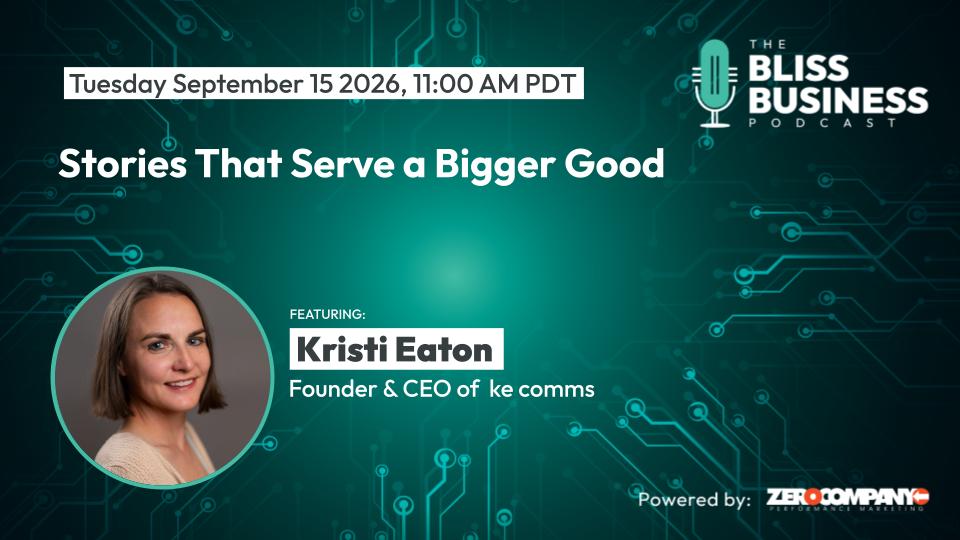
On The Bliss Business Podcast, we sat down with Kristi Eaton, Founder and CEO of KE Comms, a mission-driven public relations and storytelling agency that works with purposeful brands, organizations, and causes. Before founding the agency, Kristi spent two decades in journalism, reporting for outlets including The New York Times, The Washington Post, Associated Press, Reuters, The Guardian, and Ms. Magazine. Her career has taken her into stories involving under-resourced communities, women’s rights, public health, refugees, and other deeply human subjects.
Her perspective is a reminder that visibility should never come at the expense of the people whose stories make that visibility possible.
Responsible Storytelling Starts With the Person, Not the Message
One of the easiest mistakes organizations can make is deciding what the story should be before fully listening to the person whose experience is at the center of it.
Kristi takes the opposite approach.
Responsible storytelling begins by understanding the person telling the story, the context surrounding their experience, and what they are actually comfortable sharing. That may mean conducting an interview in someone’s native language, using an interpreter, explaining where the story will appear, and making sure the person understands how visible their words may become once published.
It also means using trauma-informed practices when the subject matter requires it.
There is a difference between inviting someone to tell their story and extracting a story from them. The first gives the person agency. The second turns them into raw material.
That distinction matters.
Mission-driven communication should never forget that behind every quote, case study, photograph, and human-interest story is a real person who will continue living with the consequences of that visibility after the campaign is over.
The Story Should Be Discovered, Not Manufactured
Kristi’s journalism background shaped the way she approaches public relations today.
As a journalist, she learned to ask people what was happening, listen closely, and allow themes to emerge. She carries that same practice into her PR work by asking clients what is new, what they are seeing, and what matters right now rather than forcing every conversation into a predetermined publicity angle.
That approach produces more authentic stories because the communication grows out of something real.
It is tempting in marketing and PR to begin with the desired headline and then search for evidence to support it. Responsible storytelling works in the other direction. You listen first. You identify what is genuinely happening. Then you determine whether there is a story worth telling.
Authenticity is difficult to manufacture because people can usually feel the difference.
When the story exists only to promote the organization, the audience often senses it. When the organization is participating in something meaningful and the story emerges naturally from that work, visibility becomes a consequence of value rather than the objective itself.
Purposeful Visibility Does Not Always Put the Brand at the Center
One of the more interesting shifts Kristi sees in media is that stories focused entirely on one company or organization have become less common.
Instead, journalists may look at a broader issue and include multiple organizations, perspectives, or voices inside the same story. For a brand seeking visibility, that can feel counterintuitive. The organization may only receive a paragraph rather than an entire feature.
But a paragraph inside an important story can sometimes carry more credibility than a full article built around self-promotion.
Kristi shared an example involving Indigenous land issues where the broader story incorporated perspectives across different communities and geographies. Her client was part of the story but was not the entire story. That allowed the issue itself to remain central while still giving the organization meaningful visibility.
That is an important lesson for purpose-driven brands.
You do not always have to be the hero of the story.
Sometimes your role is to contribute knowledge, elevate an issue, support other voices, and help the public understand something that matters. Visibility still happens, but it happens in service of a bigger conversation.
Ask “Why Now?” Before You Tell the Story
A good story is not always a timely story.
Kristi encourages organizations to ask a simple question before pitching an idea: why now?
Why does this matter at this particular moment? Why would someone want to read, watch, or listen to this story today, this month, or this year?
Relevance does not always mean breaking news. Sometimes a larger cultural conversation makes an issue timely. A policy debate may suddenly make an old challenge newly important. An anniversary, launch, social movement, industry shift, or public event may create the right context.
Timing is part of responsible communication because visibility works best when the audience has a reason to care.
Organizations naturally become excited about their own announcements. Internally, something may feel enormous because the team has spent months working on it. The outside world may not share that sense of urgency.
Good communication requires the discipline to separate internal excitement from external relevance.
Sometimes the right decision is to wait until the story has a stronger reason to exist.
Listening Requires Time
Some of Kristi’s most powerful lessons came from journalism assignments involving deeply personal and traumatic experiences.
Her reporting has included stories involving child marriage, menstruation, women living with fistula, intimate partner violence in refugee communities, and women’s rights. In those situations, listening could not be rushed. Interviews might last several hours because the person needed time to explain what had happened, how it affected them, and what they wanted others to understand.
That kind of listening runs against much of modern business culture.
Organizations are highly agenda-driven. Meetings are scheduled back to back. Interviews are reduced to 30-minute calendar slots. Leaders are often thinking about the next commitment while someone is still speaking.
But responsible storytelling requires the patience to let people finish.
The purpose of listening is not simply to wait until you hear the quote you need.
It is to understand.
Sometimes what initially seems like the obvious story is not actually the most important part of the experience. If the listener is moving too quickly toward a predetermined conclusion, that deeper meaning is easily missed.
Human Relationships Should Not Become Transactions
One of Kristi’s practices is remarkably simple: she reaches out to people when she thinks about them, not only when she needs something.
That applies to friends, past clients, professional contacts, and other relationships.
The message might simply say that she was thinking about someone, remembered an upcoming event, or wanted to know how things were going. There is no immediate ask attached to the interaction.
That sounds small, but it reflects a broader philosophy.
Many business relationships have become relentlessly transactional. We call when we need a referral, send a message when we need an introduction, or reconnect when there is an opportunity we want.
People can feel that.
Relationships become stronger when the other person realizes they are valued even when there is nothing to gain from them at that moment.
This is another place where empathy becomes a system. The system does not need to be complicated. It can simply be a habit of checking in without an agenda.
Ethical Communication Sometimes Requires Slowing Down
Modern communications work moves quickly.
There are tools to transcribe interviews, summarize meetings, generate drafts, automate outreach, and accelerate almost every part of the process.
Kristi uses technology where it makes sense, especially for administrative functions and transcription, but she is cautious about allowing efficiency to replace thoughtfulness in the actual storytelling.
Speed creates advantages, but it can also create mistakes.
When organizations move too quickly, they risk losing nuance. They may overlook context. They may publish language that technically communicates the message but fails to respect the person behind it.
This is especially important as AI becomes embedded into communications workflows.
The question should not simply be, “Can we automate this?”
It should also be, “What do we lose if we do?”
The most human parts of communication, listening, interpreting, understanding context, recognizing emotional complexity, and making ethical judgments, deserve more than a rush toward productivity.
Purpose Has to Exist Before the Publicity
Many organizations decide they want to become more purpose-driven after years of focusing almost entirely on growth.
That evolution can be positive. But there is an awkward stage where social impact risks becoming an accessory to the brand rather than part of the business itself.
Kristi believes organizations seeking greater visibility around purpose first need clarity about what they actually stand for.
That begins with mission, values, priorities, and a clear sense of what the organization believes. These ideas do not have to exist only as polished website language. They need to guide how decisions are made internally as well.
That internal alignment matters because a company cannot credibly promote one story to the public while employees are experiencing something completely different.
A business may sponsor community initiatives, publish social impact reports, and promote charitable programs. But if employees feel ignored, exhausted, under-supported, or disposable, the gap eventually becomes visible.
Purpose cannot be something a company puts on after everything else is finished.
It has to influence how people inside the organization are treated too.
The Internal Story Has to Match the External Story
This may be one of the most important lessons for any company trying to communicate purpose.
Employees now have unprecedented access to public platforms. Customers can read employee reviews, social posts, online discussions, and direct accounts of what it is like to work inside an organization.
The separation between internal culture and external brand has become much smaller.
That makes alignment essential.
If a company talks publicly about care, people inside should experience care. If it talks about flexibility, employees should have reasonable flexibility. If it promotes empathy, leadership behavior should reflect empathy.
The strongest communications strategy cannot permanently cover the gap between what an organization says and what it does.
Authenticity is not primarily a storytelling technique.
It is operational alignment.
Rest Can Be Part of Responsible Work
KE Comms also emphasizes flexibility and life-work balance.
Kristi believes that stepping away from work can help people return more energized, thoughtful, and creative. That may mean taking a walk with a friend during the day, seeing a movie in the afternoon, or simply structuring work asynchronously so life does not have to disappear behind a rigid schedule.
This connects directly to storytelling.
Exhausted people often become less thoughtful. When every task becomes something to complete as quickly as possible, it becomes easier to overlook nuance and harder to remain emotionally present.
Rest creates room for perspective.
That does not mean avoiding responsibility. It means recognizing that creative, strategic, and empathetic work benefits from people having enough space to think.
Sometimes the Responsible Choice Is Not to Tell the Story
Not every story should be proactively promoted.
Kristi pointed out that organizations need to distinguish between proactive storytelling and situations where communication may need to become reactive or handled through crisis communications.
If the story involves something genuinely damaging, proactively pitching it simply to control the narrative may not be appropriate. A journalist may still investigate it, and the organization may still need to respond, but that is a different communication challenge.
There are also situations where the story simply does not belong to the organization.
Someone may not be ready to share their experience. The potential benefit to the company may not justify the exposure for the individual. The timing may be inappropriate. The story may create more harm than good.
Visibility is not always the highest good.
Sometimes restraint is.
Love in Business Begins With Empathy and Understanding
When we asked Kristi what role love should play in business, she described it through empathy, understanding, listening, and relationships.
That fits naturally with the work of responsible storytelling.
To tell another person’s story well, you have to care about more than the output. You have to care about how the process affects them. You have to be willing to listen longer than is convenient. You have to recognize when your own agenda is beginning to overpower theirs.
Love in business does not require sentimental language.
It can simply mean treating the person as more important than the transaction.
Visibility Takes Time
Kristi also challenged one of the most common misconceptions organizations have about public relations: the expectation of instant major media coverage.
Companies often begin a PR engagement hoping to appear immediately in a prominent national outlet. Occasionally that happens, but sustainable visibility usually works differently.
Relationships take time. Credibility takes time. Stories build on one another. A smaller placement can create momentum that eventually leads to larger opportunities. Client and PR partner need to develop a strong working rhythm, respond to deadlines, and consistently build meaningful stories.
Responsible visibility is often cumulative.
It is less like flipping a switch and more like earning trust.
That is especially true for mission-driven organizations. Their credibility depends not only on being seen, but on demonstrating over time that the story they are telling is real.
Key Takeaways
-
Responsible storytelling begins with the person whose experience is being shared, not the organization’s promotional goal.
-
Trauma-informed communication means giving people agency over what they share and helping them understand how visible their story may become.
-
Authentic stories are discovered through listening rather than manufactured around a desired headline.
-
Purpose-driven organizations do not always need to be the center of the story. Sometimes contributing to a broader issue creates more meaningful visibility.
-
Asking “Why now?” helps leaders determine whether a story is genuinely relevant or simply exciting internally.
-
Ethical storytelling requires enough time to listen, understand context, and preserve nuance.
-
Relationships become more human when people communicate without always needing something in return.
-
Technology can improve communications workflows, but speed should not replace judgment, empathy, or thoughtful storytelling.
-
External purpose must align with internal culture or the gap between the two will eventually undermine trust.
-
Responsible visibility sometimes means choosing not to tell a story.
-
Sustainable PR is built over time through credibility, consistency, relationships, and stories that genuinely deserve attention.
Final Thoughts
Kristi Eaton’s perspective reminds us that storytelling is an act of stewardship.
When an organization tells someone else’s story, it is temporarily holding something that belongs to another human being: their experience, their pain, their hope, their identity, or their point of view.
That should never be treated casually.
Responsible communication means asking not only whether a story will generate attention, but whether telling it serves the person, the audience, and the larger issue with integrity.
It means listening before positioning. Understanding before promoting. Aligning internal behavior with external promises. And recognizing that visibility is most powerful when it is earned through meaningful work rather than manufactured through noise.
Every organization wants to be seen.
The more important question is what we choose to do with that attention once we have it.
Check out our full conversation with Kristi Eaton of KE Comms on The Bliss Business Podcast.

Executive Producer | Host | Blog Contributor
Tullio Siragusa is a strategic advisor, dynamic speaker, author, and EQ coach with 36 years of experience as a technology disruptor rooted in Design Thinking. Since 2018, he has been creating, producing and hosting live podcasts, interviewing over 1,000 C-suite executives across a wide range of industries. His work behind the mic reflects his larger mission: using conversation as a catalyst for human-centric innovation.
Tullio’s commitment to purpose-driven leadership and ethical transformation is reflected in his advisory roles at the University of California, Riverside’s Design Thinking Executive Program, and the University of San Francisco School of Management’s Digital Marketing Program. As a Board Advisor at AI2030.org, he helps guide the responsible advancement of AI toward ethical and sustainable outcomes. A founding member of RadicalPurpose.org, Tullio believes empathy isn’t just a trait, it’s a non-negotiable foundation for leadership.

Empathy Is an Operating System