When Space Works Better, Life Works Better
We often think about connection as something that happens between people. But the environments around us influence those connections more than we may realize.
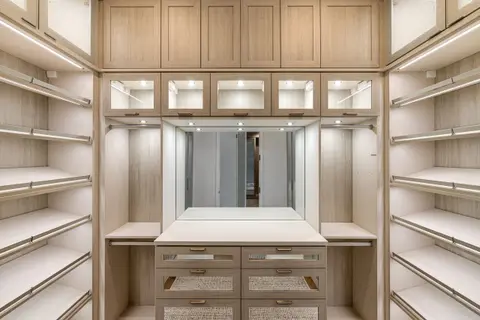
A home can reduce stress or create it. A kitchen can make preparing dinner feel effortless or turn an ordinary evening into a series of small frustrations. A closet can simplify the beginning of the day or consume time and attention before the day has even started. For someone experiencing mobility challenges, the design of a cabinet or pantry can determine whether part of the home remains accessible at all.
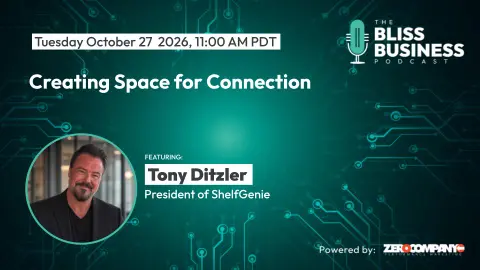
On The Bliss Business Podcast, we sat down with Tony Ditzler, President of Shelf Genie, a Neighborly company, to explore the connection between physical environments, human behavior, leadership, franchising, and purpose. Tony brings more than 20 years of experience across franchising, operations, sales, hearing healthcare, personal care, specialty retail, and home improvement. At Shelf Genie, he is helping grow a business built around making homes more functional, accessible, and aligned with the way people actually live.
What emerged from our conversation was bigger than home organization. It was a reminder that good design, good leadership, and good business all begin in the same place: understanding the person before designing the solution.
A Home Should Serve the People Living in It
Tony described the real outcome of home organization with one word: freedom.
That may sound like an ambitious word for drawers, closets, cabinets, and storage systems, but it makes sense when we consider how much friction our physical environments can create.
Families today are navigating demanding careers, commuting, school schedules, sports, travel, caregiving, and countless other responsibilities. They often return home to a space that was designed according to a generic floor plan rather than the rhythms of their actual lives.
When the home works against those rhythms, small frustrations accumulate. People cannot find things. Cabinets are difficult to access. Counters become cluttered because there is no logical place for what sits on them. Inviting people over becomes stressful because the home feels chaotic.
The goal, Tony explained, is to create an environment that works in harmony with the person living there.
One customer he described lived an extraordinarily busy life filled with travel, children’s activities, and professional responsibilities. What she wanted from her home was simplicity. Shelf Genie helped create highly personalized spaces, even down to dedicated storage for gift wrapping and candles, because those details reflected how she actually lived.
The design was successful because it was not built around what a home was supposed to look like.
It was built around her.
Understanding Has to Come Before the Solution
Tony’s career has taken him through industries that appear very different from one another, including food service, hearing healthcare, personal care, specialty retail, and home organization.
The common thread is people.
His experience in hearing healthcare taught him this particularly well. A person coming in for hearing aids might appear to be buying a device, but the real problem may have little to do with the device itself.
Perhaps they can no longer hear their grandchildren in the back seat of the car. Maybe they have stopped participating fully in conversations at church. Perhaps their spouse feels increasingly frustrated because communication has become difficult.
If the salesperson immediately starts explaining technology, features, wind reduction, Bluetooth connectivity, or pricing, they may completely miss the reason the person came through the door.
The product matters.
But the meaning behind the product matters more.
Home organization works the same way. The obvious problem might be a crowded pantry or an inaccessible cabinet. The deeper problem may be that someone is tired of fighting their home every day.
Great service begins by discovering that difference.
Purpose Connects People Beyond the Transaction
The same principle applies internally to leadership.
Shelf Genie sells home organization solutions, but Tony believes the organization needs to understand the deeper purpose behind the work.
That purpose then has to connect with the reasons franchise owners, designers, installers, and employees chose to participate in the business.
Someone may want to build financial independence. Another person may love design. Someone else may enjoy solving difficult problems for families. A franchisee may be building an asset for the next generation.
Those motivations are different, but they can still connect to a common mission.
Tony described this as aligning the “whys.”
When the purpose of the company intersects with the purpose of the individual, work changes. People are no longer simply installing shelves or completing appointments. They understand how their contribution creates something meaningful for another person.
That sense of purpose becomes especially important in franchise systems because compliance alone cannot create commitment.
People can follow a process because they are required to.
They walk in purpose because they understand why it matters.
Technology Should Create More Room for Human Connection
One of the most interesting examples from our conversation involved technology.
When Tony joined Shelf Genie, the company’s design platform required significant attention during customer appointments. Designers could find themselves navigating systems and screens when they should have been listening to the person sitting in front of them.
Shelf Genie began developing a new platform intended to remove that friction. Customers can provide images, spaces can be rendered more easily, and quoting becomes significantly more streamlined.
The purpose of the technology is not simply speed.
It is attention.
When designers spend less time wrestling with software, they gain more time for discovery. They can ask questions, listen more carefully, understand how the customer lives, and determine what is actually creating frustration.
That is an important lesson as businesses rush toward automation and AI.
The best technology does not necessarily remove people from the experience.
Sometimes its greatest value is removing the administrative work that prevents people from being fully present with one another.
Efficiency should create space for empathy.
Accessibility Turns Organization Into Independence
Home organization can easily be viewed as a convenience or aesthetic improvement.
For some people, it is much more than that.
Tony talked about seniors, veterans, and people with mobility challenges who may lose practical access to portions of their homes.
A traditional lower kitchen cabinet can be deep and difficult to reach. Someone using a wheelchair or experiencing reduced mobility may struggle to access cookware stored toward the back.
A glide-out system changes that relationship.
Instead of forcing someone to bend, reach, or depend on another person, the contents come to them.
That is not merely organization.
It is independence.
This changes the social value of the business. The question is no longer only, “How can we make this kitchen look better?” It becomes, “How can this environment help someone continue living the life they want to live?”
Tony spoke particularly passionately about helping disabled veterans and others regain usability within their homes.
When design removes unnecessary dependence, it becomes an expression of dignity.
Scalable Businesses Need Scalable Listening
Shelf Genie operates across a large franchise network, which creates another challenge: how do you preserve local insight while creating consistency across the system?
Tony’s answer is communication.
Installers participate in regular huddles where they can discuss what is working and where problems exist. Designers have their own conversations. Franchise owners participate in town halls, advisory groups, and smaller peer teams where they share ideas, struggles, and successes.
The important part is that information moves in both directions.
Frontline experience can bubble upward, and useful practices can then be integrated into broader systems.
Tony had seen the value of this earlier in his career at Miracle-Ear, where different types of franchise owners needed different kinds of support. An owner operating one location has very different needs from someone running dozens of locations with dedicated marketing teams, call centers, and management infrastructure.
Treating them identically would not create consistency.
It would create frustration.
Scaling successfully requires enough standardization to protect the model and enough listening to recognize that people are operating from different realities.
Strong Systems Preserve Humanity
Shelf Genie has adopted the idea of creating an “Unforgettable Customer Experience,” influenced in part by the philosophy behind Unreasonable Hospitality.
The intention is simple: every interaction should leave the customer feeling better about the experience.
That begins with systems, but the system cannot become the experience itself.
The call center has a role. The designer has a role. The installer has a role. The technology has a role. Franchise leadership has a role.
But ultimately all those systems exist to support a human interaction.
This is where businesses can easily lose their way as they scale.
They optimize the process until the process becomes the purpose.
Tony’s approach is different. Systems should remove friction so people have more capacity to listen, understand, solve problems, and create meaningful experiences.
That is scalability with humanity still intact.
Love in Business Begins With Caring Enough to Ask Why
When we asked Tony what role love should play in business, he returned again to purpose.
Love begins with caring enough to understand someone.
Why is this important to them?
What are they trying to accomplish?
What is getting in their way?
What would make their life better?
Those questions apply whether the person is a customer, franchise owner, installer, employee, spouse, or friend.
Tony shared a personal example from his grandfather, who loved telling stories and being the center of family conversations. As his hearing declined, so did his ability to participate. When Tony helped him get hearing aids, he watched his grandfather reconnect with the people around him and return to being the storyteller the family knew.
That experience helped shape how Tony sees business today.
The product was a hearing aid.
The outcome was connection.
Shelf Genie may design closets, kitchens, pantries, and storage systems.
But the deeper opportunity is similar.
When the environment works better, people gain more freedom to live, connect, entertain, care for themselves, and enjoy the spaces around them.
Key Takeaways
-
Physical environments influence stress, independence, connection, and quality of life more than we often recognize.
-
Great service begins by understanding the person’s real need before presenting the product or solution.
-
Franchise systems become stronger when the purpose of the organization connects with the individual motivations of owners and team members.
-
Technology creates its greatest human value when it removes administrative friction and gives people more time to listen and connect.
-
Home organization can become an accessibility solution that helps seniors, veterans, and people with mobility challenges maintain independence.
-
Scaling requires different forms of support for people at different stages of growth rather than assuming everyone needs the same thing.
-
Peer communities and regular feedback loops allow frontline learning to improve the entire franchise system.
-
Strong systems should support human connection rather than replacing it.
-
Love in business begins with caring enough to understand another person’s why and helping them move closer to it.
Final Thoughts
Tony Ditzler’s perspective is a reminder that some of the most meaningful transformations in business happen through things that initially look ordinary.
A drawer that extends a few feet farther can restore access to part of a kitchen.
A redesigned closet can reduce daily frustration.
A better technology platform can give a designer more time to listen.
A franchise community can help an owner solve a problem they would otherwise face alone.
The physical solution may be simple, but the human impact can be significant.
That is what happens when businesses stop designing primarily around products and processes and begin designing around people.
Our homes influence how we live. Our systems influence how we work. And the more intentionally both are designed around real human needs, the more space we create for what ultimately matters most: freedom, dignity, purpose, and connection.
Check out our full conversation with Tony Ditzler of Shelf Genie on The Bliss Business Podcast.

Executive Producer | Host | Blog Contributor
Tullio Siragusa is a strategic advisor, dynamic speaker, author, and EQ coach with 36 years of experience as a technology disruptor rooted in Design Thinking. Since 2018, he has been creating, producing and hosting live podcasts, interviewing over 1,000 C-suite executives across a wide range of industries. His work behind the mic reflects his larger mission: using conversation as a catalyst for human-centric innovation.
Tullio’s commitment to purpose-driven leadership and ethical transformation is reflected in his advisory roles at the University of California, Riverside’s Design Thinking Executive Program, and the University of San Francisco School of Management’s Digital Marketing Program. As a Board Advisor at AI2030.org, he helps guide the responsible advancement of AI toward ethical and sustainable outcomes. A founding member of RadicalPurpose.org, Tullio believes empathy isn’t just a trait, it’s a non-negotiable foundation for leadership.
Empathy Should Never Be Outsourced