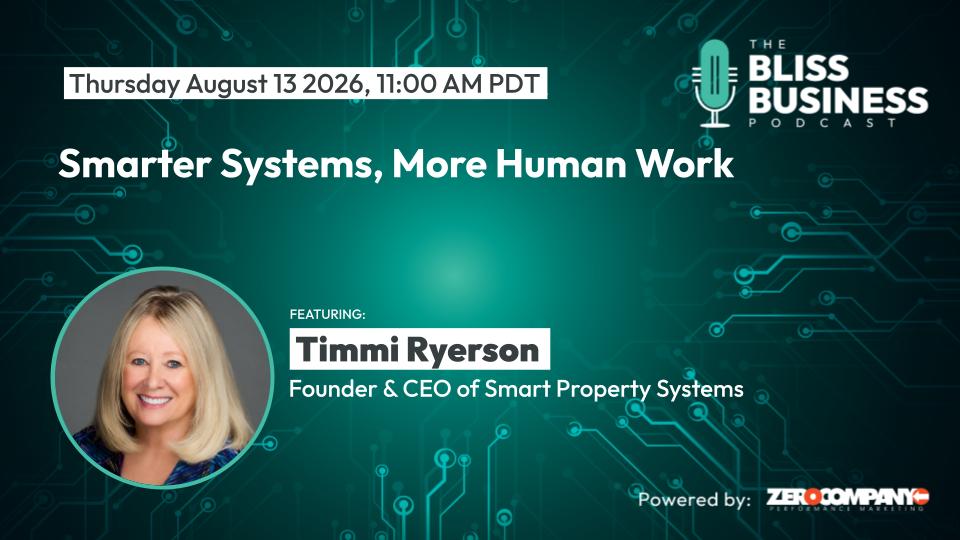
Smarter Systems, More Human Work
A home is more than a property.
It is where someone sleeps at night. It is where families build their lives. It is where people want to feel safe, settled, and cared for. So when something goes wrong, such as a broken heater, a leaking pipe, a delayed repair, or a question about a lease, it rarely feels like a small administrative issue to the person experiencing it.
It feels personal.
On The Bliss Business Podcast, we sat down with Timmi Ryerson, Founder and CEO of Smart Property Systems, to explore property management through a more human lens. Timmi’s experience in property management began long before modern software existed. After managing properties manually in the 1980s, she created Smart Property Systems to help property managers run the business, not simply record what happened. The platform connects portfolios, financials, leasing, maintenance, vendors, owners, tenants, and daily workflows in one system, with accounting at the core and AI embedded throughout.
Her message was clear: smarter systems should not make work less human. They should make it possible for people to focus on the moments where human judgment, care, and relationships matter most.
Property Management Is a Human Ecosystem
Most people think about property management from the tenant’s point of view.
They pay rent, report repairs, ask questions, and expect a safe and functional place to live. But behind that experience is a much larger ecosystem. Property managers have to coordinate owners, staff, tenants, inspectors, vendors, agents, maintenance requests, leases, financials, regulations, and constant communication.
Timmi described six core participant groups within the property management process, each with different responsibilities, permissions, needs, and workflows. Smart Property Systems was designed with separate portals for those participants so each person can see what they need, act on what matters, and communicate more clearly.
That matters because property management breaks down when information gets trapped in the wrong place.
A tenant needs visibility. An owner needs transparency. A vendor needs clear work instructions. A staff member needs to know what they are responsible for. A subscriber needs the full picture. An inspector needs a structured way to complete the right kind of inspection.
When the system supports each role, the entire ecosystem works better.
The Goal Is To Keep Things From Falling Through the Cracks
Timmi’s early experience managing properties manually shaped the way she thinks about systems.
In the 1980s, there were no modern tools to support the work. No internet. No smartphones. No easy portals. No instant notifications. Communication happened through landline phones, paper, mail, and physical follow-up. Vendors were hard to reach because they were out working. Tenants were hard to reach because they were away from home. Scheduling repairs and coordinating turns required persistence, memory, and enormous effort.
That experience taught Timmi how easily things can fall through the cracks.
A missed call can delay a repair. A lost note can frustrate a tenant. A poorly tracked invoice can damage owner trust. A repair that is not followed up on can become a bigger problem. A vacancy that should take days to turn can sit for months if no one owns the process.
Smart systems matter because they reduce the risk that important human needs become invisible.
Bad Systems Create Bad Experiences
Timmi also experienced property management from the owner side.
After paying off her mortgages, she hired a management company to handle her rentals. The experience was deeply disappointing. Properties sat vacant for months. Repairs were handled poorly. Financial oversight was weak. Her father, who was a CPA, helped her review the books and found expenses being charged improperly to her account.
That experience became part of the motivation behind Smart Property Systems.
It showed her that the problem was not always bad intentions. Sometimes property managers simply had too much to do, too little visibility, and too few systems to manage the complexity well.
But the outcome was still damaging.
Owners lost trust. Tenants had poor experiences. Staff became overwhelmed. Vendors lacked clarity. And the business became reactive instead of intentional.
A better system could not solve every human problem, but it could create the conditions for better human performance.
Software Should Help People Run the Business
Timmi made an important distinction between software that records what happened and software that helps people run the business.
Many systems are built as digital filing cabinets. They store information, track transactions, and document activity. That is useful, but it is not enough.
Property managers need systems that help them see what needs attention, understand what is next, automate repetitive steps, surface decisions, and coordinate multiple participants without losing the human thread.
Smart Property Systems was built around that idea.
The system is designed to reduce manual work, connect workflows, and create transparency across the full property management lifecycle. Rent collection, maintenance, leasing, reporting, owner visibility, tenant communication, vendor interaction, and inspections all become part of one connected process.
That connection is where the real value lives.
The more connected the workflow, the less energy people waste chasing information.
AI Should Support Decisions, Not Replace Judgment
One of the strongest themes in the conversation was Timmi’s belief that AI should do the work, but humans should make the decisions.
That distinction is critical.
Smart Property Systems uses AI to support workflows, answer questions, guide users, surface what matters, and reduce manual effort. But Timmi emphasized that the AI is not designed to make major decisions for people. It can gather information, route tasks, summarize what needs attention, and prompt the right person to act, but the human remains responsible for judgment.
That is a healthy design principle for AI.
When AI takes over decisions, accountability can become unclear. When AI supports decisions, people are empowered to act with better information and less administrative burden.
The future of work should not be humans serving software.
It should be software helping humans do better work.
Guardrails Create Trust
Timmi spoke directly about the fear many leaders have around AI.
Some worry that AI will take over, act outside its authority, expose information, or do something it was not supposed to do. These fears are not irrational. They reflect real concerns about governance, privacy, accountability, and control.
That is why Smart Property Systems was built with guardrails.
Timmi described an AI architecture designed to prevent unauthorized behavior, limit what the bot can access, recognize attempts to manipulate or hack the AI, and report suspicious activity. The system is also designed to keep users focused on business tasks rather than allowing the AI to become a personal therapist or drift into areas outside its purpose.
This is an important lesson for any company building AI into operations.
Trustworthy AI is not only about intelligence. It is about boundaries.
Grace as a System of Calm
Smart Property Systems named its bot Grace.
That name is fitting because the bot is designed to help users navigate the system with clarity and calm. Grace can answer questions, guide users to what needs attention, and help them stay on task. If someone brings a personal issue into the system, Grace responds with care but redirects them back to the business process.
That design choice matters.
In many business systems, users feel lost, frustrated, or unsupported. They do not know where to click. They do not know what happens next. They do not know whether their request has been received.
A calm, responsive guide can reduce anxiety.
That is one way technology can express care. Not by pretending to be human, but by helping humans feel less confused, less overwhelmed, and more capable.
Clarity Is a Form of Kindness
Property management can become chaotic when information is scattered across emails, spreadsheets, portals, phone calls, memory, and manual follow-up.
Chaos creates stress.
When people do not know what is happening, they become reactive. Tenants call repeatedly because they do not know the repair status. Owners worry because they lack transparency. Staff feel overwhelmed because everything feels urgent. Vendors lose track of what has been assigned. Managers spend their days chasing loose ends.
A connected workflow changes that.
When people can see the status of a repair, review account information, communicate in the right portal, receive notifications, and know what action is needed next, the experience becomes calmer.
Clarity is not only operational efficiency.
It is kindness.
The Leasing Workflow Shows the Power of Connected Systems
Timmi walked through the leasing process as an example of how connected workflows can reduce friction.
A new property can be added to the system. A web flyer can be generated and distributed across multiple online channels. Prospective tenants can inquire or apply. Application fees can be paid. Tenant screening can be initiated. The responsible human reviews the applicants, completes due diligence, makes the decision, and then the lease can be generated with relevant information already populated.
That workflow matters because it removes unnecessary manual steps without removing human responsibility.
The system can move information.
The system can prepare documents.
The system can trigger next steps.
The system can reduce duplicated work.
But the human still decides who to rent to.
That is a good balance.
Maintenance Is Where Empathy Becomes Visible
Maintenance is one of the most emotionally charged parts of property management.
To the property manager, a repair request may be one of many tasks. To the tenant, it may affect comfort, safety, sleep, health, or daily life. A leaking pipe, broken heater, electrical issue, or appliance failure can create real stress.
Smart Property Systems helps tenants report repairs and track where those repairs are in the process. It can notify the responsible person, route bids to vendors, collect responses, and prompt the human decision-maker to review and choose the next step.
That kind of visibility can reduce fear.
The tenant does not feel ignored. The property manager does not have to rely on memory. The vendor receives clearer information. The owner can see what is happening.
A maintenance system built with empathy recognizes that behind every work order is someone’s home.
Feedback Improves the Service Experience
Timmi also described how the system can send surveys after repairs are completed.
This allows tenants to provide feedback on vendor performance, which then becomes visible to the subscriber. Over time, property managers can see which vendors are performing well and which may not be meeting expectations.
That is another example of operational empathy.
If the tenant experience matters, the business needs a way to hear from tenants after the service moment. If vendor quality matters, the system needs a way to capture performance. If trust matters, there needs to be accountability.
A feedback loop turns care from intention into data-supported action.
Technology Feels Trustworthy When It Does What It Promises
One audience question asked what makes technology feel trustworthy.
Timmi’s answer began with people.
The first touch matters. When a customer is onboarding, uploading data, moving from another system, or trying to understand a new platform, the people behind the technology have to help them feel safe and supported.
After that, trust grows when the system does what it says it will do.
That is simple but important.
Trustworthy technology is not only about features. It is about reliability. It is about follow-through. It is about the gap between promise and experience.
When the people are helpful and the system works, confidence grows.
AI Can Make Service More Personal
AI can make service feel less personal if it is used only to deflect people, avoid responsibility, or reduce human contact without improving the experience.
But it can also make service more personal when it improves responsiveness.
If a tenant sends a message and the property manager is notified immediately, the tenant feels seen. If a repair request is routed quickly, the tenant feels supported. If a responsible person can respond faster because the system surfaced the issue clearly, the relationship improves.
AI does not make the relationship personal by replacing the human.
It makes the relationship more personal by giving humans more time, clarity, and capacity to respond well.
Leaders Need a Customer-Centered AI Mindset
Timmi offered a practical mindset for leaders thinking about AI: start with the customer.
Do not begin with the technology. Do not begin with automation for its own sake. Do not begin with the newest tools or the excitement of what programmers can build.
Begin with the human experience.
What does the customer need?
Where are they confused?
Where are they anxious?
Where does work break down?
Where does communication fail?
Where would clarity make the experience better?
Timmi emphasized that the intention should be to provide the best possible service or product for the customer. When leaders begin there, the technology can serve the right purpose.
That is the difference between feature-driven AI and human-centered AI.
Love Belongs at the Center
When asked what role love should play in business, Timmi said it should be number one.
For her, that love shows up in relationships with customers, many of whom have become close over the company’s 15-year history. It also shows up in the desire to help property managers build better relationships with tenants. The landlord-tenant relationship is not a friendship, but it still needs to be kind, respectful, and clear.
That distinction is important.
Business relationships do not have to become personal friendships to be human. They need professionalism, reliability, fairness, kindness, and responsiveness.
Love in property management means designing systems that help people avoid unnecessary conflict, reduce anxiety, resolve issues faster, and treat each other with dignity.
The Purpose Is Not Automation
Automation is useful, but automation is not the purpose.
The purpose is better human work.
If AI reduces manual effort but increases confusion, it fails. If it speeds up processes but removes accountability, it fails. If it makes the company more efficient but makes tenants feel ignored, it fails.
The goal should be to create systems that make people more capable, more responsive, more transparent, and more grounded.
That is what smarter systems should do.
They should not make work colder.
They should make room for more humanity.
Key Takeaways
-
Property management is a complex human ecosystem involving tenants, owners, staff, vendors, agents, inspectors, and managers.
-
Smarter systems reduce the risk that important needs fall through the cracks.
-
AI should support workflows and surface decisions, but humans should remain responsible for judgment.
-
Guardrails are essential for making AI trustworthy, safe, and accountable.
-
Clarity is a form of kindness because it reduces confusion, anxiety, and reactivity.
-
Maintenance workflows are emotional because every repair affects someone’s home and daily life.
-
Feedback loops help property managers measure and improve vendor performance and tenant experience.
-
Technology feels trustworthy when the people behind it are supportive and the system does what it promises.
-
AI can make service more personal when it helps humans respond faster and with better context.
-
Human-centered AI starts with the customer’s needs, not the technology’s capabilities.
Final Thoughts
Timmi Ryerson’s perspective is a reminder that technology should not be measured only by what it automates.
It should be measured by what it makes possible for people.
In property management, the work is full of human moments. A tenant wants to feel cared for. An owner wants transparency. A vendor wants clarity. A staff member wants confidence. A manager wants control without chaos. A business wants to grow without losing service quality.
Smart systems can help.
But only when they are designed with intention.
The future of AI in business should not be about removing people from responsibility. It should be about giving people better tools, better visibility, better workflows, and more time for the decisions and relationships that require human care.
Smarter systems should create more human work.
Check out our full conversation with Timmi Ryerson of Smart Property Systems on The Bliss Business Podcast.
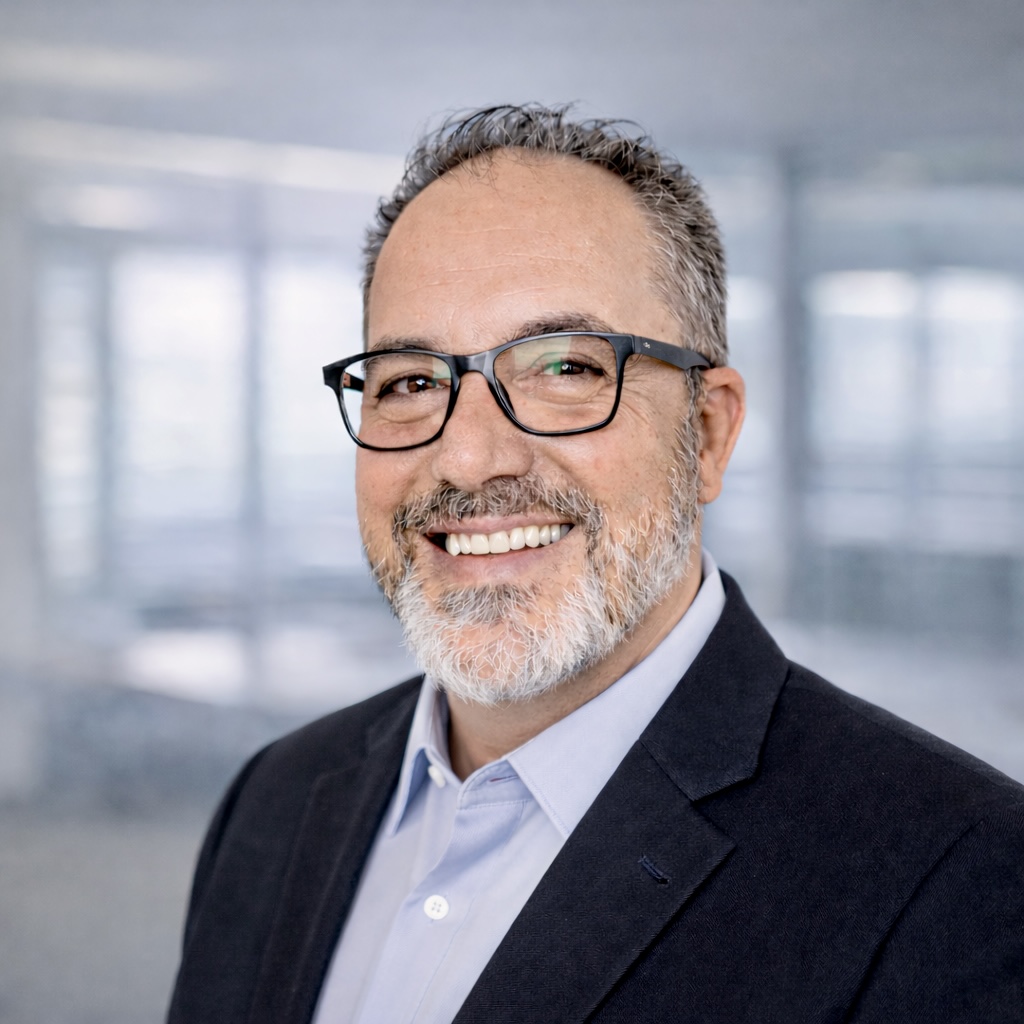
Executive Producer | Host | Blog Contributor
Tullio Siragusa is a strategic advisor, dynamic speaker, author, and EQ coach with 36 years of experience as a technology disruptor rooted in Design Thinking. Since 2018, he has been creating, producing and hosting live podcasts, interviewing over 1,000 C-suite executives across a wide range of industries. His work behind the mic reflects his larger mission: using conversation as a catalyst for human-centric innovation.
Tullio’s commitment to purpose-driven leadership and ethical transformation is reflected in his advisory roles at the University of California, Riverside’s Design Thinking Executive Program, and the University of San Francisco School of Management’s Digital Marketing Program. As a Board Advisor at AI2030.org, he helps guide the responsible advancement of AI toward ethical and sustainable outcomes. A founding member of RadicalPurpose.org, Tullio believes empathy isn’t just a trait, it’s a non-negotiable foundation for leadership.

Starting Over Deserves Community