Belonging Is Built Into the Details
Inclusion is easy to talk about at a high level. It is much harder to build into the everyday language, systems, hiring decisions, customer experiences, and operating choices of a business.
That is where inclusion becomes real.
Beauty and personal care businesses make this especially visible because the work touches confidence, vulnerability, identity, and self-expression. Customers are not simply purchasing a service. They are entering a space where they may already feel exposed, self-conscious, uncertain, or deeply aware of how they are being perceived.
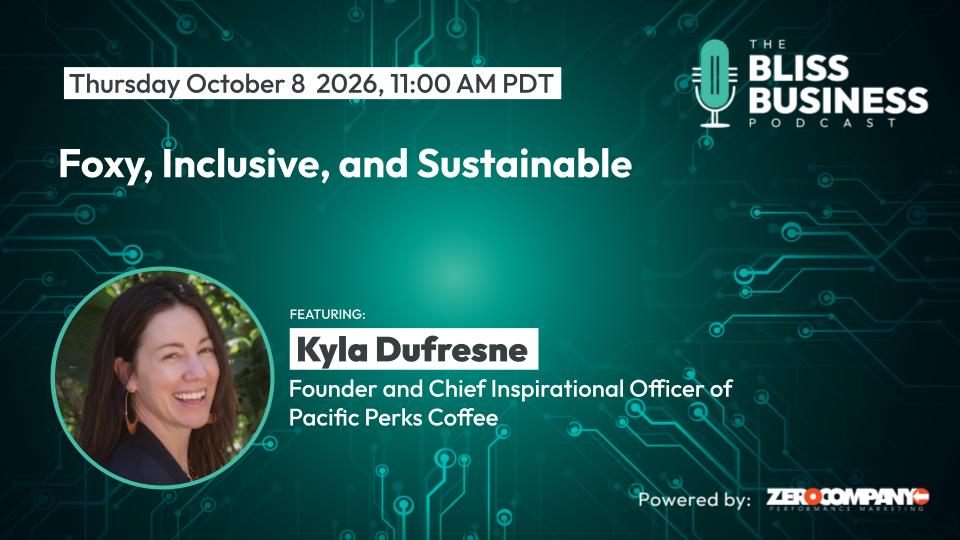
On The Bliss Business Podcast, we sat down with Kyla Dufresne, Founder and CEO of Foxy Box Laser and Wax Bar, to explore how inclusion, sustainability, community, humor, and leadership can work together inside a growing franchise brand. Kyla built Foxy Box from humble beginnings into a bold hair-removal company centered on the belief that feeling confident and cared for should be accessible to everyone. The company has removed gendered language from its service menu, is Green Circle certified, supports local communities through initiatives such as Foxy Fest, and is intentionally building these commitments into its franchise model. Foxy_ Inclusive_ and Sustainabl…
What emerged from our conversation is an important leadership principle: belonging is not created by saying everyone is welcome. It is created by examining all the places where someone might experience the opposite and changing them.
Inclusion Often Begins With Language
One of the most significant changes Foxy Box made began with a customer who simply did not know which service to book.
At the time, like many businesses in the beauty industry, Foxy Box divided parts of its menu into male and female services. That structure had not been created with the intention of excluding anyone. It reflected what Kyla had seen throughout the industry when she launched the business.
But a customer pointed out the problem.
They identified one way but had anatomy that made the traditional service categories confusing. Suddenly, something that had always seemed normal became unnecessarily complicated.
That moment prompted Kyla to question the entire structure.
Why did a leg wax need to be classified by gender? Why did so many beauty services rely on male and female categories when the actual service could simply be described by what was being done?
Foxy Box eventually removed gendered language from the menu. For Brazilian services, where the technique, timing, and anatomy genuinely affect the service, the company describes the appointment based on anatomy rather than gender. Foxy_ Inclusive_ and Sustainabl…
This is a strong example of what empathetic design looks like.
The goal was not to make a political statement. It was to remove unnecessary friction from the customer experience.
Sometimes inclusion begins by asking whether a distinction serves a real operational purpose or whether everyone has simply become accustomed to it.
Businesses Need to Audit the Experience, Not Just the Message
Removing gendered language was only one part of the process.
A company can write inclusive language on its website and still create an uncomfortable customer experience in person. That is why Kyla emphasized that the real test of belonging happens inside the store.
How are people greeted? How does the staff speak to them? Does the person providing the service create a sense of safety? Are employees making assumptions based on appearance, identity, or personal expression?
Those interactions matter far more than a statement on a website.
This is why leaders should think about inclusion as an audit across the entire business. The language needs to align with the training. The training needs to align with hiring. Hiring needs to align with the behavior customers actually experience.
If those things contradict one another, customers will believe the experience rather than the promise.
Bold Brands Still Need Emotional Intelligence
Foxy Box has intentionally built a playful, cheeky, memorable personality.
That energy is part of what differentiates the brand.
But boldness also creates responsibility.
Kyla talked about the importance of understanding the difference between being memorable and being offensive. Humor works when it creates connection. It becomes harmful when the joke depends on making someone feel ashamed, inadequate, or unwelcome.
That line can be particularly important in beauty, fitness, wellness, and personal care because those industries already operate close to people’s insecurities.
A campaign that accidentally communicates “there is something wrong with your body” may generate attention, but it can undermine the very sense of confidence the business is trying to create.
Kyla shared an example of a franchise location using a humorous sandwich-board message that crossed the line from playful into potentially body-shaming. The incident ultimately prompted the company to create an approved library of signage so franchisees could preserve the brand’s bold personality without unintentionally damaging the broader experience. Foxy_ Inclusive_ and Sustainabl…
That is a powerful example of a growing business turning a mistake into a system.
Empathy Can Be Hired For
Culture becomes much easier to protect when leaders know what qualities they are actually looking for.
Kyla and her team went through an extensive branding process that helped them define the traits that consistently showed up in their strongest employees, whom Foxy Box calls magicians.
They identified three qualities: a positive attitude, empathy, and self-responsibility.
Those qualities became practical hiring criteria.
Empathy matters because hair removal is a vulnerable service. Customers are often physically exposed, and the employee needs enough emotional intelligence to create trust, reduce anxiety, and respond appropriately to different personalities.
Self-responsibility matters because the business runs on appointments. Employees need to show up, accept feedback, and take ownership of their work.
A positive attitude matters because Foxy Box believes energy is contagious.
Together, those traits form a useful filter. When a team member is struggling, leaders can return to the original criteria and ask whether the person genuinely has the qualities the role requires.
That gives culture more clarity.
Instead of saying someone “just doesn’t fit,” leadership has a shared language for understanding why.
Customer Comfort Comes From Human Connection
One audience question asked what estheticians can do to help clients feel more comfortable in their own skin.
Kyla’s answer came back to connection.
Introduce yourself. Ask the customer how they are doing. Give them privacy. Notice their discomfort. Use humor appropriately. Make the experience feel personal instead of mechanical.
Those things may sound obvious, but they are often the first things lost when schedules become full and businesses become busy.
The danger is turning the customer into the appointment.
When the business becomes too focused on throughput, the service can become transactional. The person arrives, receives the service, pays, and leaves.
But vulnerable services depend heavily on trust.
A customer may be able to receive the same technical service in many places. What makes them return is often the person who made them feel comfortable while providing it.
That is why connection is not simply a soft skill.
It is part of the customer experience model.
Community Impact Can Become Part of the Operating System
Kyla’s instinct to give back started long before Foxy Box became a franchise.
When she was working independently, if a customer shared a hardship, Kyla often tried to help. She recalled a client facing a large veterinary bill and responded by organizing a waxathon, donating a portion of the proceeds to help cover the expense.
At a small scale, generosity can happen spontaneously.
The challenge is preserving that instinct as the organization grows.
Foxy Box eventually transformed that spirit into Foxy Fest, an annual initiative tied to community giving. What began as an event involving musicians, performers, and fundraising for women transitioning from abusive relationships became something franchise locations could participate in across the system.
Today, locations can organize events, raffles, or other local initiatives, particularly around International Women’s Day and the month of March, and direct the proceeds toward organizations serving their communities. Foxy_ Inclusive_ and Sustainabl…
That is the evolution from personal generosity to scalable generosity.
The original intention remains, but the system allows more people to participate.
Sustainability Requires Operational Commitment
One of the most substantial examples of Foxy Box turning values into systems is its environmental work.
Hair removal generates waste.
Wax, strips, gloves, hair, and other single-use materials often cannot enter conventional recycling streams. Once the company saw how much material its locations were sending to landfill, Kyla said it became difficult to ignore.
Foxy Box partnered with Green Circle Salons, an organization that collects waste from beauty businesses and redirects or repurposes materials through specialized processes. The company has since incorporated waste management into its franchise operations and build-outs. Foxy_ Inclusive_ and Sustainabl…
That transition was not effortless.
The waste had to be separated and stored. Pickup systems had to be developed. There were additional costs. Pricing needed to accommodate those costs. Franchise locations needed designated areas to manage the process.
It took time to make sustainability operational.
That point matters because values become meaningful when organizations are willing to absorb some inconvenience in order to live them.
It is easy to support sustainability when it requires no changes.
The real commitment begins when the value affects the operating model.
Sustainability Should Influence More Than Waste
Foxy Box has expanded its environmental thinking beyond waste disposal.
The company evaluates products based on packaging and sustainability practices. As it develops its own product line, it is considering recycled and recyclable materials. Kyla also discussed plans to partner with Veritree so that future services could contribute to tree-planting initiatives.
The broader principle is worth paying attention to.
Sustainability is not a single program.
It is a lens for decision-making.
When choosing products, packaging, vendors, build-out materials, or operational partners, businesses can ask where something comes from, what happens to it after use, and whether the supplier’s practices align with the organization’s values.
That does not require perfection.
It requires awareness.
Membership Can Create Belonging, Not Just Discounts
Foxy Box also operates a membership model through its Fox Club.
Like many memberships, the model currently provides practical benefits such as service perks and discounts. But Kyla spoke openly about wanting to evolve the experience further.
That is an interesting challenge for any membership-based business.
A membership becomes much more powerful when it shifts from a financial arrangement into a sense of belonging.
Discounts can encourage retention. Community creates identity.
There are many ways that can happen: early access to products, surprise benefits, invitations to events, special experiences, community initiatives, or opportunities for members to participate in the larger purpose of the brand.
When someone begins thinking of themselves as part of a community rather than simply a repeat customer, the relationship changes.
The strongest memberships give people something to belong to.
Franchise Culture Begins With Who You Let In
As Foxy Box grows, Kyla believes one of the biggest cultural safeguards is franchisee selection.
She is candid that this can be difficult because she naturally likes people and wants relationships to work.
That is why the company created criteria.
A franchise prospect cannot simply have capital and enthusiasm. Leadership looks at qualities such as empathy, attitude, leadership capability, and alignment with the broader purpose of the brand.
Kyla asks herself whether she would personally buy from the candidate.
That is a valuable question.
Franchisees become extensions of the brand in local communities. They will hire teams, interact with customers, make decisions under pressure, and interpret the culture every day.
A poorly aligned franchisee can consume enormous resources over a five or ten-year relationship.
Growth becomes healthier when leaders are willing to say no early.
A Franchise Can Create Consistency Without Erasing Community
Foxy Box refers to its larger network as the Foxy Box family.
That idea is reinforced through training, hiring practices, regional gatherings, and regular sharing among franchise owners.
Franchisees discuss wins, struggles, ideas, and updates with one another. More experienced owners can help people who are still learning the business. Regional meetings create opportunities for relationships to form outside of structured calls.
This is one of the strengths of franchising when it works well.
The system provides the operating model, but the network provides shared experience.
An owner does not have to solve every problem alone because someone else inside the system may have already encountered it.
That requires a culture where people are willing to share rather than protect information.
Community inside the franchise ultimately helps strengthen community around each location.
Growth Tests Whether the Values Are Real
Foxy Box has ambitious growth plans.
That makes protecting the culture even more important.
Rapid expansion increases the temptation to accept the wrong franchisee, hire the wrong employee, or compromise on standards because the numbers look attractive.
Kyla believes this is where leaders need clarity about their “hell yes” and their “hell no.”
Not everyone belongs inside every business.
That may sound exclusionary in a conversation about inclusion, but the two ideas are not contradictory.
Customers deserve inclusion.
Employees and franchise partners need alignment.
A company that wants to create an empathetic customer experience needs leaders and operators who believe in empathy. A company committed to sustainability needs franchisees willing to execute the systems. A company built around positive energy cannot consistently tolerate behavior that damages that energy.
The more clearly leaders understand what the culture requires, the easier it becomes to protect as the company grows.
Love Gives Purpose Staying Power
When we asked Kyla what role love should play in business, she connected it directly to longevity.
Entrepreneurship is difficult.
There are periods of growth and periods of uncertainty. Systems fail. People leave. Markets change. Expansion becomes complicated. The numbers are not always encouraging.
If the only reason someone started the business was financial opportunity, those moments can make quitting much easier.
Purpose gives leaders something deeper to return to.
For Kyla, that purpose includes helping people feel confident, creating inclusive spaces, supporting communities, protecting the environment, and building a business people are proud to belong to.
Profit matters.
But love gives people a reason to keep solving the problems required to create it.
Key Takeaways
- Inclusion becomes meaningful when it changes actual business systems, language, training, hiring, and customer experiences.
- Businesses should regularly audit whether categories, terminology, and procedures still serve a real purpose or simply reflect outdated norms.
- Bold branding can remain playful without relying on shame, exclusion, or humor that makes customers feel worse about themselves.
- Empathy can be treated as a hiring criterion, particularly in businesses where customers are physically or emotionally vulnerable.
- Technical service matters, but human connection is often what makes customers feel safe enough to return and recommend the business.
- Community giving becomes scalable when spontaneous generosity is transformed into repeatable programs that local teams can participate in.
- Sustainability requires more than messaging. It may require operational changes, added costs, new infrastructure, and stronger vendor standards.
- Membership models become more powerful when they create belonging and identity rather than relying only on financial discounts.
- Franchise growth should be selective. The wrong partner can create years of cultural and operational strain.
- Consistency does not require eliminating local connection. Strong franchise systems allow owners to participate meaningfully in their communities while protecting the brand promise.
- Culture becomes most vulnerable during rapid growth, making clear criteria for who belongs inside the organization increasingly important.
- Love gives purpose-driven businesses the resilience to keep going when entrepreneurship becomes difficult.
Final Thoughts
Kyla Dufresne’s journey with Foxy Box is a reminder that inclusion, sustainability, and community are not separate initiatives that sit beside the business.
They can become part of how the business works.
Inclusion can show up in the words a customer sees while booking an appointment. Empathy can show up in the person hired to deliver the service. Community can show up in an annual event that gives every location a reason to contribute locally. Sustainability can show up in what happens to a piece of waste after it leaves the treatment room.
None of these decisions alone transforms a company.
Together, they create a pattern.
That pattern tells customers what the company believes. It tells employees what behaviors matter. It tells franchisees what kind of business they are joining.
Most importantly, it turns values into something people can actually experience.
That is ultimately what belonging requires. It is not enough for a company to say, “Everyone is welcome here.”
People have to feel it in the details.
Check out our full conversation with Kyla Dufresne of Foxy Box Laser and Wax Bar on The Bliss Business Podcast.

Executive Producer | Host | Blog Contributor
Tullio Siragusa is a strategic advisor, dynamic speaker, author, and EQ coach with 36 years of experience as a technology disruptor rooted in Design Thinking. Since 2018, he has been creating, producing and hosting live podcasts, interviewing over 1,000 C-suite executives across a wide range of industries. His work behind the mic reflects his larger mission: using conversation as a catalyst for human-centric innovation.
Tullio’s commitment to purpose-driven leadership and ethical transformation is reflected in his advisory roles at the University of California, Riverside’s Design Thinking Executive Program, and the University of San Francisco School of Management’s Digital Marketing Program. As a Board Advisor at AI2030.org, he helps guide the responsible advancement of AI toward ethical and sustainable outcomes. A founding member of RadicalPurpose.org, Tullio believes empathy isn’t just a trait, it’s a non-negotiable foundation for leadership.
Culture Becomes Real When It Becomes a System