Sustainable Business Practices and Ethics with Amanda Fornal

Amanda Fornal, founder of Orange SFM and creator of the Investing in Kindness initiative, joins the show to argue that kindness is a performance multiplier rather than a soft value. She connects psychological safety, loyalty, and long-term sustainability.
Investing in kindness sounds like a values statement until you follow the mechanism. Amanda Fornal, founder, executive coach, and business consultant with more than 25 years in technology, transformation, and change management, treats it as a strategy with a measurable payoff. Through her company Orange SFM she helps leaders build resilient, human-centered organizations, and she joined Stephen Sakach and Tullio Siragusa to explain why kind companies tend to outperform.
In this episode we explore:
• Why sustainability is a question of time horizons, not certifications
• The origin of the Investing in Kindness initiative
• How psychological safety turns into innovation speed
• The risk gap between founders and the people they ask to innovate
• Why processes have to be revisited as a company grows
• The written ethics exercise every leader can run
Amanda’s definition of sustainable practice is about balancing horizons: you do not want only quick wins, and you cannot live only in the long term either. Stephen adds the seven generations lens from Indigenous thinking, and Amanda grounds it in a real project, a pipeline management engagement where planning several quarters ahead was itself the differentiator, because the comparison set was not doing it.
The Investing in Kindness initiative has a blunt origin story. Someone told her they would rather back sociopathic founders than kind ones. Her response was to form a hypothesis, that doing good would show up in the bottom line, and then go check it against the academic research, which supported her. Her line for the skeptics is the most quotable in the episode: if you do not like being kind but you do like money, be kind because you like money.
She is careful about what kindness is not. It is not sugarcoating and it is not avoidance. Kindness is truthfulness delivered compassionately, which means saying what went wrong and how to fix it without humiliation. That definition is what lets it scale into feedback, accountability, and management practice rather than staying a personality trait.
The innovation argument follows from safety. People take risks when mistakes are survivable, and Tullio names the structural asymmetry that blocks it: founders and CEOs can absorb a failed bet, while employees asked to innovate often carry real downside. Demanding innovation while punishing error asks people to do something the structure discourages.
Her closing exercise is deceptively simple. Write your personal ethics down in detail, read them back, and ask whether you are showing up that way, then audit the company against the same list. For any brand making public promises, that gap between stated values and operating reality is exactly where audience trust is won or lost.
Key Takeaways
• (4:37) The origin of the initiative: it was “inspired by someone saying that they wanted to invest in sociopathic founders instead of kind founders.”
• (4:56) Her hypothesis, later supported by academic research: “if we do good, we feel good. Other people feel good and... it should hit our bottom line.”
• (8:37) The argument aimed squarely at skeptics: “if you don’t like being kind and you like money, just be kind because you like money.”
• (8:37) The definition that makes kindness scalable: “Kind is not sugarcoating the truth. Kind is being truthful, but doing it in a compassionate, empathetic way.”
• (14:23) The innovation mechanism: “when you have this psychological safety where you can make mistakes, you can try new things, you will push forward innovation.”
• (37:42) Her one action for leaders: “writing down your personal ethics and making that very clear,” then auditing yourself and the company against it.
FAQ
Is kindness actually good for business?
Amanda Fornal built the Investing in Kindness initiative around that question and found the academic research supported it. When people feel respected and safe, they contribute more, innovate more, and stay longer, which shows up in performance.
What does psychological safety have to do with innovation?
Innovation requires taking risks that might fail. Amanda Fornal argues people only do that when mistakes are survivable, so punishing error while demanding new ideas asks for something the structure prevents.
How can a leader put ethics into practice?
Amanda Fornal recommends writing your personal ethics down in detail, checking whether you actually show up that way, and then auditing the company against the same standard. Most leaders have never been asked to put theirs into words.
Sustainable practice and ethics are the foundation of performance that lasts. Hear the full conversation with Amanda Fornal, and find more on the Bliss Businesses series.
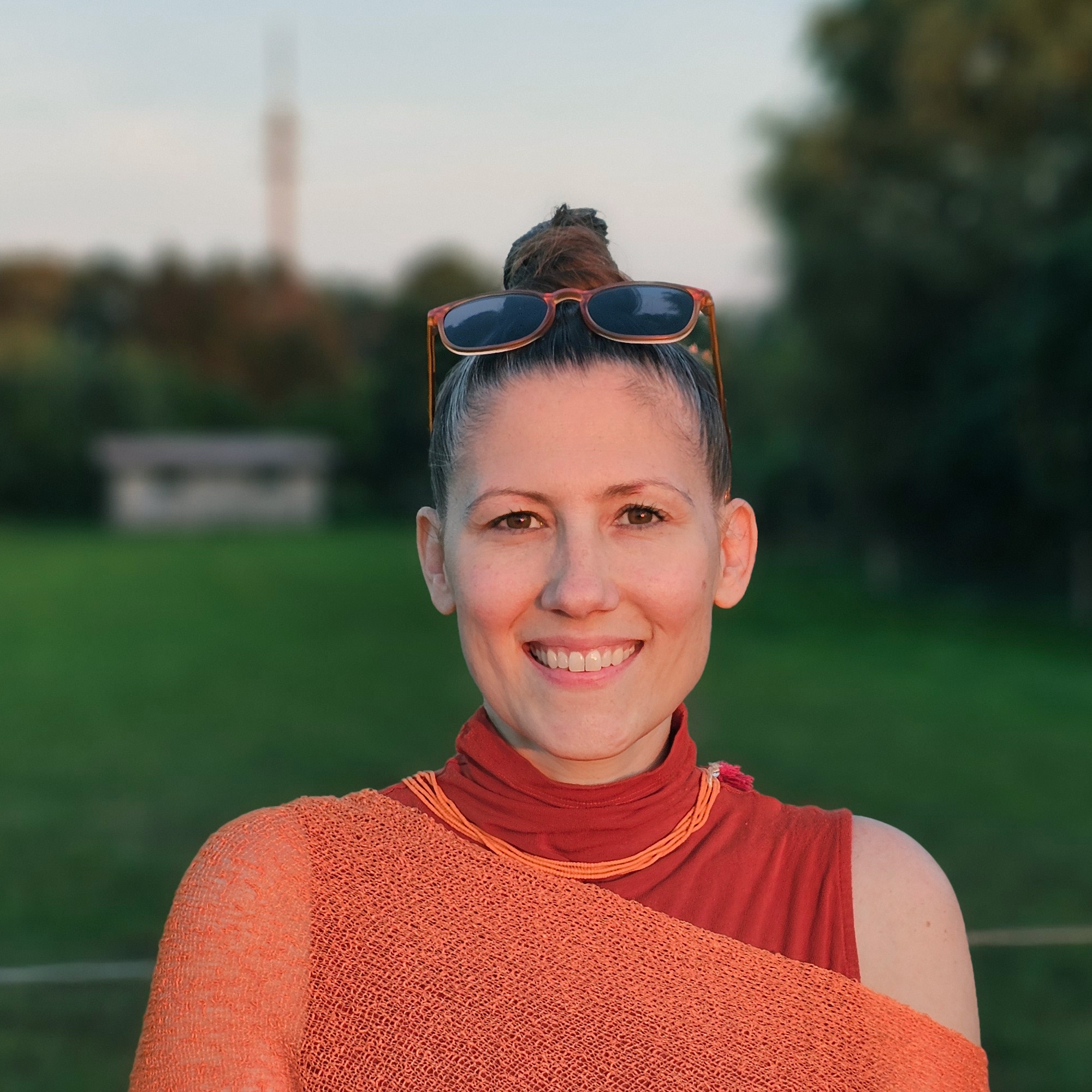
Founder | Executive Coach | Business Consultant | Explorer | Startup Advisor
Amanda Fornal is a founder, executive coach, startup advisor, and business consultant with more than 25 years of experience in technology, business transformation, and change management. Through her company Orange SFM, she helps leaders build resilient, human-centered organizations by improving strategy, strengthening processes, and guiding teams through complex transitions.
She is the founder of Founder Buddies, a community supporting purpose-driven entrepreneurs through structured peer connections, coaching, and cohort-based learning. Amanda also serves as a Director with Founder Institute Germany, where she has advised more than 100 early-stage founders. She is the creator of the Investing in Kindness initiative, which explores how kindness influences leadership, business practices, and investment decision-making.
Beyond her work in business, Amanda is an explorer and cultural visual storyteller. She is a Fellow of The Explorers Club and the founder of Women in Exploration. She has traveled to more than 100 countries documenting global traditions and women’s histories, and works to highlight the contributions of women in scientific research, sustainability, and cultural learning.
Through her Love is… project, Amanda interviewed 612 people across more than 75 countries about how they define love and which forms of love they value most. This research has informed her coaching practice as well as creative works, including a play, a musical, and a technology initiative. Drawing on these insights, she founded Elephari, a storytelling platform that … Read More

