Marketing With Purpose Kit: Aligning Marketing with Business Growth
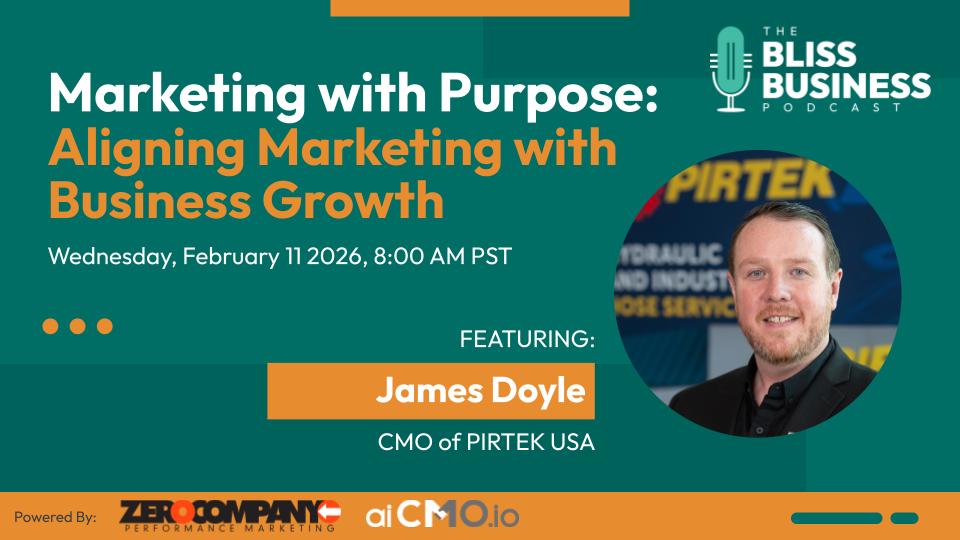
James Doyle, Chief Marketing Officer of PIRTEK USA, joins the Marketing With Purpose series on AI call scoring and lead quality, why a QR sticker outperformed his slick automated review system, and how a rollout finally lands.
AI call scoring is how James Doyle stopped guessing which marketing dollars were working. James is Chief Marketing Officer of PIRTEK USA, a hydraulic hose service franchise approaching 200 US locations, and he came to the role after leading marketing for an eleven brand franchise platform. He is also an active franchisee himself. He joined host Mike Liwski on the Marketing With Purpose series.
In this episode we explore:
• Splitting brand work and local execution across a franchise system
• Why the service delivered is the strongest branding available
• The rollout gap between the team announcing and the team hearing
• A QR sticker that beat a polished automated system
• Findability as the growth engine in emergency service
• Scoring calls for quality, not counting them for volume
James frames the franchisor and franchisee split cleanly. Corporate builds the campaigns, creative, messaging, and sponsorships; the owner pulls the local levers to fill tomorrow’s schedule. But he refuses to let branding take the credit, because the local experience is what actually creates the brand, and no campaign survives service that does not deliver.
His most useful warning is about rollouts. By the time corporate announces an initiative, the team has lived with it through three dozen meetings; for the franchisee it is the first exposure. His fix is deliberate repetition through multiple channels, and his rule of thumb is worth stealing, because by the time you are sick of saying it, it is only just landing. He pairs that with real empathy for the audience, since marketing is one ball among payroll, inventory, and staffing that an owner is already juggling.
The best story is the one where the simple thing won. His team had built elegant automated review drips with beautiful templates. What actually drove volume was a small sticker on the invoice saying we are a small business, please share your feedback, with a QR code. His conclusion is not to abandon automation but to run both, because people work with people rather than with companies.
On revenue, PIRTEK is an emergency business with a one hour ETA, so growth is a function of being findable at the moment something breaks. That makes attribution the real work, and his team now uses AI call scoring to judge whether the calls a channel produced were actually quality and became jobs, so budget moves on evidence. That is the same argument Zero Company makes to clients: the number that matters is the one downstream of the click.
Key Takeaways
• (2:59) His test for the work: is what we do daily “actually impacting the bottom line for the business and helping the business to grow,” which at PIRTEK means helping franchisees capture local market share.
• (5:08) Corporate builds the brand system and the owner pulls the local levers, but he gives the credit away: “The best branding you can do is deliver great service, reliable service and be the go-to person in your community. You can’t really market better than that.”
• (12:46) The rollout gap, in his words: you have been in three dozen meetings and they are hearing it for the first time, so “by the time we’re sick of talking about it, it’s really kind of just landing.”
• (15:24) Why over communicating is empathy rather than noise: “we are one ball in the air that the owner or the local manager is juggling,” alongside payroll, inventory, and everything else.
• (17:53) The simple thing that beat the sophisticated one: a sticker on the invoice with a QR code asking a small business favor outdrew the automated drips, because “people work with people, not necessarily companies.”
• (20:52) AI call scoring changed the question from how many calls the spend drove to whether those calls were quality and became jobs, so the team can “put more money here, take money away from there, and just spend in a smarter way.”
FAQ
What is AI call scoring in marketing?
It uses AI to evaluate inbound calls for quality rather than counting them. James Doyle’s team at PIRTEK USA scores whether calls were qualified and turned into jobs, which lets them shift budget toward the channels producing real revenue.
How do you get more Google reviews for a service business?
James Doyle found a small sticker on the invoice with a direct message and a QR code outperformed a polished automated email sequence. He recommends running both, because the personal ask reaches people the system does not.
Why do product rollouts fail to land with franchisees?
Because the team announcing has spent months on it and the owner is hearing it for the first time while juggling payroll, inventory, and staffing. James Doyle’s answer is to repeat it across multiple channels well past the point the corporate team is tired of it.
Great marketing does not just sell, it serves. Hear the full conversation with James Doyle, watch it on the video page, hear PIRTEK CEO Kim Gubera on empathy and standards, and find more on the Marketing with Purpose Kit series.
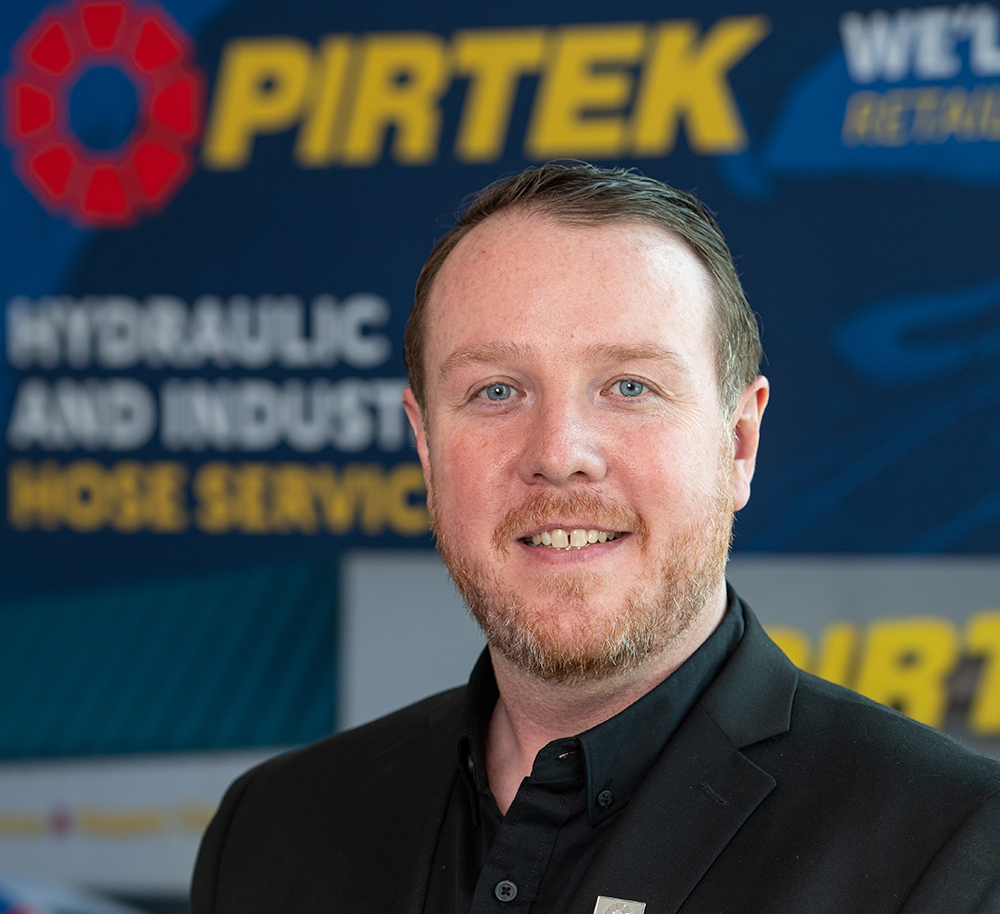
Chief Marketing Officer of PIRTEK USA and Canada
As Chief Marketing Officer for PIRTEK, James is responsible for the development and execution of the organization’s marketing strategy while ensuring the growth and protection of the PIRTEK brand. With an extensive background in marketing and franchise leadership, James is focused on driving demand across the franchise network. James leads the efforts to continuously refine the marketing systems and resources that empower franchise owners to effectively market their businesses within their respective territories. James is also an active franchisee in another franchise system.
James joined PIRTEK in 2024, having previously led marketing teams across a diverse spectrum of service brands. He recently served as Vice President of Marketing at Threshold Brands, where he oversaw the marketing division for a franchise platform spanning eleven distinct consumer brands. James holds a Master of Business Administration from Bentley University and a Bachelor of Science degree from Suffolk University.