Innovative Work Models for the Future with Alex Filipuk

Alex Filipuk, CEO and Founder of Ideal Siding, joins The Bliss Business Podcast to explore innovative work models in construction: paid half-day Fridays, same-day pay for crews, and the trust systems built for a franchised home-improvement business.
Innovative work models in construction rarely make the “future of work” conversation, fixated as it is on remote-friendly office roles. In this episode of The Bliss Business Podcast, we sit down with Alex Filipuk, CEO and Founder of Ideal Siding, to explore how a franchised home-improvement company built flexibility, fair pay, and trust into a trade assumed to offer none of it.
In this episode we explore:
• How to rethink work models beyond tech and office-based roles
• Why the second half of Friday became paid, optional time
• The systems that keep distributed crews aligned, accountable, and empowered
• Why Ideal Siding pays crews the same day a job is completed
• How franchisee masterminds diagnose problems faster than a corporate scorecard
• Why purpose matters when you are redesigning how people work and grow
Alex treats flexibility as a design principle, not a perk. Productivity dropped hard in the last four hours of Friday, so “we decided not to work for those four hours, but we still pay for those four hours.” Going remote unlocked more: “100 percent, yeah, higher retention… you have access not just to local talent but global talent.”
That same respect extends to crews, a group the industry often treats as disposable. Where competitors fine installers and delay payment weeks, Ideal Siding pays by ACH the same or next business day: “they’re like, I didn’t know it’s possible.”
When a location struggles, Alex doesn’t just point to a dashboard. Franchisees meet weekly in small mastermind groups, where peer feedback lands harder than a corporate scorecard: “the ears are opening.”
Purpose started with mistrust. Alex watched the renovation industry cycle through horror stories, including one company that “collected $2.5 million in deposits and declared bankruptcy.” Ideal Siding was built as the predictable alternative: better materials and crews, at roughly half the category leader’s price.
That same principle, designing a system around trust and predictability instead of extracting the most from people, is what Zero Company helps brands build into their own marketing and client relationships.
Key Takeaways
• (8:27) On paid half-day Fridays: “Why would we even work those four hours? So we decided not to work for those four hours, but we still pay for those four hours.”
• (13:36) On going fully remote: “100 percent, yeah, higher retention… you have access not just to local talent but global talent.”
• (18:53) On paying crews same-day by ACH instead of the industry’s six-to-eight-week lag: “Once crews start getting money next day, they’re like, I didn’t know it’s possible.”
• (24:26) On franchisee mastermind groups solving what corporate scorecards can’t: “When other franchisors say, listen, we are in the same mold… then they listen, the ears are opening.”
• (28:03) On the industry mistrust that shaped his purpose: one local company “collected $2.5 million in deposits and declared bankruptcy,” and the owners “bought brand new homes, brand new cars.”
• (36:38) On love in business: “If your heart doesn’t have enough love in you, it will be very, very difficult for you to be successful at this.”
FAQ
Why does Ideal Siding pay employees for a full Friday but only require four hours of work?
Alex Filipuk, CEO and Founder of Ideal Siding, found that productivity in the last four hours of Friday was already low, so the company made that time paid and optional instead of pretending the output was there.
How does Ideal Siding treat construction crews differently from most competitors?
Instead of arbitrary fines and payment delayed six to eight weeks, Ideal Siding pays crews by ACH the same day or next business day, and Alex Filipuk says that predictability alone is what earns crew loyalty in an industry known for the opposite.
What sparked Alex Filipuk’s purpose in founding Ideal Siding?
Watching the siding renovation industry cycle through mistrust, including one local company that collected $2.5 million in deposits before declaring bankruptcy, convinced him homeowners needed a predictable, fairly priced alternative built on better materials and honest pricing.
For Alex Filipuk, an innovative work model is just a business built on the same trust it asks customers to have in the finished product. Learn more about Alex Filipuk and Ideal Siding at idealsiding.com. See his guest profile, and explore more Featured Guest Series conversations.
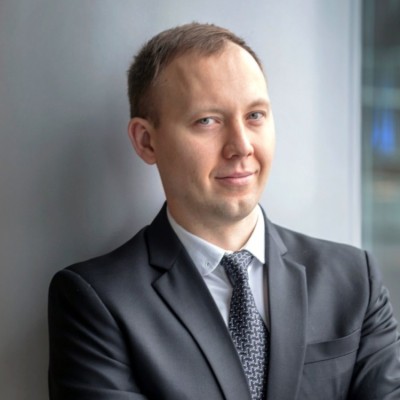
CEO and Founder of Ideal Siding
Alex Filipuk is a dynamic entrepreneur whose remarkable journey spans multiple continents and industries. Born in Belarus to a family of entrepreneurs, he demonstrated exceptional academic prowess early on, earning a prestigious government scholarship in Poland.
His educational path is distinguished by degrees from top-tier institutions, including computer science from the Technical University of Denmark and Warsaw University of Technology, and a Master's in Finance, Banking and Accounting from the Warsaw School of Economics.
Professionally, Filipuk's career is marked by innovative ventures and strategic achievements. He made significant contributions to PayPal's European market, developed the first social media platform in the Russian-speaking world, and established successful businesses across multiple sectors. His entrepreneurial portfolio includes a performance-based marketing agency, a translation company, a publishing firm with over 140 employees, and four construction companies.
In 2019, Filipuk founded Ideal Siding, quickly expanding the business through franchising in Canada (2020) and the United States (2022). A polyglot who speaks five languages, he has consistently demonstrated an ability to navigate complex business landscapes and drive transformative growth.
Today, Alex Filipuk is recognized as an innovative leader in the home improvement industry, leveraging his diverse background in technology, finance, and entrepreneurship to revolutionize the siding industry.

