Building Trust with Responsible AI with Dominique Shelton Leipzig

Dominique Shelton Leipzig, founder and CEO of Global Data Innovation, joins Stephen Sakach and Tullio Siragusa on AI quality control. She has advised more than 300 companies, and her argument is blunt: raw models drift, so governance is not the brake pedal, it is part of the steering.
AI quality control is the phrase Dominique Shelton Leipzig prefers, because responsible AI sounds optional and quality control does not. Dominique is founder and CEO of Global Data Innovation, a legal advisory consulting firm for CEOs and board members, and one of the leading voices on AI governance, data ethics, and privacy law. She has advised more than 300 companies on responsible innovation. She joined hosts Stephen Sakach and Tullio Siragusa.
In this episode we explore:
• Why set it and forget it is the costliest assumption in enterprise AI
• What model drift looks like when it reaches real people
• The five pillars of her TRUST framework
• Where to get your accuracy standards from
• Why silos show up inside the model itself
• The empathy test she gives CEOs and boards
Dominique starts with the misconception that generative AI could be deployed and left alone. Three years on, the result is a run of trust incidents and a missing return on investment, and she is direct that the missing ingredient is trust with the customer base rather than capability in the model.
The drift examples are what make it land. Children in South Florida flagged as violent risks for speaking in loud tones. Tennessee spending $400 million on an algorithm a judge then blocked, after it denied Medicare and Medicaid benefits to the neediest residents 92 percent of the time. None of it was intended, and all of it was preventable.
Her fix is unglamorous and specific. TRUST is five pillars drawn from best practices across a hundred countries: triage the use cases, control the data you own, run uninterrupted testing, keep supervising humans ready to intervene, and hold documentation so you can tell when drift began. On where standards come from she is refreshingly practical: ask the expert employee who did that task by hand what accurate looks like.
The organizational point is the one leaders skip. AI reflects the company it is deployed into, so silos and unclear policy show up in the output. Nobody interviewed the store security supervisor before coding a theft model because IT sat in one silo and physical security in another. Her empathy test is what a brand should ask of every touchpoint: what would this feel like on the receiving end when it goes wrong. That is the distance between promise and experience, which is where Zero Company works.
Key Takeaways
• (2:12) The founding mistake: a “big misconception at the beginning that generative AI could be deployed as almost kind of a set it and forget it.” What followed was trust incidents and a missing return on investment.
• (6:33) What drift costs when it reaches people: wrong medication recommendations, kids “speaking in loud tones in South Florida” classified as violent risks, and Tennessee spending $400 million on an algorithm a judge blocked after it denied benefits to the neediest 92 percent of the time.
• (10:58) Why the fix is organizational: a retail pharmacy’s vendor AI misidentified paying customers as criminals. Her question is what if they had asked the store security supervisor what theft actually looks like. “I bet that security guard could tell you about five minutes exactly what they would look at.”
• (17:35) The reframe that moves boards: “we can call it responsible AI, but I just call it quality control.” Provider model system cards put raw error rates “anywhere between 26% and 79% of the time.”
• (23:34) TRUST, unpacked: triage the use cases, the right data to train, uninterrupted testing and monitoring, supervising humans, technical documentation. Her standard for accuracy: “go to the expert employee at your company that had that job the most recent” and ask what correct looks like.
• (41:35) Why she left big law after 33 years: “I started the company because of love.” Having watched one data breach after another, she could see the same pattern forming with AI and wanted to interrupt it before it repeated at scale.
FAQ
What is the TRUST framework for AI governance?
Dominique Shelton Leipzig built it from best practices across a hundred countries. The five pillars are triage of use cases, the right data to train, uninterrupted testing and monitoring, supervising humans ready to intervene, and technical documentation that makes drift diagnosable.
Where should a company get its AI accuracy standards from?
From the people who did the work. Dominique Shelton Leipzig says to find the expert employee who most recently performed that task by hand, ask what accurate looks like, and code that answer in as a live testing guardrail.
Does responsible AI slow innovation down?
Dominique Shelton Leipzig argues the opposite. She calls it quality control, and with raw model error rates running between 26 and 79 percent, deploying without guardrails is what actually costs a company time, money, and reputation.
Trust is not the brake on AI, it is the thing that makes the investment pay. Hear the full conversation with Dominique Shelton Leipzig, watch it on the video page, hear Timmi Ryerson on smarter systems and more human work, and find more on the Bliss Businesses series.
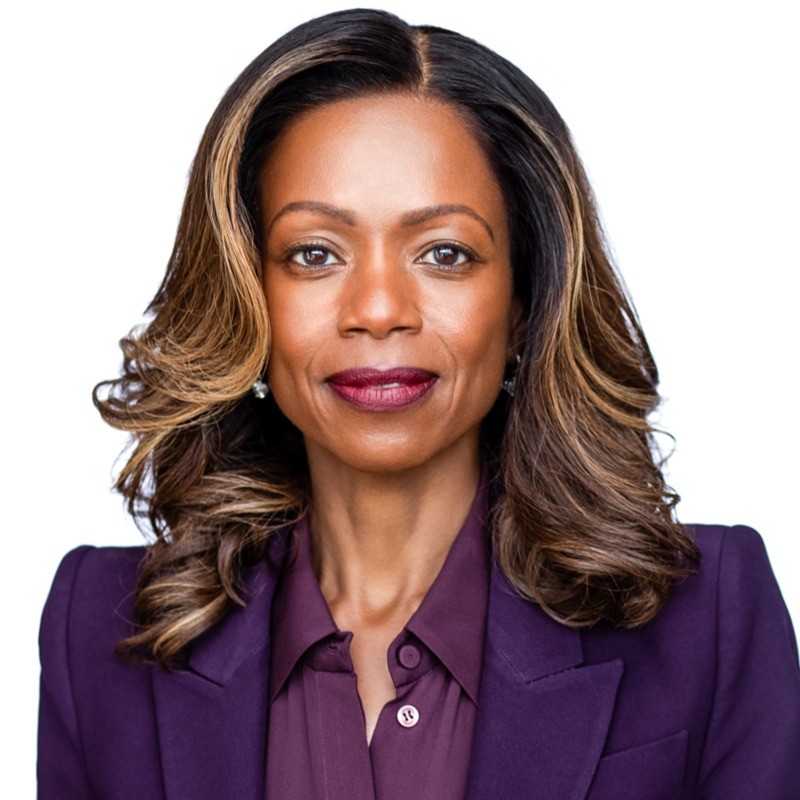
CEO of Global Data Innovation
Dominique Shelton Leipzig, CEO of Global Data Innovation, leverages her 30+ years as a Big Law partner to empower CEOs and Boards to transform data and AI risks into growth and competitive advantage. She has advised companies with a combined market cap over $3 trillion, achieving over $1 trillion in value creation, 15–80% revenue growth through AI transformation, zero fines across 100+ regulatory investigations, and rapid 30-day AI rollouts, guiding industries like automotive and finance with strategic clarity.
Her thought leadership shines through her award-winning book Trust: Responsible AI, Innovation, Privacy & Data Leadership (2024 getAbstract Business Impact Award) and a TEDx talk with over 1.6 million views. Dominique’s patent-pending TRUST™ AI governance framework is widely adopted across healthcare and energy, and her 39 awards, including Forbes’ 50 Over 50 Innovator and ADWEEK’s AI Trailblazer Power 100, reflect her impact. She founded the Digital Trust Summit and serves on the Board of Harris & Associates, advocating trust as the foundation for unstoppable innovation.