The Third Place Is Coming Back
Business leaders keep asking the same question: why do people feel numb, disengaged, and harder to motivate than they used to. The answer is not always strategy. Sometimes it is simpler. People are starving for real human connection, and most modern “systems” are engineered to keep them alone.
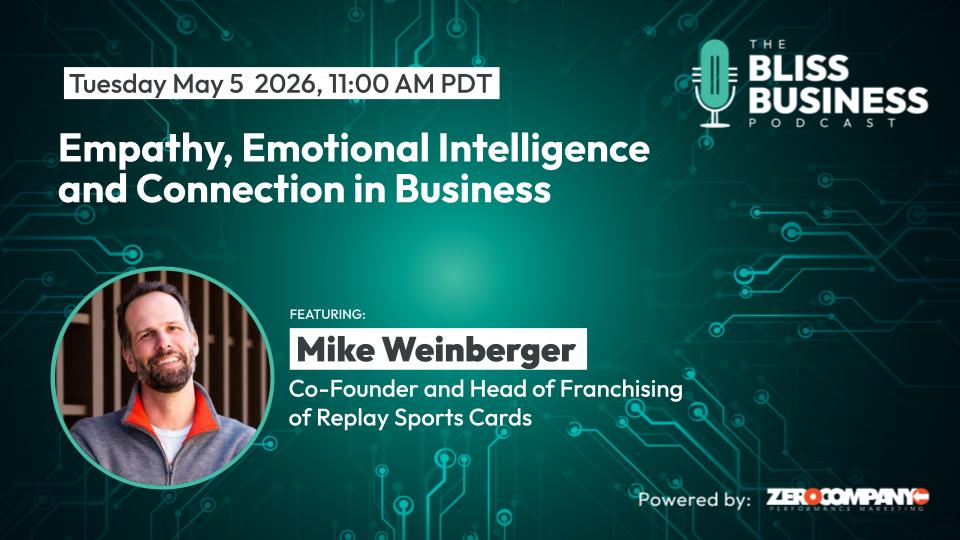
On The Bliss Business Podcast, we sat down with Mike Weinberger, Co-Founder and Head of Franchising at Replay Sports Cards and Founder of Community Franchise Group. Mike has spent more than twenty years leading, scaling, and exiting franchise brands across multiple categories, and he is now focused on something deeply personal: preserving the local sports card shop experience nationwide and scaling it without losing the soul. His model treats community as a growth strategy first, and a marketing line second.
The Product Is Not the Card
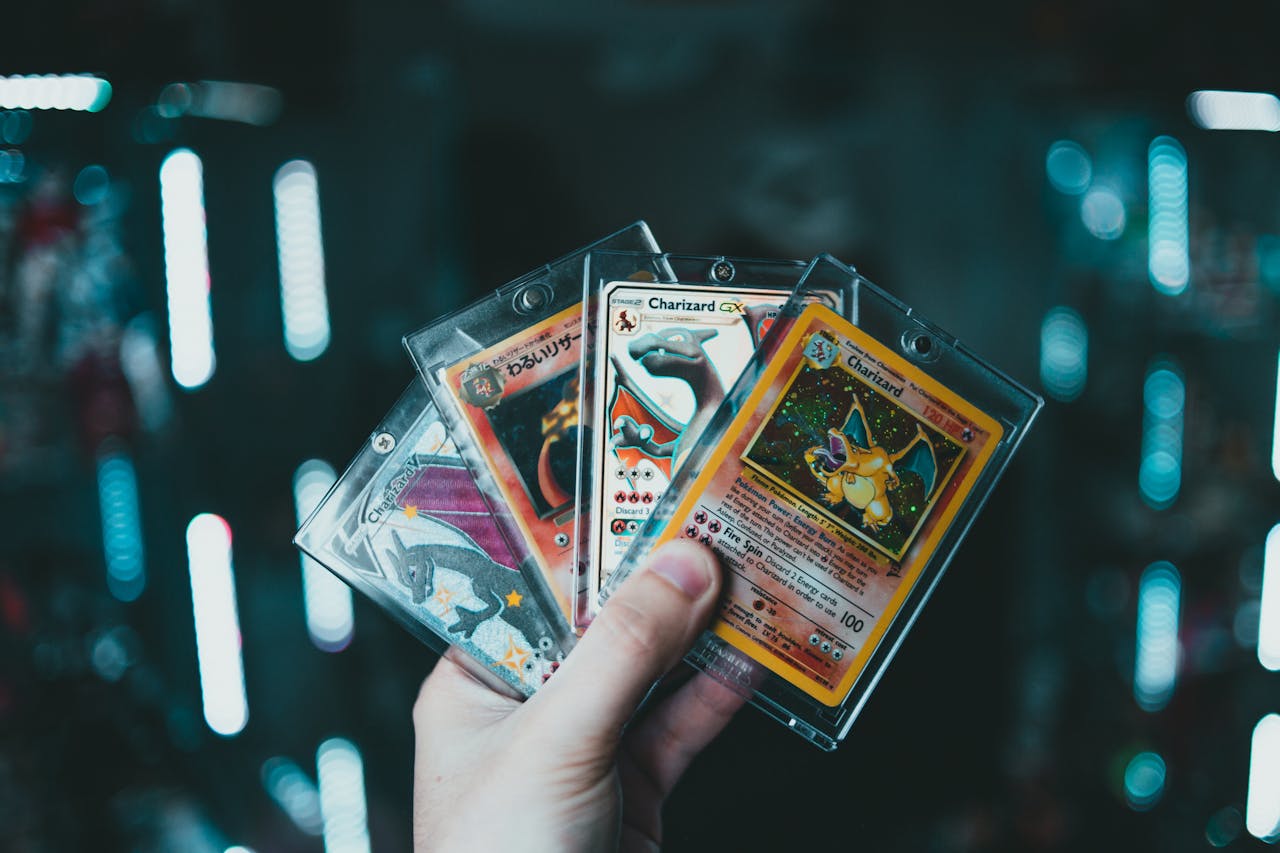
The easy assumption is that a sports card shop sells sports cards. Mike made it clear that is not the real business. Replay sells experiences, stories, and “core memories.” The cards are the artifact.
He described the most important customer moment as the one happening in real time behind the wall of the shop: a parent and child standing together, talking about cards, learning the value of a dollar, and building a memory that lasts longer than whatever was purchased that day.
That framing is important. The most valuable businesses are rarely transactional. They are emotional. The customer is not buying a product. They are buying a feeling and a story they want to keep.
The Real Opportunity Is Analog
Mike’s take on modern culture was blunt. Screen time is everywhere. Doom scrolling is normal. People feel disconnected even when they are constantly “connected” online.
What he is seeing now is a recoil. People are reaching for analog experiences again, not because they hate technology, but because they miss being human with other humans. He called Replay a “third place,” a place outside the home and work where people can exist, talk, and be themselves.
That third place used to be normal. Local card shops, comic shops, hobby stores, and small community hangouts were part of growing up. Many disappeared. The demand did not. It just went unmet until people realized how much they missed it.
Emotional Intelligence Is the Operating System
Mike tied emotional intelligence to leadership in a way that felt lived-in, not theoretical.
He said something leaders forget as companies grow: we often become less human at work. Deadlines, goals, and money crowd out basic decency and curiosity. His countermeasure is simple and relentless: checking on people. Asking what they need. Learning their story. Making “how are you doing” a real question, not a greeting.
He also described how empathy scales from the top down. When leaders consistently treat people like humans, teams start treating customers like humans. When leaders treat people like throughput, teams learn to do the same.
Scale Breaks the Experience Unless You Protect It
Stephen raised an important tension: scaling the “local” experience is hard. The bigger you get, the more you risk turning something personal into something generic.
Mike’s answer was practical. First, you curate franchisees deliberately. If someone is primarily money-motivated and not community-first, they might be a good operator somewhere else, but they will be a cultural mismatch here. Replay’s business model depends on people who want to be involved in the community, support kids, and treat stories as part of the transaction.
Second, you train more than operations. Replay’s training is not just buy-sell-trade mechanics. It includes how to hire, how to lead, how to communicate, and how to build a culture that feels welcoming.
Third, you stay close. In-person visits, meals, site time, and real relationships are not “nice extras.” They are the infrastructure. If the franchisor disappears, the experience degrades.
Community Is the Growth Strategy
Mike described a simple flywheel. Kids come in because their friends at school told them about the shop. That happens because the franchise owner is embedded: sponsoring local teams, supporting PTAs, showing up at silent auctions, fundraising with schools, being present in churches or synagogues, and becoming a recognizable part of the neighborhood.
This is not peripheral marketing. It is the growth strategy.
A community-driven business that does not participate in the community is a contradiction. Replay’s model works because community engagement is treated as the business, not a side initiative.
Technology Can Support Connection If You Use It Right
Mike did not romanticize analog and dismiss digital. Replay has a digital component, including streaming cards online for long hours each day. The purpose is not to replace the shop experience. It is to funnel people into it.
His framing was honest: AI does not have emotional intelligence. Technology can help you respond faster, organize, and scale access. It cannot replace the human layer that makes someone feel safe and welcome. The best use of technology is the one that leads people back into real connection.
“Replay Gives Back” Shows What You Really Value
One of the most moving parts of the conversation was Replay Gives Back, their initiative to donate sports cards to kids who otherwise would not have access to them.
The idea is simple: many collectors have piles of base cards that have limited resale value but enormous emotional value to a kid. Replay set a goal of donating one million cards in a year and ended up collecting more than three and a half million, packaging them into packs, and distributing them through charities, hospitals, and places like Ronald McDonald House.
The bigger point is not the number. It is the leadership posture behind it. Mike said it plainly: there is a scoreboard we keep chasing in business that is often the wrong scoreboard. He wants leaders to add a second scoreboard: impact, employee happiness, giving back, and key moments of impact.
The One Practice That Changes Everything
When asked for one practical step leaders can take to strengthen empathy and connection, Mike gave the kind of answer that sounds obvious until you try it:
Stop waiting to talk and listen.
He said the best leaders say less. They observe more. They listen fully. When they speak, it matters. The worst leaders never stop talking and never actually hear their customers, teams, or franchisees.
That is a leadership filter that applies everywhere, from boardrooms to kitchens to parenting.
Key Takeaways
-
The most valuable “products” are often experiences, stories, and memories, not objects.
-
People are craving third places again because screens have not replaced human connection.
-
Emotional intelligence scales culture from the top down when leaders stay human under pressure.
-
Community-first franchises require deliberate franchisee selection and training that includes leadership, not just operations.
-
Community participation is not charity. It is the growth engine for experiential local businesses.
-
Technology works best when it supports speed and access, then brings people back into real-world connection.
-
Listening is the highest-leverage habit for leaders who want more empathy, trust, and impact.
Final Thoughts
If you want to predict what kinds of businesses will matter more over the next decade, look for the ones creating places people can breathe again. Places where they feel seen, welcomed, and part of something real.
Mike Weinberger is building Replay Sports Cards around that premise: the third place matters, community is the business model, and emotional intelligence is the operating system that keeps scale from ruining what made the experience special in the first place.
Where to Go Next
Listen to the full conversation: Empathy, Emotional Intelligence and Connection in Business with Mike Weinberger.
Watch the video: Mike Weinberger: Stop Waiting to Talk and Listen.
Meet the guest: Mike Weinberger, co-founder of Replay Sports Cards.

Executive Producer | Host | Blog Contributor
Tullio Siragusa is a strategic advisor, dynamic speaker, author, and EQ coach with 36 years of experience as a technology disruptor rooted in Design Thinking. Since 2018, he has been creating, producing and hosting live podcasts, interviewing over 1,000 C-suite executives across a wide range of industries. His work behind the mic reflects his larger mission: using conversation as a catalyst for human-centric innovation.
Tullio’s commitment to purpose-driven leadership and ethical transformation is reflected in his advisory roles at the University of California, Riverside’s Design Thinking Executive Program, and the University of San Francisco School of Management’s Digital Marketing Program. As a Board Advisor at AI2030.org, he helps guide the responsible advancement of AI toward ethical and sustainable outcomes. A founding member of RadicalPurpose.org, Tullio believes empathy isn’t just a trait, it’s a non-negotiable foundation for leadership.

Belonging Is a Business Strategy