From Compliance to Coaching: The Emotional Intelligence Shift Franchising Needs

Franchising can look simple on paper. Follow the system, execute the playbook, and scale. In real life, franchising is a high-stakes relationship business. People invest life savings, leave steady careers, and step into fear, uncertainty, and overwhelm. When that reality gets ignored, performance drifts and trust erodes.
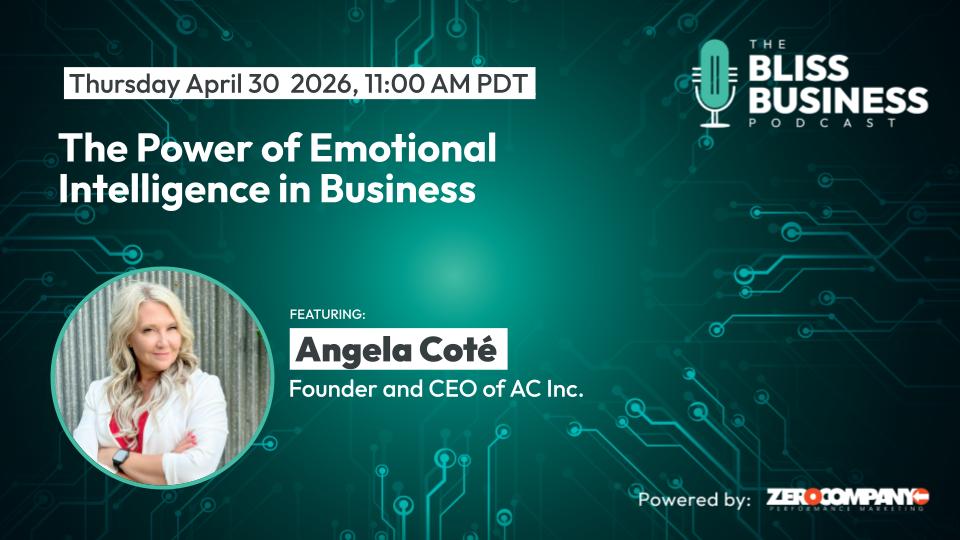
On The Bliss Business Podcast, we sat down with Angela Coté, Founder and CEO of AC Inc. Angela is a franchise industry thought leader with a rare 360-degree lens. She grew up inside a franchise brand that scaled to nearly 500 locations, operated as a multi-unit franchisee for 18 years, and worked as a field coach inside a franchise system. She is also the creator of the franchise industry’s first certification program for field support teams. Her work is built around one deceptively simple shift: moving franchise brands from compliance to coaching.
What made this conversation stand out is how clearly Angela connects emotional intelligence to action and performance. Emotional intelligence is not motivational language. It is the difference between a franchisee who stays stuck in fear and overwhelm and a franchisee who gains momentum, takes ownership, and grows.
Why the Field Coach Role Determines Franchisee Performance
Angela starts with a blunt truth: the person responsible for building the relationship with franchisees is usually the field coach. Titles vary, franchise business coach, area manager, field consultant. The function is the same. This is the person closest to the franchisee’s lived reality.
She argues that many field teams are stuck in a reactive, consulting-style approach. They default to authority and compliance. They tell franchisees what to do. They lead with market expectations and pressure. That approach is not emotionally intelligent, and it does not drive sustained action.
Angela’s work focuses on shifting brands from consulting to coaching. Coaching is not fluff. Coaching is what helps a franchisee connect daily actions to their deeper why, which is where real motivation comes from.
Fear Is the Invisible Operating System
One of the most honest parts of the episode was Angela describing fear from the inside.
Most franchisees did not come in with business ownership experience. They loved the idea of ownership, but once they are in, the weight hits. A large investment. A new role. A sudden realization that there is no safety net. Angela shared her own memory from the first year of her first store, leaving the business in the hands of entry-level staff while she went to her own wedding. Her mindset was fear, and it made perfect sense.
Fear creates a predictable pattern:
-
Franchisees hesitate to trust staff.
-
They try to do everything themselves.
-
They stay trapped in the business instead of working on it.
-
They start questioning the system.
-
They stop following the system and try to do it their way.
The franchisor often interprets this as stubbornness or lack of discipline. Angela frames it differently. This is a human being in fear mode, and fear changes how people process information and take action. Emotional intelligence is the skill that helps leaders see that clearly instead of responding with pressure and compliance.
Overwhelm Comes From Wearing Every Hat
Angela pushed back on a common internal narrative inside franchise companies: “Franchisees are all over the place.”
Her response is simple. They are wearing every hat. Early-stage franchisees are operating, hiring, marketing, managing customers, dealing with facilities issues, and carrying constant financial stress. Of course they are overwhelmed. The right support is not more pressure. The right support is coaching that helps them see what to let go of, what to prioritize, and how to build a team they can trust.
This is where emotional intelligence becomes operational. The field coach is not there to fix every problem. They are there to help the franchisee develop the mindset, clarity, and ownership needed to lead.
How to Help Someone See Their Blind Spot Without Telling Them
Tullio asked a key question in the episode: how do you help leaders recognize when emotions or beliefs are driving decisions in unhelpful ways.
Angela’s answer was coaching. Ask questions until the person arrives at the truth themselves. When a franchisee says they cannot keep up, a consulting approach rushes to solutions. A coaching approach stays in inquiry:
-
Why do you think that is happening?
-
What is driving that?
-
What have you tried?
-
What do you think is actually in your control here?
She also described a simple brainstorm practice: ask franchisees what is slowing them down, while removing the easy escape hatches of blaming the franchisor, the market, or the economy. Top performers often arrive quickly at the same conclusion: “I am the one in the way.” That level of ownership is what creates momentum.
This is a core point. Emotional intelligence is not just being kind. It is helping people move out of victim mode and into ownership without shaming them.
The Coaching Agenda That Stops the Spiral
Angela shared one of the most practical system examples in the transcript: the agenda for a coaching call.
Many franchise support calls become a vent session. The franchisee unloads problems, and the field coach gets pulled into firefighting and giving answers. It feels helpful in the moment, but it does not build the franchisee’s capability.
Her solution is simple and effective:
-
Start with wins.
-
Review key metrics and action steps.
-
Include a dedicated section for venting, so the franchisee feels heard.
-
Then pivot back to goals and the why.
That structure matters because it lets the franchisee be human without allowing the call to become chaos. It also preserves the real point of coaching: keeping the franchisee connected to what they want most and what actions will actually get them there.
Angela gave a clean example. If the franchisee’s why is taking a month-long family cruise, then the coaching conversation should not get stuck on a leaky roof. The roof may need to be addressed, but it is not the path to the goal. Coaching is the discipline of redirecting the energy toward what drives progress.
Why the Certification Program Had to Exist
Angela explained why she built the franchise industry’s first certification program for field support teams. It came from lived experience on both sides.
As a young field consultant, she knew the operations and could “show” people what to do, but she did not have coaching skills. As a franchisee, she experienced field teams who defaulted to compliance because they did not know how to add value to an experienced operator. Nobody asked her what she wanted her life to look like at 45 or 50. Nobody helped her connect daily decisions to a future vision.
Her work fills that gap by teaching skills like active listening, effective questioning, conflict navigation, and how to apply those skills inside the unique franchisor-franchisee relationship where power dynamics, fear, and dependency are always present.
Scaling Emotional Connection Across Multiple Locations
An audience question asked how multi-unit owners can stay emotionally connected to staff across locations.
Angela’s answer was systems. You cannot rely on memory and good intentions at scale. You need deliberate rhythms:
-
Notes on personal details that matter to people.
-
Check-ins that capture emotional state and wins.
-
Regular recognition and praise, not only correction.
-
Small rituals that keep teams human to each other.
She shared examples from her own company, including a voice messaging app for a remote team, a weekly “Feel Good Friday,” and a Monday accountability check-in. These are small practices, but they create continuity and visibility.
This is a strong leadership principle: connection at scale does not happen accidentally. It happens through repeatable rhythms that protect it.
Love in Business Is Caring That Builds Trust
When asked about love in business, Angela brought it back to caring. People can feel whether you care. When they believe you care, trust increases, and action becomes more likely.
She shared a powerful story about her father, the founder of a franchise brand that grew to nearly 500 locations. He told a room of hundreds of franchisees, “I love you guys. You’re my family.” More importantly, he backed it up by shutting down an “us versus them” mentality inside the home office and owning mistakes when they happened.
This is love as leadership, not sentiment. It is caring expressed through behavior, tone, and the refusal to demean the people who built the brand with you.
One Practical Step Leaders Can Use Immediately
Angela closed with a simple tactic that works far beyond franchising.
When someone keeps coming to you with the same question, stop feeding dependency. Instead of answering immediately, ask:
“If I were not available right now, where would you find the answer?”
It is caring candor. It respects the other person’s capability. It teaches self-sufficiency. It reduces bottlenecks. It builds owners, not dependents.
Key Takeaways
-
Emotional intelligence drives action when support shifts from compliance and consulting to coaching and ownership.
-
Fear is often the hidden operating system behind franchisee behavior, and leaders must address it, not shame it.
-
Overwhelm is structural. Franchisees wear every hat, so coaching must help them prioritize and let go.
-
A simple coaching agenda can stop vent spirals and refocus calls on goals, metrics, and the franchisee’s why.
-
Connection at scale requires systems: check-ins, recognition rhythms, and intentional human touch.
-
Love in business is caring expressed through behavior, which builds trust and unlocks action.
-
A practical step: reduce dependency by asking, “Where would you find the answer if I were not available?”
Final Thoughts
Franchising does not fail because the system is missing. It fails when the human system breaks. Emotional intelligence is what keeps that human system healthy enough for the business system to work.
Angela Coté’s message is both simple and challenging: build owners, not dependents. Coach, do not lecture. Lead with caring and follow-through, not compliance and control.
Where to Go Next
Listen to the full conversation: The Power of Emotional Intelligence in Business with Angela Coté.
Watch the video: Angela Coté: Stop Giving Franchisees the Answer.
Meet the guest: Angela Coté, Founder and CEO of AC Inc.

Executive Producer | Host | Blog Contributor
Tullio Siragusa is a strategic advisor, dynamic speaker, author, and EQ coach with 36 years of experience as a technology disruptor rooted in Design Thinking. Since 2018, he has been creating, producing and hosting live podcasts, interviewing over 1,000 C-suite executives across a wide range of industries. His work behind the mic reflects his larger mission: using conversation as a catalyst for human-centric innovation.
Tullio’s commitment to purpose-driven leadership and ethical transformation is reflected in his advisory roles at the University of California, Riverside’s Design Thinking Executive Program, and the University of San Francisco School of Management’s Digital Marketing Program. As a Board Advisor at AI2030.org, he helps guide the responsible advancement of AI toward ethical and sustainable outcomes. A founding member of RadicalPurpose.org, Tullio believes empathy isn’t just a trait, it’s a non-negotiable foundation for leadership.

Empathy Is an Operating System