Conscious Leadership Begins With How You Show Up

Business is often described through the language of growth, competition, efficiency, and profit. Those things matter, but the organizations people trust most are also expected to demonstrate something deeper: clear values, authentic communication, social responsibility, and a genuine commitment to the people and communities they serve.
That is where conscious leadership becomes practical.
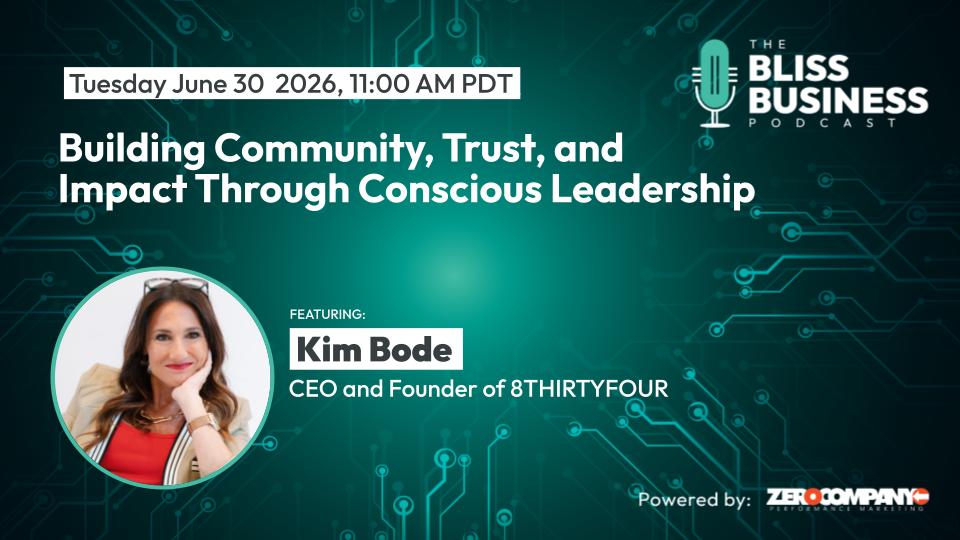
On The Bliss Business Podcast, we sat down with Kim Bode, Founder and CEO of EightThirtyFour, a communications and learning company she has led for more than 20 years, to talk about self-love in leadership. Kim’s perspective is rooted in entrepreneurship, resilience, advocacy, and the belief that businesses have a responsibility to consider the whole, not just the individual.
Her message was refreshingly direct: conscious leadership is not about perfect branding or aspirational values. It is about how leaders actually behave when the pressure is real.
Put the Whole Before the Self
Kim described conscious capitalism in simple terms: putting the whole before the self.
That means considering how decisions affect employees, clients, partners, vendors, and the broader community. It means setting ego aside and understanding that leadership choices rarely affect only the person making them.
For a small business, this can feel even more personal. In a company with fewer than ten employees, every decision is visible. Every mood travels. Every act of care matters.
Conscious leadership asks a different question:
Not, “What is best for me?”
But, “What is the impact of this decision on everyone around me?”
Values Are Proven Through Behavior
Many companies create values that reflect who they hope to become. The problem is that employees and customers experience who the company actually is.
Kim made the distinction clear. Leaders can place values on a wall, publish them on a website, and include them in presentations. But if their daily actions contradict those values, the culture will follow the actions, not the words.
This is especially true in small and midsize businesses where the founder or CEO is often the face of the organization. How that leader communicates, responds to pressure, treats employees, and handles conflict becomes the real brand.
You cannot market your way around a leadership credibility problem forever.
Vulnerability Creates Psychological Safety
One of the most meaningful moments in the conversation came when Kim described a difficult period in her business.
She was struggling personally and professionally, and her instinct was to protect her employees by staying away. She worked from home more often because she did not want the team to see her stress or worry about what was happening.
When she finally shared what she was going through, her employees told her they wanted her there. They did not need a polished version of her. They wanted the real person.
That experience changed her understanding of leadership.
When leaders admit they are struggling, make mistakes, or do not have every answer, they create permission for others to be human too. Vulnerability does not weaken leadership. Used responsibly, it creates intimacy, trust, and psychological safety.
Employees cannot feel safe admitting failure if their leaders pretend never to fail.
Leadership Does Not Have To Be Lonely
Business ownership can be deeply isolating. Leaders often feel they have to carry uncertainty alone, especially when the company is under pressure.
They protect employees from bad news. They absorb financial anxiety. They try to appear calm even when they are afraid.
But transparency can change that dynamic.
When leaders share the truth appropriately, people often step forward. Teams take greater ownership. Employees offer support. The leader discovers that other people care about the business too.
That does not mean transferring every burden to the team. It means trusting people enough to let them participate in reality.
People Before Profit Has To Cost Something
EightThirtyFour operates around the principle of people before profit. Kim was honest that she has not always executed this perfectly, but she has repeatedly made decisions that demonstrate the priority.
She shared an example of overhearing a client yelling at an employee. Kim took the phone and fired the client immediately.
The revenue mattered, but employee safety mattered more.
This is where purpose becomes credible. A value is not proven when it is easy. It is proven when honoring it costs revenue, creates discomfort, or requires a difficult decision.
Saying people come first is branding.
Protecting them when money is at stake is leadership.
Build Care Into the System
Kim’s team makes care tangible through small, repeatable acts.
They learn the names of clients’ family members and pets. They remember birthdays. They send handwritten cards. They acknowledge losses, weddings, milestones, and difficult seasons. Employees are encouraged to spend time building real relationships with clients rather than limiting every interaction to work.
These actions may seem small, but they communicate something powerful: you matter beyond the transaction.
When a mistake eventually happens, as it will in every business, that relationship creates resilience. The client does not see the company as an interchangeable vendor. They see people they trust.
Systems of care are not complicated. They require attention, consistency, and genuine curiosity about other people.
Let People Grow Beyond You
Kim also spoke candidly about employees leaving.
For founders, departures can feel deeply personal. A long-term employee may have shared difficult years, helped build the company, and become part of the founder’s life. When they leave, it can feel like rejection.
Kim has learned to reframe that experience.
Instead of only focusing on the loss, she tries to recognize how much the employee has grown and what the next opportunity makes possible for them.
That is a powerful test of conscious leadership. Are you developing people only so they can continue serving your company, or are you helping them become more capable humans, even if their journey eventually takes them elsewhere?
A great company should leave people stronger than it found them.
Community Investment Is Part of the Job
Kim believes businesses have a responsibility to improve the part of the world they occupy.
That does not require a global campaign. It may mean sponsoring a local event, supporting a neighborhood initiative, volunteering, mentoring, or opening the company’s doors to the community.
Her reasoning is simple: imagine how different communities would be if every business invested time, attention, and resources into making its corner of the world better.
Community responsibility is not separate from business. It is part of what gives business legitimacy.
Mentorship Requires Showing the Real Story
Kim has benefited from mentors and has made mentoring others part of her work. Her approach is not based on presenting a perfectly polished version of success.
She believes leaders help others most when they show the real path, including uncertainty, failure, awkwardness, and the lessons learned along the way.
Emerging professionals often do not know what they do not know. They may lack experience with conflict, networking, business etiquette, difficult conversations, or professional environments that previous generations learned through repetition and failure.
Established leaders have a responsibility to teach those skills without shaming people for not already knowing them.
Mentorship is not about displaying expertise. It is about making growth safer for someone else.
Growth Lives in the Uncomfortable
Kim’s personal mantra is “Find comfort in the uncomfortable.”
She believes discomfort is where meaningful growth happens. It may mean attending an event alone, asking someone to meet for breakfast, volunteering for a board, making a pitch, receiving criticism, or showing up publicly as your real self.
Comfort protects the current version of you.
Discomfort introduces you to the next one.
That is especially important for leaders. The higher someone rises, the easier it becomes to avoid situations where they might feel uncertain, exposed, or inexperienced. But avoiding discomfort eventually limits growth.
Conscious leadership requires the humility to keep entering rooms where you still have something to learn.
Love Begins With Self-Love
When asked what role love should play in business, Kim began with empathy, but she ultimately brought the answer back to self-love.
Business ownership is lonely. Leaders face criticism, uncertainty, failure, and constant pressure. Without belief in themselves, they can become dependent on approval, reactive to every setback, and unable to extend genuine care to others.
Self-love does not mean ego or self-importance. It means refusing to make yourself smaller for someone else’s comfort. It means recognizing your capabilities, surviving difficult moments, and trusting that you can face what comes next.
You cannot consistently offer empathy, patience, and care if you are constantly attacking yourself internally.
Love in leadership has to begin within the leader.
Reflection Creates Conscious Action
Kim offered one practical starting point for leaders who want to become more intentional: create space to think.
She begins her mornings early, puts away her phone, sets a timer, and gives herself quiet time to write, read, or reflect. She also writes letters to her future self, offering encouragement and capturing what matters in the present moment.
That practice creates distance from urgency.
Conscious leadership is difficult when every decision is reactive. Reflection helps leaders notice patterns, challenge assumptions, and choose how they want to show up rather than defaulting to habit.
Key Takeaways
-
Conscious leadership means considering the impact of decisions on the whole organization and community.
-
Values become credible only when leadership behavior reflects them under pressure.
-
Responsible vulnerability creates psychological safety and allows teams to support one another.
-
People-before-profit principles are proven when leaders protect employees even at a financial cost.
-
Small, repeatable acts of care can turn business relationships into genuine human connections.
-
Conscious leaders celebrate employee growth, even when that growth eventually takes people elsewhere.
-
Businesses have a responsibility to improve the communities around them.
-
Mentorship works best when experienced leaders share the real story, not a polished performance.
-
Discomfort is often the price of meaningful leadership growth.
-
Love in business begins with self-belief and expands through empathy for others.
Final Thoughts
Kim Bode’s perspective is a reminder that conscious leadership is not a title, framework, or communications strategy. It is a daily practice.
It shows up in how leaders protect employees, treat clients, respond to mistakes, mentor others, invest in their communities, and care for themselves.
The most trusted businesses are not led by perfect people. They are led by people willing to be honest, stay human, and accept responsibility for the impact they have on everyone around them.
Where to Go Next
Listen to the full conversation: Building Community, Trust, and Impact Through Conscious Leadership with Kim Bode.
Watch the video: Kim Bode on vulnerability in leadership.
Meet Kim on her guest profile.

Executive Producer | Host | Blog Contributor
Tullio Siragusa is a strategic advisor, dynamic speaker, author, and EQ coach with 36 years of experience as a technology disruptor rooted in Design Thinking. Since 2018, he has been creating, producing and hosting live podcasts, interviewing over 1,000 C-suite executives across a wide range of industries. His work behind the mic reflects his larger mission: using conversation as a catalyst for human-centric innovation.
Tullio’s commitment to purpose-driven leadership and ethical transformation is reflected in his advisory roles at the University of California, Riverside’s Design Thinking Executive Program, and the University of San Francisco School of Management’s Digital Marketing Program. As a Board Advisor at AI2030.org, he helps guide the responsible advancement of AI toward ethical and sustainable outcomes. A founding member of RadicalPurpose.org, Tullio believes empathy isn’t just a trait, it’s a non-negotiable foundation for leadership.

Starting Over Deserves Community