The Role of EQ in Leadership with Daniel Sieberg

Daniel Sieberg, Emmy-nominated journalist and founder of Screen Genius, explores EQ in leadership with hosts Stephen Sakach and Tullio Siragusa, sharing how psychological safety, vulnerability, and self-awareness shape teams that perform, and where AI can't stand in for real empathy.
EQ in leadership isn't a soft add-on, it's the thing that actually holds a team together. In this episode of The Bliss Business Podcast, hosts Stephen Sakach and Tullio Siragusa welcome Daniel Sieberg, Emmy-nominated journalist and founder of Screen Genius, to talk about what emotional intelligence looks like in practice, at Google, in a startup, and now in an AI-driven workplace.
In this episode we explore:
• Why Google's own internal research found psychological safety was the top trait of its best teams
• Why vulnerability in leadership builds trust instead of undermining it
• How self-regulation, not suppression, is the other half of EQ
• Where empathetic AI genuinely helps, and where it still depends entirely on who's building it
• Why self-love is the starting point for showing up as a better leader
• What changes about team cohesion once work goes remote
Before he left Google, Daniel points to one internal finding that shaped how he thinks about leadership: a company-wide survey found "the most common factor was psychological safety, which to some degree that's within the umbrella of empathy or EQ." That means letting people "ask questions, to challenge existing paradigms, to collaborate together in ways that feel meaningful and purposeful."
Daniel treats his own weaknesses as material, not liabilities. He describes calling himself out mid-meeting for talking too much: "I think that helps people to see that you're not just going to plow through meetings... you're not going to be embarrassed or ashamed of somebody calling it out because you know inherently that it's something you need to work on." That kind of transparency, he says, "really pulls people in."
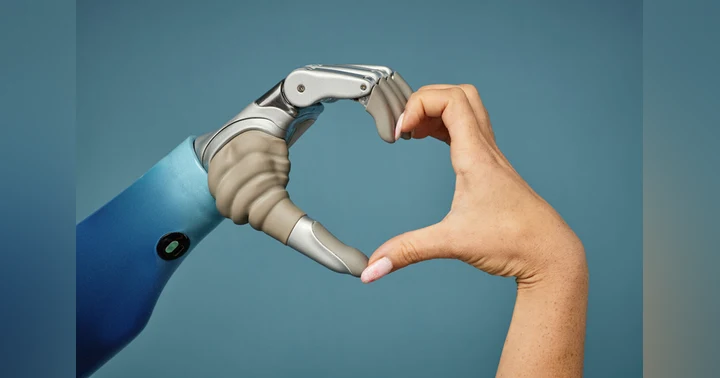
On empathetic AI's limits, Daniel points to where the real risk sits, not in the technology itself, but in who's steering it. Empathetic AI already exists as its own category, from voice-based sentiment analysis to AI coaching tools, but he's blunt about what happens without the right people behind it: "if the why and the purpose and the mission behind any empathetic AI isn't led by people with EQ, then I think we're all racing towards a black mirror episode."
That same instinct, that people trust what feels genuinely understood rather than optimized, is what good marketing has to get right too. It's the same principle behind Zero Company's approach: build the message around a real audience, not just an algorithm's best guess.
Key Takeaways
• (14:42) Google's internal survey found psychological safety was the top trait of its most successful teams: "psychological safety, which to some degree that's within the umbrella of empathy or EQ"
• (18:22) Naming his own tendency to dominate meetings builds trust instead of eroding it: "that kind of transparency and self-awareness... really pulls people in"
• (21:24) In a startup especially, vulnerability creates "almost like a flywheel of trust," and "trust is at the core of any business"
• (24:58) On empathetic AI: "if the why and the purpose and the mission behind any empathetic AI isn't led by people with EQ, then I think we're all racing towards a black mirror episode"
• (39:04) Asked if love belongs in business: "you can't have love without respect and trust"
FAQ
What did Google's internal research find made its best teams successful?
Daniel Sieberg says a company-wide Google survey found psychological safety, the ability to ask questions, challenge ideas, and collaborate without fear, was the most common trait of its most successful teams, and that trait sits within the broader umbrella of EQ.
Why does vulnerability make leaders more trusted, not less?
Daniel Sieberg points to naming his own habit of dominating meetings as an example: calling it out openly shows a team that self-awareness and transparency are safe, which pulls people in rather than making a leader look weak.
Can AI actually replace human empathy in leadership?
Daniel Sieberg says no. Empathetic AI already exists, from sentiment analysis to AI coaching tools, but he warns that if the people building it don't lead with EQ themselves, the technology can drift in the wrong direction fast.
Daniel's answer when asked if love belongs in business: love "absolutely has a place in the workplace... you can't have love without respect and trust." Learn more about Daniel and Screen Genius at screengeni.us.

Founder and CEO of ScreenGeni.us
Daniel Sieberg is a News Emmy®-nominated media and innovation expert who has built a diverse career in journalism, marketing, communications and entrepreneurship. He's previously held senior roles at Google, Moody's Analytics, Huawei USA and served as science and technology correspondent for CBS News, ABC News and CNN.
He's also cofounder of GoodTrust and founder of ScreenGeni.us, a GenAI-powered viewing assistant, along with a twice-published author ("Digital Diet" and "Digital Legacy") and advisor. He holds a B.F.A. from the University of Victoria, an M.J. from the University of British Columbia and a Certificate in Business Excellence from Columbia Business School. A dual citizen of Canada and the U.S., he lives in NYC with his daughters and hopes to continue inspiring others through his commitment to collaboration and curiosity.