The Power of Emotional Intelligence in Business with Zechariah Thomas

Zechariah Thomas, Founder and CEO of Swift Hockey and a Forbes 30 Under 30 honoree at 23, joins The Bliss Business Podcast to describe emotional intelligence for founders as a recovery speed: how quickly you return to level after the day tries to knock you off it.
Emotional intelligence for founders, in Zechariah Thomas's definition, is not composure. It is recovery speed. In this episode of The Bliss Business Podcast, host Stephen Sakach talks with the Founder and CEO of Swift Hockey, a Forbes 30 Under 30 honoree at 23 and a retired minor professional player who built a performance hockey equipment brand without venture capital.
In this episode we explore:
• Why the metric is how fast you get back to the median ground, not whether you stay there
• Watching teammates' parents do the math on a broken $400 stick
• Pitching Dragon's Den completely unrehearsed, and the episode that had no cuts
• Running a company of under-25s like a hockey team
• Publicizing failures as routinely as wins
• Hiring for what someone adds to the culture, not whether they fit it
The Median Ground Is the Whole Skill
Zechariah's framing of entrepreneurship is unromantic. Business is “portrayed to be such an easy thing, and everybody kind of glorifies the entrepreneurs that do win, but they don't see what you have to deal with every single day.” The days he describes are fires and people coming at you from every direction.
What matters is not avoiding the swing. “It's almost how fast can you get back to like that baseline middle part, which is super important, where you'll have the super downs that you can't make payroll some weeks, but it's how fast can you get back to that median ground.” He credits hockey and his faith for keeping him there, and he is direct about what the sport cost him too. Being a Black player in hockey, hearing what he heard daily, “created a fake skin for myself,” and taught him to keep going while losing.
Where the Company Came From
The origin is a specific image rather than a market thesis. He grew up in a town split down the middle financially, on the better side of it, watching teammates who could not afford equipment. “I would look out in the stands sometimes and see, like after a stick breaks, the parents are like almost in tears in those situations.” He gave away his employee discount at a sporting goods store, and his lunch at school, because that is how he was raised.
Swift Hockey started as the product he wanted to exist: “a stick that I would be willing to buy and use every single day and at a price I would be willing to pay for it,” rather than the four and five hundred dollar sticks on the wall.
The Dragon's Den appearance, where he secured three offers, works the same way. He did not rehearse, which he does not recommend to anyone else. He was a shy kid, and practicing made him stutter more, so he went in raw and pitched for about an hour with, as he tells it, no cuts in the episode. His explanation is the useful part: he could never present well on geography, but “speaking on myself and speaking on Swift, I know it better than anybody.” Preparation was never the variable. Whether the subject was actually his was.
Running It Like a Team
Swift has 15 to 20 staff, almost all under 25, and Zechariah runs it deliberately flat. Few titles, minimal hierarchy, an open floor where he can see everyone at once. “Everybody has to have that same collective goal of winning every single day.”
Two practices carry it. Modeling from the top: if the expectation is business casual, management shows up in suits. And radical visibility about how the company is actually doing, because “as a founder, your staff has no idea the building's on fire over there.” So Swift publicizes failures and wins alike. His third ingredient, when pressed for what keeps a young team engaged, is that everyone has a voice, all the way down to accounting, and their opinions are used on marketing, video, everything.
Stephen's reframe on hiring is worth keeping alongside it: stop screening for culture fit and start asking what a person adds to the culture, because conformity contains no expansion. It is the same instinct behind the way Zero Company builds teams around a brand rather than staffing to a template.
Key Takeaways
• (3:21) Zechariah Thomas on what the highlight reel leaves out: entrepreneurs are “waking up, burning, taking out fires... dealing with people attacking you at every single second.”
• (8:46) Zechariah Thomas on the actual measure of emotional intelligence: “how fast can you get back to that median ground that's in the middle,” including the weeks you cannot make payroll.
• (5:55) Zechariah Thomas on what hockey built and what it cost: being a Black player and hearing what he heard daily “created such as like a fake skin for myself,” and taught him to keep going while losing.
• (14:26) Zechariah Thomas on the moment behind the company: “I would look out in the stands sometimes and see, like after a stick breaks, the parents are like almost in tears.”
• (14:26) Zechariah Thomas on the product spec: “a stick that I would be willing to buy and use every single day and at a price I would be willing to pay for it,” against four and five hundred dollar sticks.
• (10:19) Zechariah Thomas on pitching Dragon's Den with no preparation, which he does not recommend: he pitched for about an hour and, as he tells it, his was the only episode with no cuts.
• (12:06) Zechariah Thomas on why that worked: he presented badly on geography at school, but “speaking on myself and speaking on Swift, I know it better than anybody.”
• (7:13) Zechariah Thomas on trust as a young founder: business is “almost similar like war,” and his circle inside the company has gotten smaller and tighter as a result.
• (18:23) Zechariah Thomas on structure: with 15 to 20 staff he runs the organization “like a hockey team,” where “everybody has to have that same collective goal of winning every single day.”
• (20:11) Zechariah Thomas on transparency: “as a founder, as an entrepreneur, your staff has no idea what's going on... they have no idea the building's on fire,” which is why Swift publicizes failures and wins alike.
• (26:52) Zechariah Thomas on the third thing that keeps a young team engaged: “giving everybody feeling like they have a voice,” down to accounting, on marketing, video, and everything else.
• (30:54) Zechariah Thomas's one piece of advice, which he admits is vague: “do more than everybody else.” Stephen's addition: love more, care more, give more empathy, not just the grind.
FAQ
What does emotional intelligence mean for a founder day to day?
Zechariah Thomas of Swift Hockey defines it as recovery speed rather than steadiness. The highs and lows are guaranteed, including weeks where payroll is in question, so the skill that matters is how quickly you get back to what he calls the median ground.
How do you keep a young team engaged?
Zechariah Thomas names three things: constant variety so no two days look alike, an open floor plan where everyone can see and talk to everyone, and giving every person a real voice, including staff whose job title has nothing to do with the decision being made.
Should founders rehearse an investor pitch?
Zechariah Thomas went into Dragon's Den unrehearsed and secured three offers, but he is explicit that he does not recommend it. His point is that preparation was never his variable: he presents badly on subjects that are not his, and fluently on the one that is.
Learn more about Zechariah Thomas at his guest profile. Read the companion post, Emotional Intelligence Is the Skill That Keeps You Standing. More from the Featured Guest Series.
Founder
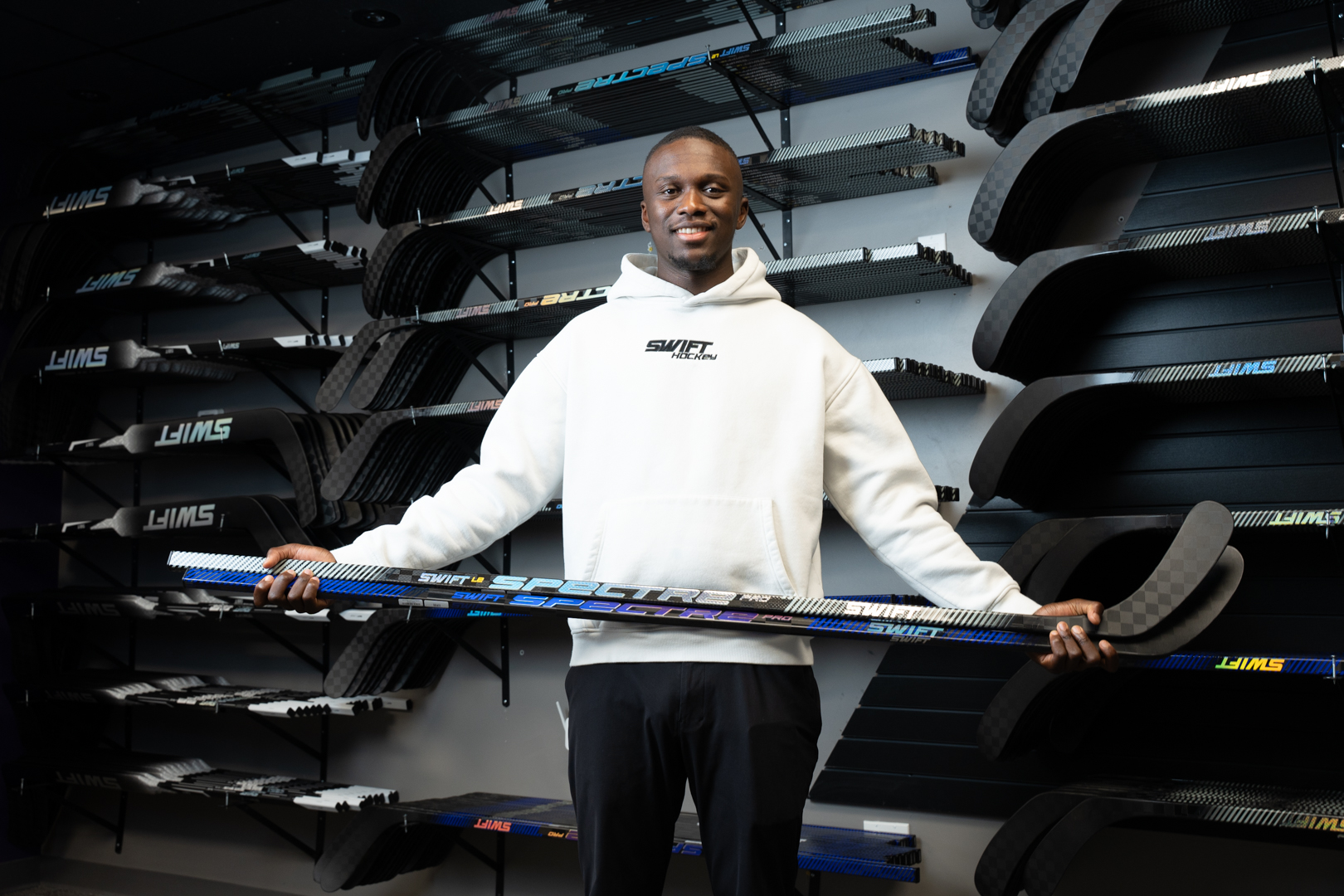
Zechariah Thomas is a 23-year-old entrepreneur, retired minor pro hockey player, Forbes 30 Under 30 honoree, and the founder of Swift Hockey, a performance hockey equipment brand built without venture capital.
Entering one of the most traditional and exclusive sports industries, Thomas launched Swift Hockey with a mission to make high-performance equipment more accessible to players and families. Navigating limited access, high barriers to entry and early skepticism, he has built Swift Hockey into a competitive consumer brand driven by authenticity, player insight and a deep connection to the game.
Drawing on his own experience as a competitive player, Thomas combines an athlete’s perspective with entrepreneurial grit, proving that innovation in hockey doesn’t have to come from legacy brands or big budgets, but from those willing to challenge the status quo.