Fostering a Culture of Inclusivity with Paul Damico

Paul Damico, President and CEO of Ascent Hospitality Management, joins The Bliss Business Podcast to explain how a culture of inclusivity gets built in a 500-restaurant franchise system, one granular conversation at a time.
A culture of inclusivity, in Paul Damico's telling, is not a training module. It is a leader who knows people at what he calls a granular level. In this episode of The Bliss Business Podcast, host Tullio Siragusa talks with the President and CEO of Ascent Hospitality Management, a hospitality operator with more than 40 years in the industry and a three-time Undercover Boss participant, about what inclusion actually costs a leader in time and attention.
In this episode we explore:
• The sandbox conversation he opens with every single new hire
• Weekly coffee clutches, and why people tell the truth in groups of six
• Why culture cannot be a mission statement on a wall
• The desk plaque every new employee gets on day one
• What three seasons of Undercover Boss taught him that a boardroom could not
• Acknowledging what is great as the one move to start this week
The Sandbox, and Why It Is the First Thing He Says
Paul was personally involved in interviewing every person hired into his organizations, and he opened each conversation the same way. “You're about to enter my sandbox... my sandbox is my home. I spend more time in this sandbox than I do with my wife and children back at the house.” Then the choice: “We can make beautiful sandcastles together, or you can kick sand in my face and run away.”
He is explicit about what the analogy does. “It knocked down all the ego that some people have, or it knocked down the pretentiousness, or it knocked up the shyness because they could relate.” The same directness carries into how he introduces himself as a leader: transparent to the point of discomfort, first into the office, probably the loudest in the meeting, and genuinely interested in what everyone says. His reasoning is that if you do not tell people what you are like, “they just assume,” and assumption is a worse starting point than an uncomfortable truth.
Culture Is Not Something a CEO Announces
When he arrived at Ascent, people told him the culture was broken and asked him to fix it. He declined the framing. “I'm not here to figure out the culture. Everybody around me is going to have a piece of the ingredient pool that creates whatever that culture may be.” A mission and values statement on the wall, in his view, produces talking points worth living by, but it is not the culture.
What he does instead is concrete. A weekly coffee clutch with six open seats, because people share differently in a small setting. A plaque handed to every new employee on day one, alongside the t-shirt and water bottle, reading: Our success will be determined at the speed at which we accomplish our tasks. And a discipline of reinforcing the same ideas through his eleven direct reports, since everyone in the organization is ultimately led by one of them.
The franchise version of this is what he calls being franchisee-centric, a stance he says is “very foreign to large franchise organizations.” The logic is a chain: happy franchisees grow, growing franchisees increase enterprise value, so the company is better off. And it is easier day to day. “It's so much easier to treat a franchisee with honesty and respect than it is to just yell at them and tell them they're doing something wrong.”
What Undercover Boss Taught Him
Paul has done the show three times, and he is candid that talking about it moves him. The part worth hearing is not the reveal. It is the 21 days of filming that produce a 44 minute episode, and what happens to a CEO who spends them cleaning toilets, burning himself on a stove, and learning to clean a walk-in. “You get to know at the most granular level what's happening in these employees' lives.”
That is also his answer to the leadership question underneath the whole episode. Walking into any restaurant, he says, he can find ten things wrong within minutes. “If I lead with that, then I have failed, because we can always fix those problems.” The first move is finding the hostess or the server and asking how the shift is going. On one visit that hostess had been there 47 years, and in his words, “she's dying to tell her story.”
Zero Company sees the same pattern from the brand side of the business: the companies whose customer experience holds up under scale are the ones whose leaders still know what the work feels like from the floor.
Key Takeaways
• (2:41) Paul Damico on the gap he has watched for decades: leaders “normally don't get connected at what I call a granular level to the employees of the organization, no matter where those employees sit.”
• (4:47) Paul Damico on the sandbox conversation he has with every new hire: “We can make beautiful sandcastles together, or you can kick sand in my face and run away.”
• (6:31) Paul Damico on why the analogy works: it “knocked down all the ego that some people have, or it knocked down the pretentiousness, or it knocked up the shyness because they could relate.”
• (7:21) Paul Damico on declaring his own leadership style up front, because if you do not, “they just assume, and we don't want anybody to assume what the leader is going to be like.”
• (9:34) Paul Damico on franchisee-centric operating, a stance he calls “very foreign to large franchise organizations”: happy franchisees grow, and growth raises the value of the whole enterprise.
• (11:24) Paul Damico on what he leads with on a restaurant visit: he can find ten things wrong immediately, but “if I lead with that, then I have failed.” He asks the hostess how the shift is going first.
• (13:43) Paul Damico on the Moe's years, where he hosted the holiday party at his own house six years running, and the team grew from six people to 105 while the brand went from 160 restaurants to 700.
• (15:50) Paul Damico on refusing to author the culture himself: “I'm not here to figure out the culture. Everybody around me is going to have a piece of the ingredient pool.”
• (15:50) Paul Damico on the plaque every employee gets on day one: “Our success will be determined at the speed at which we accomplish our tasks.”
• (24:03) Paul Damico on three seasons of Undercover Boss: 21 days of filming for a 44 minute episode, cleaning toilets and learning to cook, because “you can't do that in a boardroom.”
• (26:17) Paul Damico on younger employees: “their inclusivity is in the device,” which is why the new kitchen display system lets a cook tap the screen for a plate presentation, method, and recipe.
• (36:45) Paul Damico's one move for this week: “Find ways to acknowledge the great that is happening in the company, even if it's not really great at this point.”
FAQ
What does a culture of inclusivity look like in a large franchise?
Paul Damico of Ascent Hospitality Management describes it as knowing people at a granular level rather than running training modules: interviewing every hire personally, holding weekly small-group coffee sessions, and treating franchisees as the customer the corporate office exists to serve.
Can a CEO create company culture?
Paul Damico argues no. He told his team he was not there to figure out the culture, because everyone contributes an ingredient to it. His view is that a mission and values statement produces talking points to live by, while the culture itself comes from repeated behavior across the whole organization.
What is the simplest way to start building an inclusive culture?
Paul Damico's single recommendation is to find ways to acknowledge what is going well, even when the overall picture is not good yet, and to do it in whatever words feel natural. Problems are easy to find, he says. Naming something great and telling the person is the harder discipline.
Learn more about Paul Damico at his guest profile or at Ascent Hospitality Management. Read the companion post, Fostering Inclusivity Starts With Getting Granular. More from the Featured Guest Series.
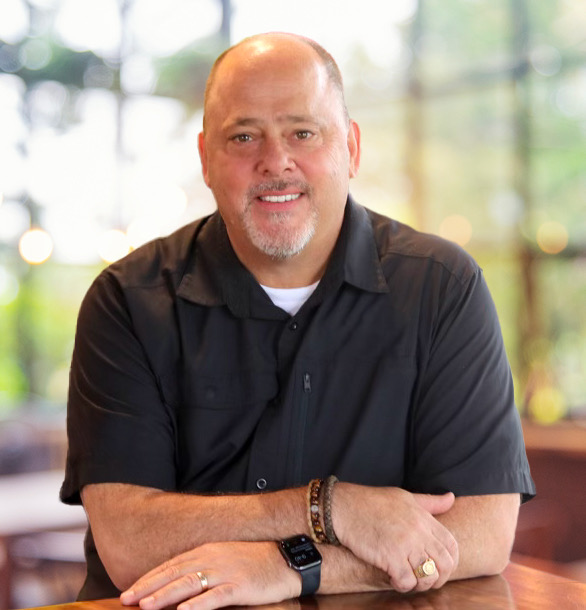
President & CEO
Paul Damico is an accomplished and well-respected executive with more than 40 years of foodservice experience in the hospitality industry. Paul’s career includes top leadership roles in premium organizations including Host Marriott, FoodBrand, LLC, Creative Host, SSP America, FOCUS Brands portfolio of restaurants, Naf Naf Middle Eastern Grill, Global Franchise Group, Fuzzy’s Taco Shop and Dine Brands Global.
Following graduation from Johnson & Wales University in 1986 with a Bachelor of Science degree in Hotel Restaurant/Institutional Management and an Associate of Science degree in Hotel Food and Beverage Management (Culinary Arts) Paul spent 13 years in various roles with Host Marriott Corporation culminating to his role as Vice President of International Development where he oversaw restaurant development on five continents.
In 1999, his entrepreneurial instinct came to life and he co-founded FoodBrand LLC, a company that specialized in the development of restaurants in malls and airports. He and his co-founders grew this company to over 100 restaurant locations.
In 2005 he joined SSP America, a global concessions company as Chief Operating Officer responsible for the day-to-day operations for 42 airports in the USA, Canada, and Caribbean.
In 2008, Paul was recruited to Moe’s Southwest Grill (a Roark Capital/Focus Brands company) as President of the organization. Over a six-year period he grew the company from 170 locations to over 700, leading the industry in new restaurant openings and culinary development. During his time w… Read More