Trust Is the Only Scalable Differentiator in Home Services

Franchising is often framed as growth: more territories, more trucks, more units. That framing misses the real issue in essential home services. When someone lets a technician into their home, they are not just buying a repair. They are taking a trust risk. The future of franchising will be shaped by who treats trust as a differentiator, not a byproduct.
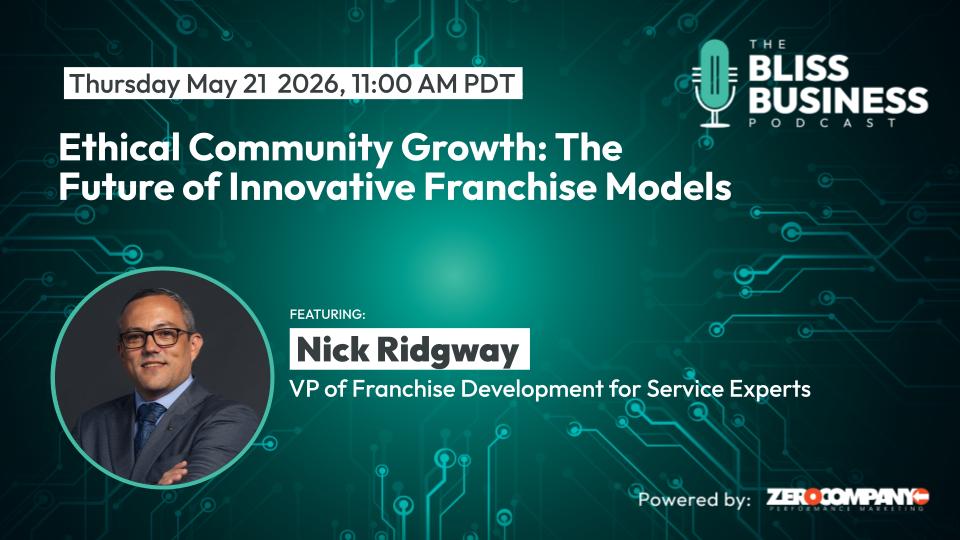
On The Bliss Business Podcast, we sat down with Nick Ridgway, Vice President of Franchise Development for Service Experts. Nick shared what ethical community growth looks like inside a franchise model built around HVAC and other critical home services, where urgency is real and the customer’s stress level is already high before the phone even rings.
Ethical Community Growth Starts With the Why
Nick framed ethical community growth as a return to why home services exist in the first place. These businesses are local by nature. They have a face. They are rooted in neighborhoods. People want to know who they are calling and whether that person will be honest.
That is why he emphasized selecting franchise owners who want to be part of the community, not just extract from it. In his view, trust is not a marketing line. It is built through repeated experiences that feel consistent, honest, and reliable.
Innovation in Franchising Is Not Always New Technology
A useful moment in the conversation was the reframing of “innovation.” Many people assume franchise innovation is already done. The recipes are written. The playbooks exist. Franchising, in that view, is simply execution.
Nick disagreed, especially in HVAC.
He described two innovation levers that change the business model itself:
-
Lead generation systems that support local owners
A franchise can feel like an engine only if it actually drives work to the owner. Partnerships and national programs that generate volume create a meaningful advantage, especially in competitive markets. -
A subscription-style model that smooths seasonality
HVAC is notorious for peaks and valleys. A program that creates recurring relationships with customers is not just a revenue tactic. It stabilizes labor, improves culture, and reduces the feast-or-famine stress that drives turnover.
Expansion for the Sake of Expansion Breaks Trust
Nick addressed a real problem in franchising: brands that sprint to sell units without the systems, processes, and selection discipline to support those owners well.
His view of responsible growth starts upstream, in candidate selection. Not every entrepreneurial personality is a fit. Some people want to rewrite the recipe. In franchising, that can become a slow-motion failure if the owner is allergic to process.
Responsible growth is choosing the right owners, then delivering what was promised across three phases:
-
The sales process: truth, transparency, and consistent messaging
-
Onboarding and training: helping owners get operational quickly
-
Ongoing support: continuing to evolve the brand and support execution over time
How Prospective Owners Can Spot a Brand That Actually Cares
A strong part of the episode was the question most candidates do not know how to ask: how can you tell whether a franchisor will support you, or whether they are simply selling royalties.
Nick’s answer was practical. Look for consistency and unity across the organization. Are you hearing the same message from leadership, from support functions, and from franchisees. Does the internal team seem aligned or fragmented. Is the franchisor willing to introduce you to the right people so you can see how support actually works.
Then validate beyond the franchisor’s narrative. He shared an example of a candidate who spoke with a supplier to learn what the brand is really like to work with. That is a smart move. A polished customer-facing story can hide a chaotic internal reality. How a brand treats vendors and partners often reveals its real operating character.
The “Cook vs. Chef” Fit Test
A moment that landed was the analogy of cook versus chef.
Some people want to invent recipes. Others want to execute proven recipes exceptionally well. Franchising generally rewards the cook: the person willing to run the system, follow the process, and build a great local business with disciplined execution.
Nick also added nuance. In service businesses, local execution requires flexibility. Owners need room to operate in their community and make local decisions while still staying on brand. That balance works when trust is high and communication stays open in both directions. Franchisees should influence evolution, but not turn the system into a free-for-all.
Emergency Work Tests Your Culture in Real Time
Home services are often emergency-driven. Heat goes down. Air goes down. A family is stressed. A homeowner is anxious about cost, timing, and whether they are about to be taken advantage of.
Nick described the customer experience levers that matter most in those moments:
-
How quickly the phone is answered
-
How the call is handled
-
How quickly a technician can arrive
-
How communication and updates are managed until resolution
This is where ethics becomes visible. A brand can claim trust. In an emergency, the customer decides whether it is real based on response time, clarity, and how they are treated under pressure.
Mentorship and Community as Built-In Leverage
Nick highlighted one of franchising’s core advantages: you are not alone.
Independent operators often have no peer group in the same category willing to share playbooks, pricing insights, or operational lessons. In franchising, the community of owners becomes a built-in mentorship engine. That creates learning speed and reduces costly trial-and-error cycles.
He also offered a grounded message to “corporate refugees” entering franchising: do not expect to replace a high corporate salary immediately. Plan for a transition. Build reserves. Focus on delegation early. Growth requires a team, not a heroic founder doing everything alone.
Love in Franchising Looks Like Compassion Under Stress
When asked what role love should play in business, Nick did not romanticize it. He made it practical.
Franchising is stressful. Owners are under pressure. Customers are under pressure. Employees are under pressure. In that environment, love looks like:
-
Compassion for franchise owners, regardless of background or skill set
-
Respect and care that proves the franchisor has the owner’s back
-
A realistic understanding that money and work inside a family system can either strengthen relationships or break them if not handled intentionally
Love, in his framing, is part of what keeps the relationship-based model intact when the tension rises.
Key Takeaways
-
Trust is the real product in essential home services, and franchising must treat it as a core operating standard.
-
Ethical community growth begins with franchisee selection and the desire to be genuinely embedded in local communities.
-
Innovation in franchising is often business-model innovation: lead generation leverage and subscription-style programs that stabilize seasonality.
-
Responsible growth is consistency across the full lifecycle: sales truth, onboarding delivery, and ongoing support.
-
Candidates should validate a franchisor’s reality by speaking with franchisees, employees, and even suppliers to see whether the culture is consistent.
-
Franchising rewards disciplined execution with room for local leadership, as long as the owner stays on brand and collaborates with the system.
Final Thoughts
The future of franchising will not be defined by who expands fastest. It will be defined by who sustains trust longest. In industries where customers call at their most stressed moments, ethical standards, operational consistency, and human care are not optional. They are the business model.
Where to Go Next
Listen to the full conversation: Ethical Community Growth: The Future of Innovative Franchise Models with Nick Ridgway.
Watch the video: Responsible Franchise Growth.
Meet Nick on his guest profile.
Executive Producer | Host | Blog Contributor
Tullio Siragusa is a strategic advisor, dynamic speaker, author, and EQ coach with 36 years of experience as a technology disruptor rooted in Design Thinking. Since 2018, he has been creating, producing and hosting live podcasts, interviewing over 1,000 C-suite executives across a wide range of industries. His work behind the mic reflects his larger mission: using conversation as a catalyst for human-centric innovation.
Tullio’s commitment to purpose-driven leadership and ethical transformation is reflected in his advisory roles at the University of California, Riverside’s Design Thinking Executive Program, and the University of San Francisco School of Management’s Digital Marketing Program. As a Board Advisor at AI2030.org, he helps guide the responsible advancement of AI toward ethical and sustainable outcomes. A founding member of RadicalPurpose.org, Tullio believes empathy isn’t just a trait, it’s a non-negotiable foundation for leadership.

Hospitality Begins With Making People Feel Seen