Building Community and Connection in Business with Noah Smock
Noah Smock, Director of Resource Development at ToolBank USA, joins The Bliss Business Podcast to explain radical sharing: a lending model that takes equipment costs off nonprofit budgets and, more importantly, changes what those organizations think they can take on.
Radical sharing is Noah Smock's own name for something that sounds almost too simple to matter: lending community organizations the tools they need instead of making each one buy, store and replace its own. In this episode of The Bliss Business Podcast, Stephen Sakach and Mike Liwski welcome Noah, Director of Resource Development at ToolBank USA, who spent more than a decade running the Baltimore Community ToolBank before moving to the national organization.
In this episode we explore:
• Why a warehouse of shovels changes what a nonprofit believes it can attempt
• The misconception that quietly damages funder and community partnerships
• Why consistency, not enthusiasm, is what sustains community work
• Measuring time, talent and testimony rather than only dollars
• How employee passion should shape corporate giving, not the CEO's
• The five-times-why exercise for finding out whether your systems mean anything
The inventory is unglamorous on purpose: shovels, drills, rakes, tables, chairs, Wi-Fi hotspots with data. What it does to a budget is measurable. Noah describes tree-planting groups in Baltimore that stopped buying and storing their own equipment once the ToolBank had been open a few years, cutting what they spent on tools and equipment by an estimated 40 to 50 percent between 2010 and 2016. But the money is the smaller half. “It's not just saving money, it's making brand new things possible because you simply dream differently about what you can do now that you have high quality tools by the hundreds at your disposal.” Or, as he puts it when Stephen imagines a group with three hammers and twenty willing volunteers, it changes “how many people you can say yes to to be involved in your mission.”
The misconception he names is the one that quietly wrecks partnerships: the assumption that whoever writes the cheque should also set the vision. Noah raises money for a living and is not arguing against funders. He is arguing that business, government and the community sector each hold a different part, and that the people on the ground usually see most clearly what a neighborhood actually needs.
His answer for what makes any of it last is consistency, and he tells it against himself. He moved into a Baltimore neighborhood in December 2019, three months before nobody was allowed to gather, and started community cleanups anyway. Not conditional on turnout. “I just said, we are doing this. I don't care if it's just me and my partner.” The first one drew ten or fifteen people, then it fell to two or three, and it is back to ten or fifteen now with its own equipment. He is just as direct about the corporate version: when a partner's contact leaves and the philosophy changes every eighteen months, “I can see a mile away that they're not serious about engaging in the community.”
That is the same test Zero Company applies to a brand's community and purpose work: a campaign is a moment, and a system is what is still running after the person who championed it has moved on.
Key Takeaways
• (5:45) Noah Smock naming the model: “we disrupt the cycle of community groups paying for what we have to share with them... It is so simple, but it's also pretty radical, so we call it radical sharing.”
• (7:48) Noah Smock on what the tools do to a budget: partner groups' tool and equipment spend “probably decreased by 40-50 percent” between 2010 and 2016 once they could borrow instead of buy and store.
• (7:48) Noah Smock on the part that matters more than the money: “it's making brand new things possible because you simply dream differently about what you can do now that you have high quality tools by the hundreds at your disposal.”
• (9:47) Noah Smock on the real leverage: it is “an enormous force multiplier. You could just think differently about how many people you can say yes to to be involved in your mission.”
• (3:50) Noah Smock on what community building means in practice: “There's the people who want to go right into solution mode, and they don't do the listening.”
• (10:09) Noah Smock on the misconception that damages partnerships: “the paradigm can flip and feel like the people giving the money should be charting the entirety of the vision, when really they should just be a partner in that.”
• (13:02) Noah Smock on letting employees pick the cause: “it doesn't have to be the CEO's passion. It could be the front-facing, customer-facing person who wants to see a certain topic area.”
• (15:26) Noah Smock on inconsistent corporate partners: when the contact leaves and the philosophy resets, “if that happens too many times in a three-year cycle, to me, I can see a mile away that they're not serious about engaging in the community.”
• (17:43) Noah Smock on systems nobody uses: a Fortune 500 partner pays the ToolBank $10 an hour for every employee who volunteers, “But not all the employees know that even though the system is there.”
• (22:33) Noah Smock on measuring beyond dollars: mature systems account for “not just the treasure or the money behind things, but also the time, the testimony, the talent.”
• (27:05) Noah Smock on the story that anchors his purpose, lending a debris sled to a homeowner recovering belongings from a house that had burned down two days earlier: “I'm not a very good salesman. I'm though a very good citizen.”
• (30:22) Noah Smock on keeping a community project alive after the excitement fades: “I just said, we are doing this. I don't care if it's just me and my partner... I'm not waiting for critical mass.”
• (35:24) Noah Smock on the five-times-why exercise and what it reveals: “the fifth time you ask that question, you should be getting to some essence of why you exist in the first place. That's why you can tell that you have good systems in place.”
FAQ
What is radical sharing?
Noah Smock of ToolBank USA uses it to describe lending high-quality tools and equipment to community organizations rather than having each one buy, store and replace its own. He calls it radical not because the idea is complicated but because almost nobody runs it at scale with real inventory tracking behind it.
How should a company measure its community impact?
Noah Smock argues for measuring time, talent and testimony alongside dollars. An engineer who redesigns a battery system, or a company serving on seven nonprofit boards, represents a level of contribution that a cash-only measurement will never capture.
How do you keep a community project going after the initial excitement fades?
Noah Smock's answer is consistency and lowered expectations about speed. He kept running neighborhood cleanups whether two people showed up or fifteen, refusing to make them conditional on turnout, and the group eventually grew back and acquired its own equipment.
Learn more about Noah Smock and ToolBank USA at toolbank.org. Guest profile: Noah Smock. More from the Featured Guest Series. Read the companion post, Connection Is a Resource Multiplier.
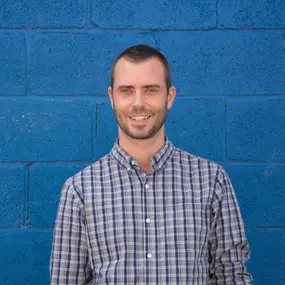
Director of Resource Development
Noah Smock’s career in social justice started in Baltimore in 2008. From January 2014 – December 2024, he had the honor of serving as Executive Director of the Baltimore Community ToolBank. He currently serves as the Director of Development at ToolBank USA. The ToolBank movement enhances access to tools, equipment, and expertise for community organizations and first responders, amplifying their efforts to strengthen and celebrate diverse neighborhoods.
He currently serves as Secretary of the board of the Affiliated Sante Group, a behavioral health services and crisis response organization.
Past board service includes the South Baltimore Gateway Partnership (Programming Chair), the Carroll-Camden Business Association (President), Black is the New Green (Chairman), and The 6th Branch (Treasurer).
Smock has been honored with awards for his work in the community sector, including recognition as a Birdland Community Hero by the Baltimore Orioles (2019) and as a Homecoming Hero by Baltimore Homecoming (2022). In 2025, he completed Leadership Maryland’s Executive Program.
Smock earned a Bachelor of Arts degree in philosophy from the University of California, San Diego. He is prouder to have been a transfer student from San Diego City College. He is an alum of AmeriCorps National Civilian Community Corps, a year of service that shaped his interest and experience working within community settings.